Where Do Teeth Whitening Strips Fit? A Beginner's Map of the Oral Care Aisle
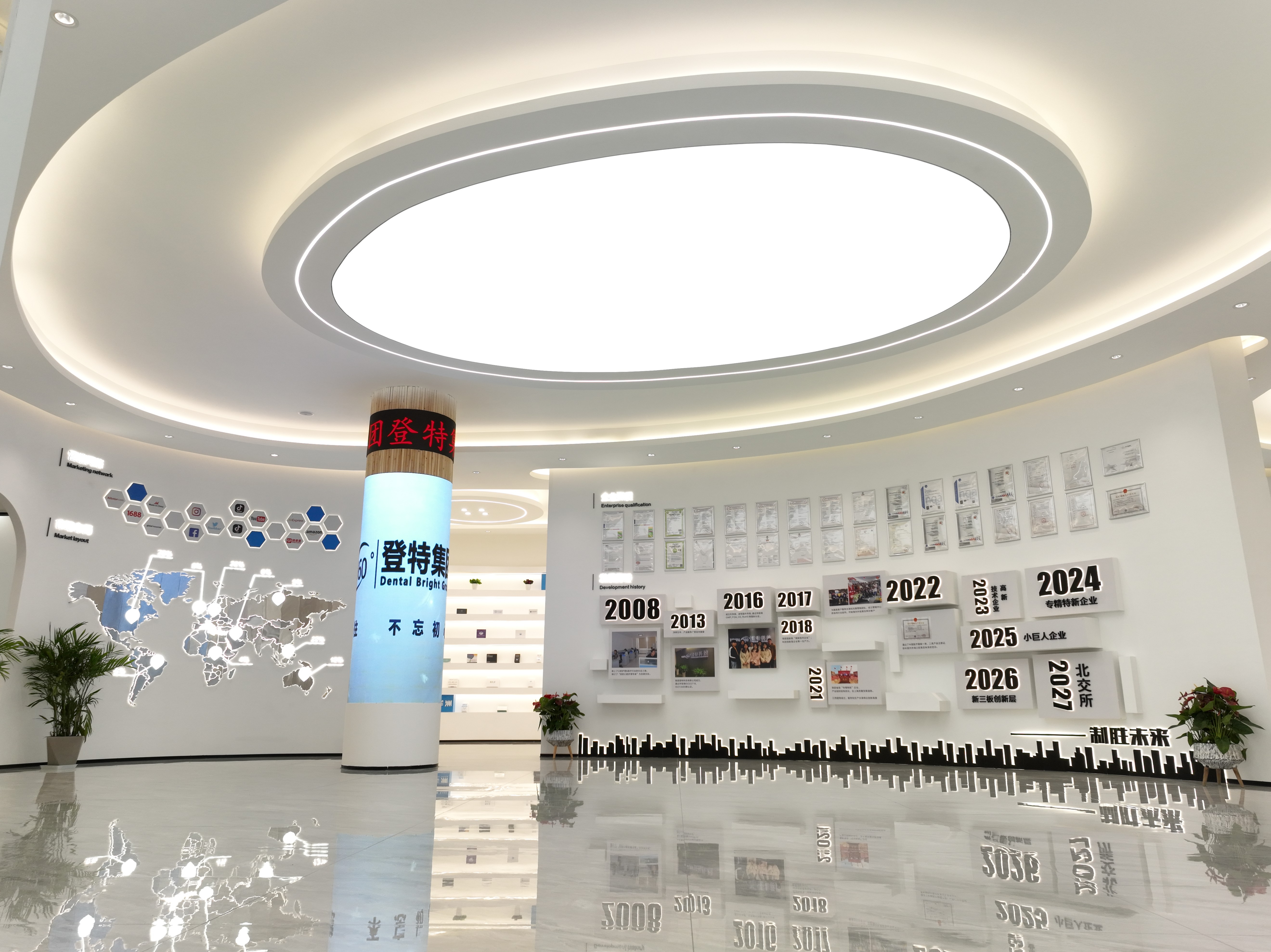
Cover: the Glorysmile factory showroom, where the oral care range is presented.
Teeth whitening strips are the leave-on cosmetic in the middle of the oral care aisle: more contact time than a whitening toothpaste, lower commitment than a tray-and-light whitening kit. They do not clean teeth, and they are not a substitute for a brush, a rinse or a water flosser. They sit beside those products and do one job — lifting surface stain such as coffee, tea and tobacco — while the rest of the shelf handles daily hygiene and the intensive end handles course-based whitening. This beginner's map walks through the whole aisle, defines the vocabulary that trips people up (dry versus wet strips, peroxide versus PAP gel, sensitive-teeth options) and shows what to check before a strip SKU joins a brand's range.
Where Whitening Strips Fit: The Short Answer
An oral care range solves three different problems, and teeth whitening strips belong to the second one.
- Cleaning and hygiene — toothpaste, toothpaste tablets, mouthwash, mouth spray, electric toothbrushes and oral irrigators. These remove or disrupt plaque, food debris and oral biofilm, and freshen breath. They are used daily, sometimes twice daily.
- Cosmetic surface brightening — whitening strips, whitening powder and colour-correcting products. These work on extrinsic (surface) stain or on the appearance of yellow tone. Strips are applied once a day and left on the tooth surface; whitening powder is used during brushing; colour correctors use purple dye to neutralize yellow undertones.
- Intensive, course-based whitening — whitening kits with a tray and a LED light, and professional clinic kits. These run in timed sessions: Glorysmile's GS-001Y kit uses a 10-minute light timer for 30 uses, while the DB-001M kit uses a 16-minute timer.
Placed on that line, a whitening strip is a daily-use, single-dose cosmetic. It is not a cleaner, and it is not a treatment course. Understanding that position solves most of the confusion that beginners meet on the shelf.
Why the Oral Care Aisle Confuses Beginners
The confusion is not a knowledge gap about teeth. It is a naming and format problem, and it shows up in three places.
First, the same word is used for different jobs. "Whitening" appears on toothpaste, powder, strips, kits and even mouthwash. A whitening toothpaste such as DB-007P, a purple colour corrector toothpaste, is described as removing stains while you brush and revealing naturally whiter teeth — a brushing action. A strip is a wear-time product. Both are called whitening; they are used in completely different ways.
Second, the formats overlap. A strip can be dry, wet or dissolving. A whitening kit can be a tray with a LED light or a pen-based system. A powder can be a charcoal powder, a PAP+ powder or a purple colour corrector powder. Without a map, a buyer can end up with three SKUs that all claim the same result and no clear reason for a shopper to choose between them.
Third, the regulatory language differs by product type and by market. A cosmetic oral product, a medical device and an OTC drug follow different paperwork routes, and the same strip format may need a different documentation set in the EU than in the United States. That is a procurement question, not a shelf question, but it decides which SKUs a brand can actually sell where.
Industry Background: A Category That Grew Faster Than Its Vocabulary
The strips and gels segment is large enough to support specialist manufacturing. Grand View Research valued the global teeth whitening strips and gels market at USD 1.1 billion in 2025 in its market size report — a figure that covers strips and gels specifically, not the entire teeth whitening category. On the supply side, Glorysmile (Jiangxi DentalBright Technology Co., Ltd.) reports annual output capacity of 300,000,000 pieces of teeth whitening strips, alongside 10,000,000 teeth whitening kits and 150,000,000 toothpaste tablets.
Two regulatory reference points explain why formulation vocabulary matters to a beginner:
- European Union: Regulation (EC) No. 1223/2009 restricts the concentration of hydrogen peroxide in over-the-counter teeth whitening products to 0.1% or less, as set out in the European Commission and HPRA materials on teeth whitening products. This is one reason peroxide-free positioning appears so often in European-facing strip ranges.
- United States: Under MoCRA 2022, whitening strips are treated as cosmetics, which brings facility registration and product listing obligations — summarized by Registrar Corp as USD 849 per year for facility registration and USD 200 per product for listing.
For trade and logistics, teeth whitening strips are primarily classified under HS Code 3306.90.00 (preparations for oral or dental hygiene), per U.S. Customs and Border Protection ruling NY N342147. Beginners usually meet this code for the first time when a freight forwarder asks for it, and it is worth knowing before the first shipment rather than after.
The Oral Care Map: Ten Categories and the Job Each One Does
The table below is the aisle in one view. It uses Glorysmile's documented product categories so that each row maps to a real, specified product rather than a generic label.
| Category | Primary job | How it is used | Typical role in a range |
|---|---|---|---|
| Toothpaste | Clean and remove stain during brushing | Brush, daily | Core traffic driver |
| Toothpaste tablets | Clean with a chewable, waterless format | Chew, brush, daily or travel | Travel and eco-format SKU |
| Mouthwash | Rinse, freshen breath, reach surfaces brushing misses | Swish and expel | Companion to paste |
| Mouth spray | On-the-go breath freshening | Spray as needed | Impulse and travel SKU |
| Oral irrigator | Interdental cleaning and gum care | Pulsed water jet | Device anchor |
| Electric toothbrush | Plaque removal through powered brushing | Sonic vibration, daily | Device anchor / premium tier |
| Teeth whitening strips | Lift extrinsic stain | Apply once a day, wear, remove | Repeat-purchase brightening SKU |
| Whitening kit | Course-based whitening with tray and light | Timed sessions, e.g. 10 or 16 minutes | Premium / seasonal kit |
| Whitening powder | Stain removal during brushing | Brush with powder | Alternative-format brightener |
| Colour corrector (serum or foam) | Neutralize yellow tone instantly | Apply or rinse, short contact | Instant-gratification SKU |
Read down the "primary job" column and the boundaries become obvious. Cleaning products act mechanically or chemically during brushing or rinsing. Brightening products act on stain or on colour perception. The kit acts on the tooth over a defined course. A range that keeps those three jobs distinct is easier to merchandise, easier to explain and easier to defend in a market where every second package says "whitening".
Strip Vocabulary for Beginners: Dry, Wet and Dissolving
Once the category position is clear, the next layer is format. Three strip types dominate the vocabulary, and they are not marketing synonyms — they describe different constructions.
| Format | What the term describes | Example in Glorysmile's range |
|---|---|---|
| Dry strip | A dry adhesive strip with a high-viscosity, residue-free, alcohol-free gel layer on a film backing | GS-004H, GS-004V, GS-004C, GS-004P |
| Wet strip | A strip supplied with a wet gel surface rather than a dried adhesive layer | Listed as a separate teeth whitening wet strip category |
| Dissolving strip | A strip that is placed on the teeth and dissolves in use rather than being peeled off | DB-004L; the GS-V34-S07 dissolved strip |
Construction. Glorysmile's strip formats use a three-layer build: a PET hard film, the whitening gel, and a PE soft film. Each strip is individually sealed in an aluminum bag — a detail that matters more than beginners expect, because individual wrapping protects the gel from moisture and makes the product viable for travel retail and subscription boxes.
Pack count and flavour. Pack size is part of the format decision. The GS-004P dry strip, for example, is offered in pack sizes of 7, 14 or 21 strips and in multiple flavours, so a brand can build a trial pack and a full course from the same base product.
Model coding. Glorysmile's strip models follow a readable pattern: GS-004H (6% hydrogen peroxide), GS-004V (purple formulation), GS-004C (PAP plus charcoal) and GS-004P (PAP). Beginners reading a quotation for the first time can decode the gel system from the model suffix before opening a specification sheet.
Gel Chemistry Basics: Peroxide Gel Versus PAP Gel
The gel is what distinguishes one strip from another within the same format. Glorysmile's published FAQ lists three whitening formula families: PAP (peroxide-free), carbamide peroxide (CP) and hydrogen peroxide (HP).
Peroxide gels. Hydrogen peroxide and carbamide peroxide work by oxidation: the peroxide releases reactive oxygen species that break down the coloured compounds responsible for extrinsic stain. This is well-established chemistry, and it is why peroxide formulas are associated with faster visible change and with sensitivity in some users. The GS-004H dry strip is formulated with 6% hydrogen peroxide.
PAP gels. PAP — phthalimidoperoxycaproic acid — is described in Glorysmile's product data as a peroxide-free whitening ingredient. The GS-004P strip and the GS-005P whitening powder are both PAP-based, and the GS-004C strip combines PAP with charcoal. Because PAP is not hydrogen peroxide, a PAP strip is the format most often used when a brand wants a "peroxide-free" claim on pack.
Why the EU limit changes the conversation. The 0.1% cap on hydrogen peroxide in over-the-counter products under Regulation (EC) No. 1223/2009 means that a high-peroxide strip specification cannot simply be copied into a European range. The formulation decision and the market decision are the same decision, and they need to be made together — with the documentation set for each target market confirmed before packaging artwork is signed off.
Sensitive Teeth: What to Check Before You Promise Comfort
Sensitivity is the objection that decides repeat purchase in this category, so it deserves its own check rather than a footnote.
Glorysmile's FAQ states that the company offers PAP and low-sensitivity formulas designed for sensitive teeth. The strip application profile also lists an enamel-safe formula, a zero-peroxide option and individual wrapping as project requirements for strip development — which tells a beginner where to look when a brief says "gentle".
- Ask which gel system is in the sample, not just which model. GS-004P (PAP) and GS-004H (6% HP) are both dry strips, but they are different formulations with different positioning.
- Confirm the wear regimen the formulation was designed for. Glorysmile's strip application profile specifies once per day; stretching or compressing that schedule changes the exposure the formula was built around.
- Keep the instruction leaflet in the pack. Wear time, frequency and a note to stop if irritation persists belong beside the claim, not on a website only.
- Match claims to paperwork. "Sensitive" and "enamel safe" are positioning words; the supporting documentation for the specific market is what makes them usable.
How to Read a Whitening Strip Specification in Seven Steps
A strip quotation looks simple until the details start to matter. Read it in this order.
- Format and model. Dry, wet or dissolving, and which model code. This sets the manufacturing line and the pack style before anything else is discussed.
- Gel system and concentration. PAP, PAP plus charcoal, 6% HP, purple, or a custom formula. Confirm the exact specification rather than the family name.
- Wear regimen. Once per day, as listed in Glorysmile's strip application profile, and the wear duration the formula is designed for.
- Pack count and wrapping. 7, 14 or 21 strips per pack, individually sealed in aluminum bags, with the outer carton and artwork specified.
- Documentation for the target market. For cosmetic products, CPSR, CPNP and PIF are available; for medical devices, CE-MDR registration has been completed. MSDS is available on request.
- MOQ. 200 pieces for private label and 1 piece for a regular product — a split that lets a brand test with a small custom run while keeping single-unit sampling possible.
- Customization scope. Custom formula, custom packaging and custom printing are part of the OEM/ODM service, along with free sampling and package design support.
Where Strips Stop and the Neighbouring Categories Start
The fastest way to learn the aisle is to walk its edges. Each neighbour below is a real, specified Glorysmile category, and each one answers a question a strip cannot.
Toothpaste
Toothpaste is the daily cleaning engine. Glorysmile's DB-007P is a purple colour corrector toothpaste in 65g and 120g PE tubes with PP caps, in mint or custom flavours, described as removing stains while you brush. The GS-007D double tube toothpaste carries both PAP and hydrogen peroxide formulas in a 100g tube, and the GS-007F fruity toothpaste is a 60g formula that skips SLS, PEGs and added sugar and is not tested on animals. If the shopper's routine is "brush twice a day", paste is the answer; a strip adds a separate step.
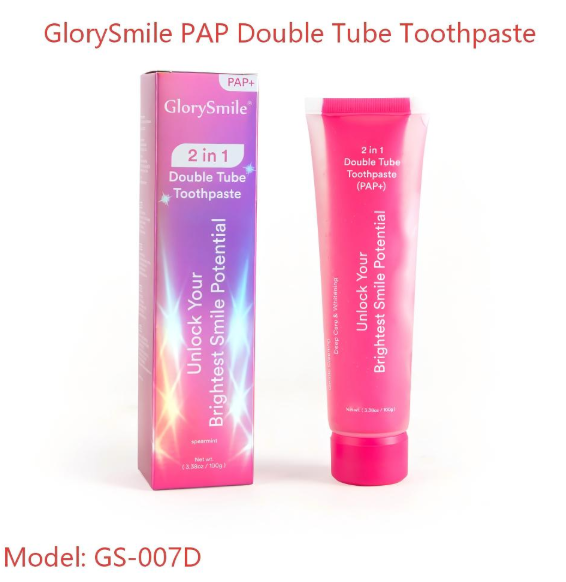
GlorySmile double tube toothpaste (GS-007D), available with PAP and hydrogen peroxide formulas.
Toothpaste tablets
Tablets are paste without water and without a tube. Glorysmile's GS-008 comes in 30 or 60 tablets, in rectangle, round or oval shapes, mint flavour, with plastic jar, glass jar, aluminum jar or kraft bag packaging, and in Purple, Charcoal and Sakura variants. The glass jar with aluminum cover is the retail version. Tablets win on portability and packaging weight; they do not replace a brightening step.
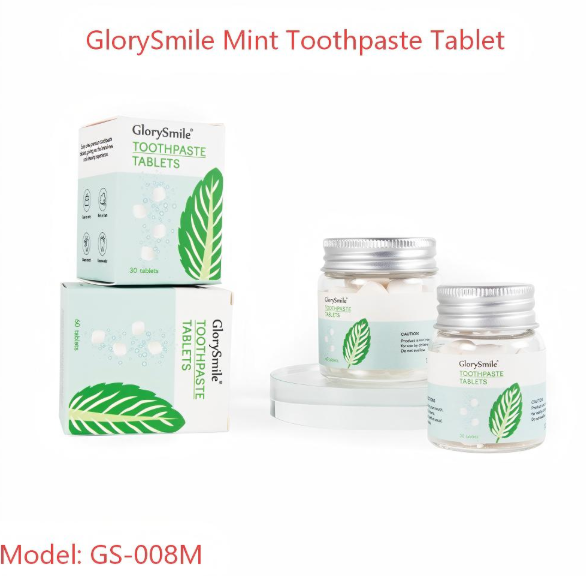
Mint toothpaste tablets (GS-008), supplied in 30 or 60 tablet packs.
Mouthwash and mouth spray
Rinse and spray products handle freshness and the surfaces brushing reaches imperfectly. The GS-010F foam mouthwash is applied as two pumps, swished for 30 to 60 seconds and expelled, in strawberry, grape bubblegum, watermelon or blue raspberry flavours. The DB-010S liquid mouthwash is alcohol-free, 237ml, positioned as a breath freshener and stain remover. The GS-011 mouth spray is a 17ml PP bottle in ten flavours including mint, lime, peach and peppermint. None of these deliver the sustained contact time of a strip.
Oral irrigator and electric toothbrush
Devices change the hygiene baseline. The GS-V2 oral irrigator has a 280ml PP tank, rated water pressure of 20–120 PSI, four modes (Soft, Gum Care, Pulse, Standard) and an 800mAh battery rated for up to 65 days per charge. The GS-K5 electric toothbrush offers Gentle, Everyday, Intense, Whitening and Custom modes with a 600mAh battery rated up to 60 days, and the GS-K9P runs at 33,000–38,000 vibrations per minute with four modes and IPX7 waterproofing. Glorysmile backs electronic products with a 12-month warranty from the date of purchase. A device improves cleaning; it does not bleach.
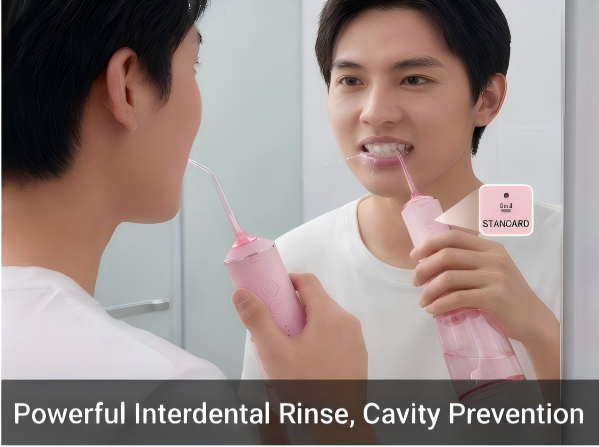
GS-V2 oral irrigator, 280ml tank, four cleaning modes.
Whitening kit
The kit is the intensive neighbour. The GS-001Y kit contains a 5-LED light with a 10-minute timer for 30 uses, a mouth tray, three 3ml whitening syringes, a shade guide and a manual, with hydrogen peroxide, carbamide peroxide, PAP, sodium phytate and charcoal formula options. The DB-001M kit uses a 32-LED light with a 16-minute timer, four 2ml whitening pens and a 450mAh battery, and carries US patent US D1,128,065 S, EU patent 015065790-0001 and UK patent 6377277. The GS-001L clinic kit is a 5ml dual-barrier gel with 35% hydrogen peroxide in a food-grade TPE tray for professional settings.
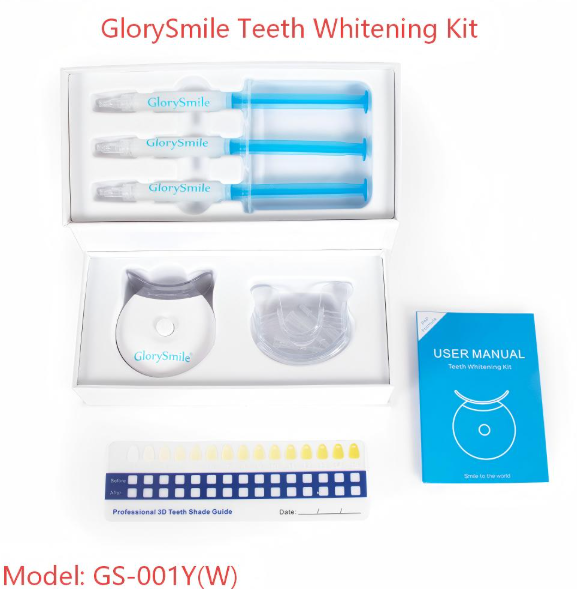
GlorySmile teeth whitening LED kit, model GS-001Y.
Whitening powder
Powder is brightening folded into brushing. Glorysmile offers GS-005C (naturally derived activated charcoal), GS-005P (PAP+) and GS-005V (purple colour corrector powder), with flavours including mint, rose, strawberry, lemon and custom. Powder suits a shopper who wants one step, not two; a strip suits a shopper who wants controlled, measured contact per use.
Colour correctors
Purple colour correctors are a visual trick rather than a stain-removal step: purple sits opposite yellow on the colour wheel, so a water-soluble purple dye cancels yellow undertones. Glorysmile's GS-006V colour corrector foam is a 30ml PET bottle in mint or custom flavour, and the colour corrector serum uses the same principle in a 30ml format. Correctors deliver instant appearance; strips deliver cumulative stain removal. They answer different shopper questions and can legitimately sit side by side.
Use Cases: When a Strip Is the Right SKU
- Coffee, tea and tobacco stain. Glorysmile's strip application profile lists removal of exogenous stains from coffee, tea and tobacco as a core function — the everyday stains a whitening paste only partly addresses.
- Travel and on-the-go routines. Individually wrapped strips fit a wash bag and a hotel sink; a kit with a light and a tray usually does not.
- Subscription and boxed retail. A 7-strip pack is a natural monthly unit, and the individually sealed aluminum bag protects the gel between shipments.
- Clinic retail add-on. A take-home strip gives a dental practice a retail SKU that complements, rather than competes with, in-chair treatment.
Strips, Kit, Powder and Toothpaste: A Side-by-Side View
| Dimension | Whitening strips | Whitening kit | Whitening powder | Whitening toothpaste |
|---|---|---|---|---|
| Format | Dry, wet or dissolving strip, individually wrapped | Tray plus LED light and gel | Powder used during brushing | Paste in a tube |
| Session | Once per day | Timed light session, e.g. 10 or 16 minutes | During normal brushing | During normal brushing |
| Positioning | Daily brightening step | Course-based intensive whitening | Alternative brightening format | Everyday cleaning with stain removal |
| Customization | Custom formula, packaging and printing | Custom packaging and gel ingredient | Custom flavour and packaging | Custom formula, packaging, printing, tube |
| Private label MOQ | 200 pcs | 200 pcs | 200 pcs | 200 pcs |
The MOQ line looks uniform because it is: Glorysmile quotes 200 pieces for private label across its product line, and 1 piece for a regular product. That consistency is useful for a beginner building a first range, because it removes one variable from the comparison.
Manufacturing Credentials and MOQ: The Supplier Side of the Map
Format and formula decide what the product is; the factory decides whether it can be supplied consistently. Glorysmile (Jiangxi DentalBright Technology Co., Ltd.) operates a 36,000 m² facility that includes 20,000 m² of 100,000-class cleanrooms and a 1,000 m² laboratory with a 100-class cleanroom for microbiological testing. The company employs 256 people, including 17 R&D engineers and 11 QC specialists, alongside an 8-person production management team and a 6-person packaging design team.
The credentials that a beginner should look for first are the ones that recur across the product documentation: MDSAP, ISO 13485, ISO 22716, GMP and BSCI. Together they cover quality management, cosmetic good manufacturing practice, medical device audit expectations and social responsibility. Glorysmile's FAQ adds CE, FDA, CPSR, CPNP, PIF, SCPN, MSDS, COA, RoHS, HALAL and Vegan documentation, and states that its products are FDA approved within a scope covering medical devices, cosmetics and OTC drugs.
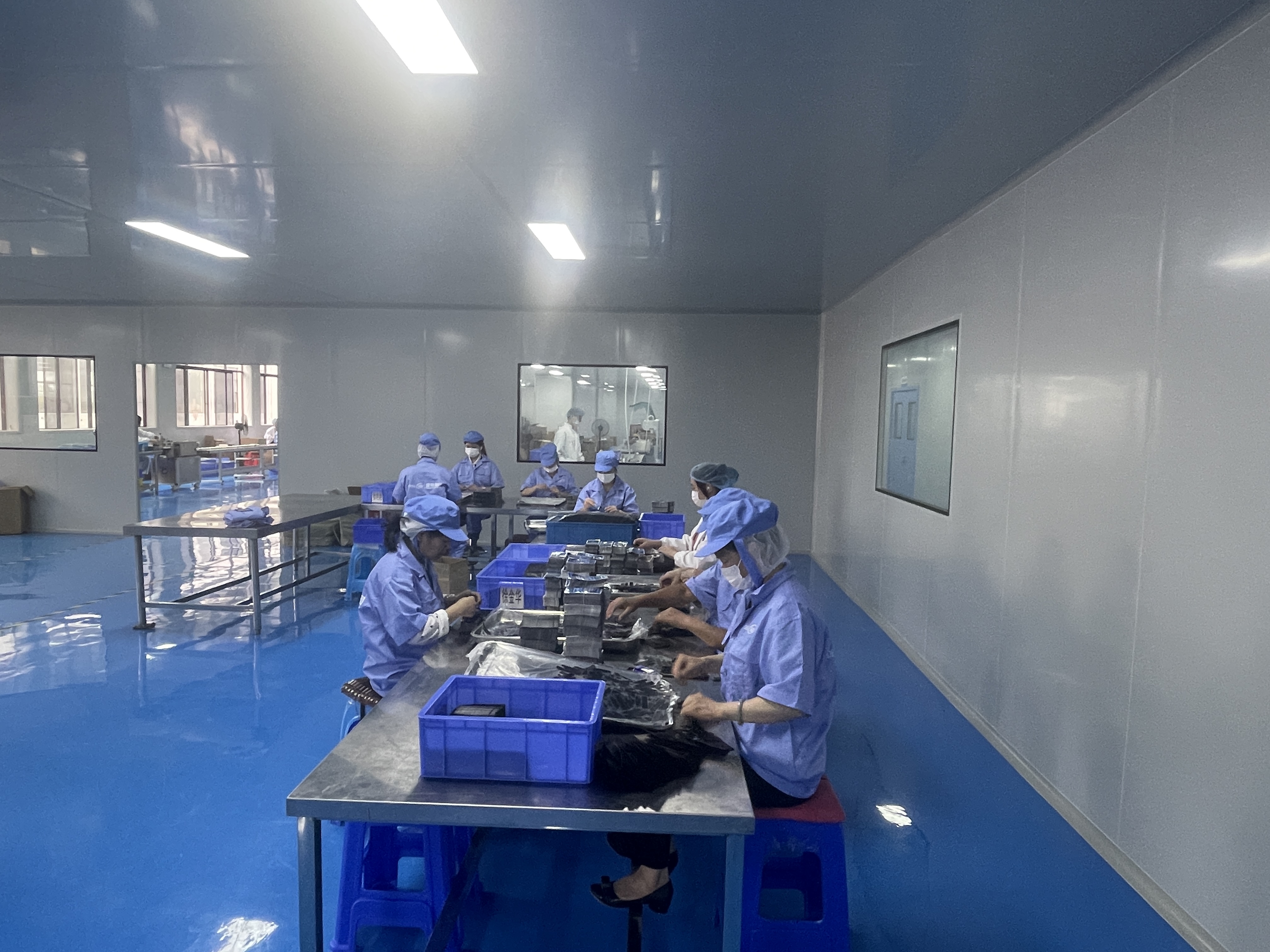
Production workshop at the Glorysmile facility in Jiangxi Province.
Scale matters when a strip line grows. Reported annual output covers 300,000,000 pieces of teeth whitening strips, 10,000,000 teeth whitening kits, 18,000,000 boxes of whitening powder, 20,000,000 whitening pens, 30,000,000 toothpastes, 90,000,000 10ml mouthwash units, 150,000,000 toothpaste tablets and 30,000,000 electric devices. Products are exported to 102 countries, with roughly 90% of output going to the EU, USA and UK — the three markets where strip documentation requirements are most demanding.
The commercial terms are simple to state and easy to check: 200 pieces minimum for private label, 1 piece for a regular product, with custom formula, custom packaging, custom printing, free sampling and professional package design support. A factory visit is also possible — the site is about 15 minutes from Nanchang Changbei International Airport, with flights from Guangzhou, Shanghai and Beijing taking roughly two hours.
For the complete product reference, the Glorysmile catalogue is available for download, and the company profile can be reviewed at Glorysmile.
FAQ
1. Are teeth whitening strips regulated as cosmetics or as medical devices?
It depends on the product, the claims and the market. In the EU, cosmetic oral products fall under Regulation (EC) No. 1223/2009, which restricts hydrogen peroxide in over-the-counter teeth whitening products to 0.1% or less. In the US, MoCRA 2022 treats whitening strips as cosmetics, requiring facility registration and product listing. Glorysmile's published FAQ states that its products are FDA approved within a scope covering medical devices, cosmetics and OTC drugs, and the company offers CPSR, CPNP and PIF for cosmetic products plus CE-MDR registration for medical devices. The documentation set should be confirmed for each target market before artwork is approved.
2. Are whitening strips suitable for sensitive teeth?
Glorysmile offers PAP (peroxide-free) and low-sensitivity formulas designed for sensitive teeth. The strip application profile also lists an enamel-safe formula and a zero-peroxide option as project requirements. Practically, sensitivity is managed by matching the gel system to the user — PAP instead of a hydrogen peroxide formula — confirming the once-daily wear regimen the formula was designed for, and keeping wear-time instructions in the pack.
3. What is the minimum order quantity for private-label strips?
The MOQ is 200 pieces for private label and 1 piece for a regular product. The same split applies across Glorysmile's oral care line, including toothpaste, mouthwash, whitening kits and whitening powder, which means a brand can test a small custom run and order single units of an existing product at the same time.
4. Can I get samples before committing to a private-label order?
Yes. Free sampling is part of Glorysmile's OEM/ODM service, together with professional package design support, and MSDS documentation is available on request. Sampling is the point at which the format decision should be tested physically: a dry strip, a wet strip and a dissolving strip feel different in use, and no specification sheet communicates adhesion as clearly as a trial.
5. What certificates do the strips and the factory carry?
The product certifications quoted across Glorysmile's documentation are GMP, ISO 22716, ISO 13485, MDSAP and BSCI. Factory-level documentation additionally includes CE, FDA, CPSR, CPNP, PIF, SCPN, MSDS, COA, RoHS, HALAL and Vegan certificates. Buyers should confirm which certificate applies to the specific strip model and market rather than assuming that a factory certificate covers every SKU.
6. How should I compare teeth whitening strips manufacturers?
Compare five things in a fixed order: the certification set (MDSAP, ISO 13485, ISO 22716, GMP, BSCI), the format and formula range (dry, wet, dissolving; PAP, PAP plus charcoal, hydrogen peroxide, purple), the MOQ structure (200 pieces private label, 1 piece regular), documented capacity (Glorysmile reports 300,000,000 strip pieces per year) and customization scope (custom formula, packaging and printing, with free sampling). Export experience is a useful fifth check — Glorysmile exports to 102 countries, with about 90% of output going to the EU, USA and UK. A sample request and a specification review will confirm more than a brochure, and the team can be reached through the contact details published on the company site or through the catalogue download above.
Conclusion: One Shelf, Three Jobs, One Clear Place for Strips
Teeth whitening strips are not a cleaner and not a course. They are the daily cosmetic step that sits between the toothpaste in the bathroom cabinet and the whitening kit in the drawer. Once a range is organized around the three jobs — cleaning, brightening, intensive whitening — the strip stops competing with the paste and starts complementing it, and the vocabulary that confused beginners becomes a specification checklist: dry, wet or dissolving; peroxide or PAP; which market; which documentation; what MOQ.
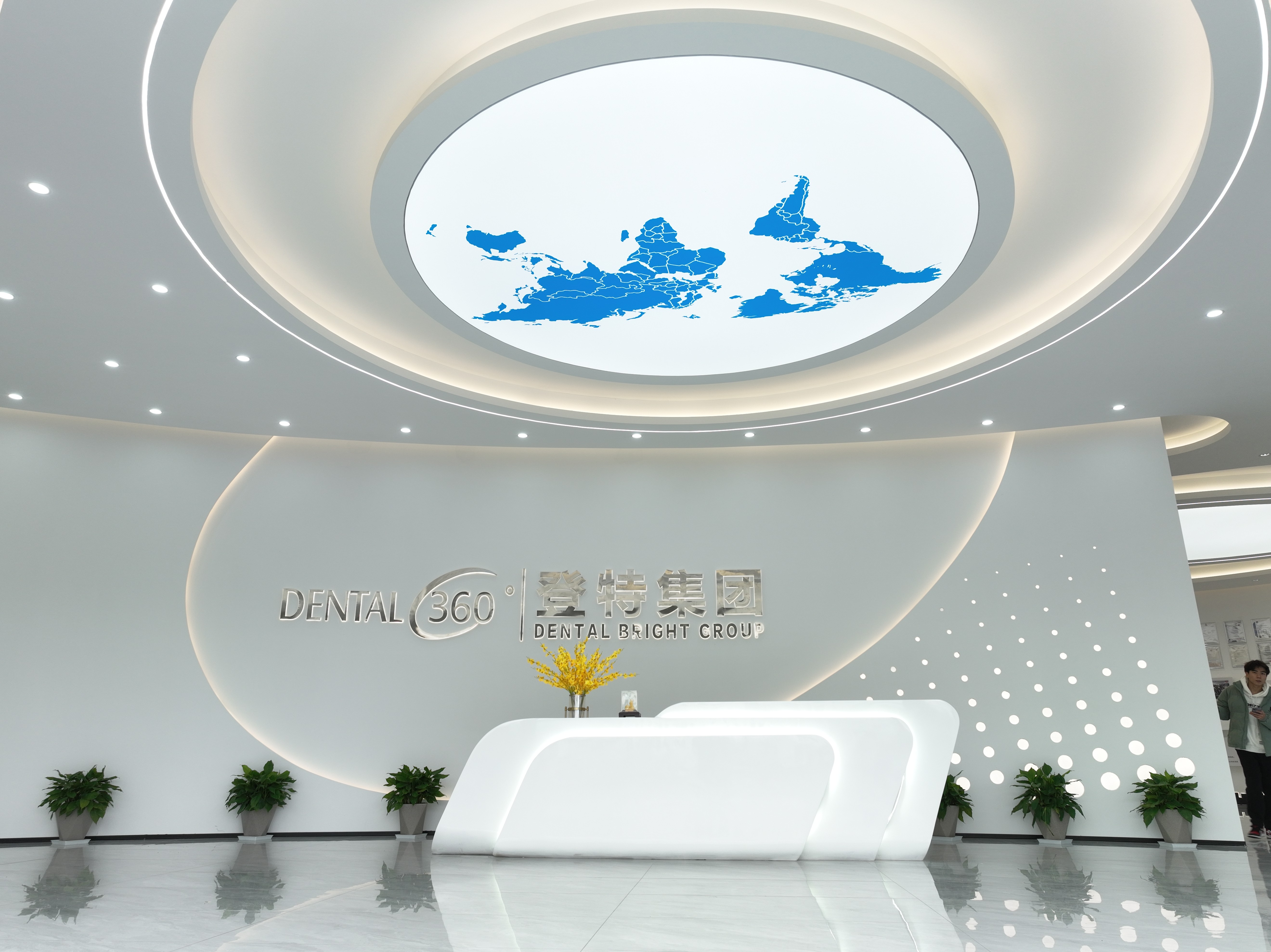
Reception at the Glorysmile facility — factory visits can be arranged, 15 minutes from Nanchang Changbei International Airport.
Have Questions or Need More Details?
Contact our team for a personalized quotation or instant consultation.
Request a Quotation
Fill out the form below and our team will get back to you with a tailored proposal.
WhatsApp Direct Chat
Prefer to chat in real-time? Message us on WhatsApp for instant assistance & quick answers.
- Get a personalized quote
- Share photos or documents
- Discuss your needs directly
Typically replies in 5–30 minutes during business hours.