Teeth Whitening Kit Supplier Evaluation: Sachet and Bottle Capacity, MOQ, and Delivery Assurance
Evaluating a teeth whitening kit supplier comes down to three checks that buyers cannot skip: whether the factory can produce the requested format on the promised schedule, what the minimum order quantity (MOQ) actually is, and whether the delivery timeline holds given order volume and customization. This article provides an evaluation template for private-label brands, importers, and distributors who are already past initial discovery — they have candidate suppliers and now need to verify claims rather than start from zero.
The article covers capacity evidence, MOQ logic, lead-time variables, and compliance and product documentation based on disclosed documents and a structured quotation process. Examples reference capacity reported by GlorySmile Factory (Jiangxi DentalBright Technology Co.,Ltd.) to illustrate what buyers should request, rather than treating any single supplier as the standard.
Why Capacity, MOQ, and Delivery Decide a Teeth Whitening Kit Supplier
The biggest sourcing risk in teeth whitening kits is not an out-of-stock catalog. It is alignment failure: a factory quotes capacity without saying which production line it belongs to, an MOQ is stated as a single number but changes once sampling starts, or a delivery commitment is offered without the variables that affect it.
Each of those three problems compounds for a buyer at the evaluation to execution stage. A misstated capacity claim delays a launch window. An MOQ mismatch creates dead stock or rework. A lead time without a disclosed production schedule turns into a missed retail commitment. For a distributor extending a successful line, the same misalignment produces stockouts under repeat orders.
Practical evaluation should therefore run in this order: format capacity first, MOQ logic second, lead-time variables third, and compliance and documentation readiness last. That order follows the dependencies — capacity and format determine the MOQ range, MOQ and customization determine delivery time, and all three together decide which supplier is actually usable.
Industry Background: From Product Photos to Capability Evidence
Teeth whitening kits now reach the market in sachet, bottle, gel, pen, and strip formats, often bundled into home kits. Private-label growth means more buyers are looking for an OEM teeth whitening kit manufacturer rather than purchasing stock goods from a distributor. As buyers mature, the sourcing process shifts from product photos toward capability evidence.
At the same time, the regulatory burden in oral care is changing. Medical-device-adjacent categories such as whitening light devices sit under FDA device registration in the United States and under CE-MDR and CPSR/CPNP/PIF documentation in the European Union. Buyers no longer treat compliance documents as an afterthought; they use them as a screening filter during supplier shortlisting.
These two shifts explain why this article focuses on verifiable capacity, verifiable MOQ logic, and a verifiable delivery timeline.
Detailed Solution: Capacity, MOQ, Lead Time, and Documentation
1. Sachet and Bottle Capacity Evidence
Buyers should start by separating confirmed capacity from line-level capacity. A toothpaste tube line or a strip line is not the same as kit assembly, and a good supplier will identify which production line each number belongs to.
For sachet and bottle formats specifically, GlorySmile reports monthly capacity of 2,500,000 sachets and 416,000 bottles on its oral-care liquid filling lines. Buyers should require the supplier to state this precisely at quotation — a specific quantity tied to a named line is more usable than a single factory-wide total.
Adjacent format capacity helps contextualize kit capability. GlorySmile reports the following monthly capacities:
- Home teeth whitening kits: 105,000 sets
- Teeth whitening strips: 29,200,000 pieces
- Teeth whitening pens: 21,000,000 pieces
- Teeth whitening gel: 8,330,000 sets
- Teeth whitening powder: 500,000 bottles
- Toothpaste: 830,000 tubes
- Electric toothbrushes: 300,000 units
- Lip balm and lip mask: 833,000 units
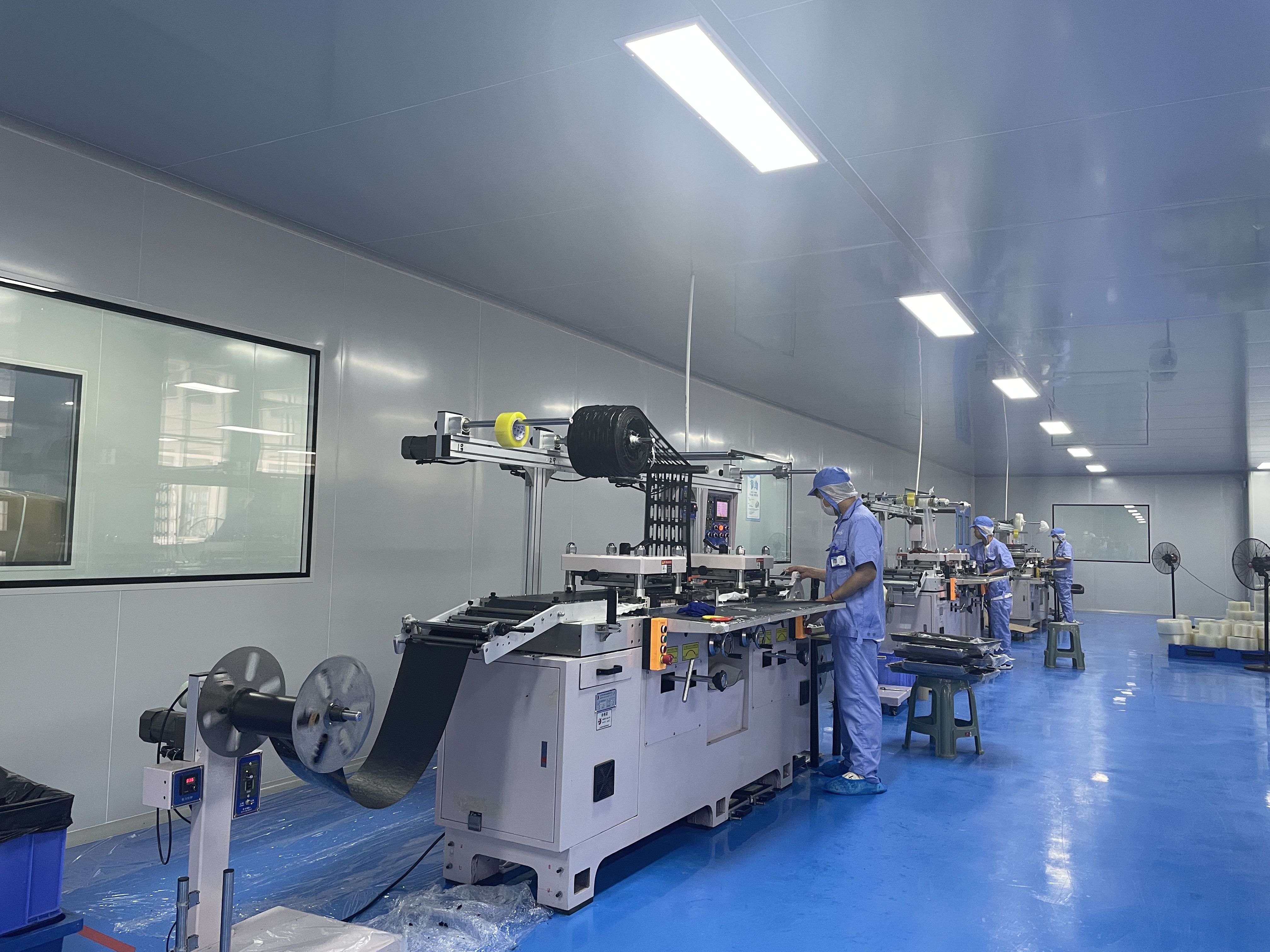
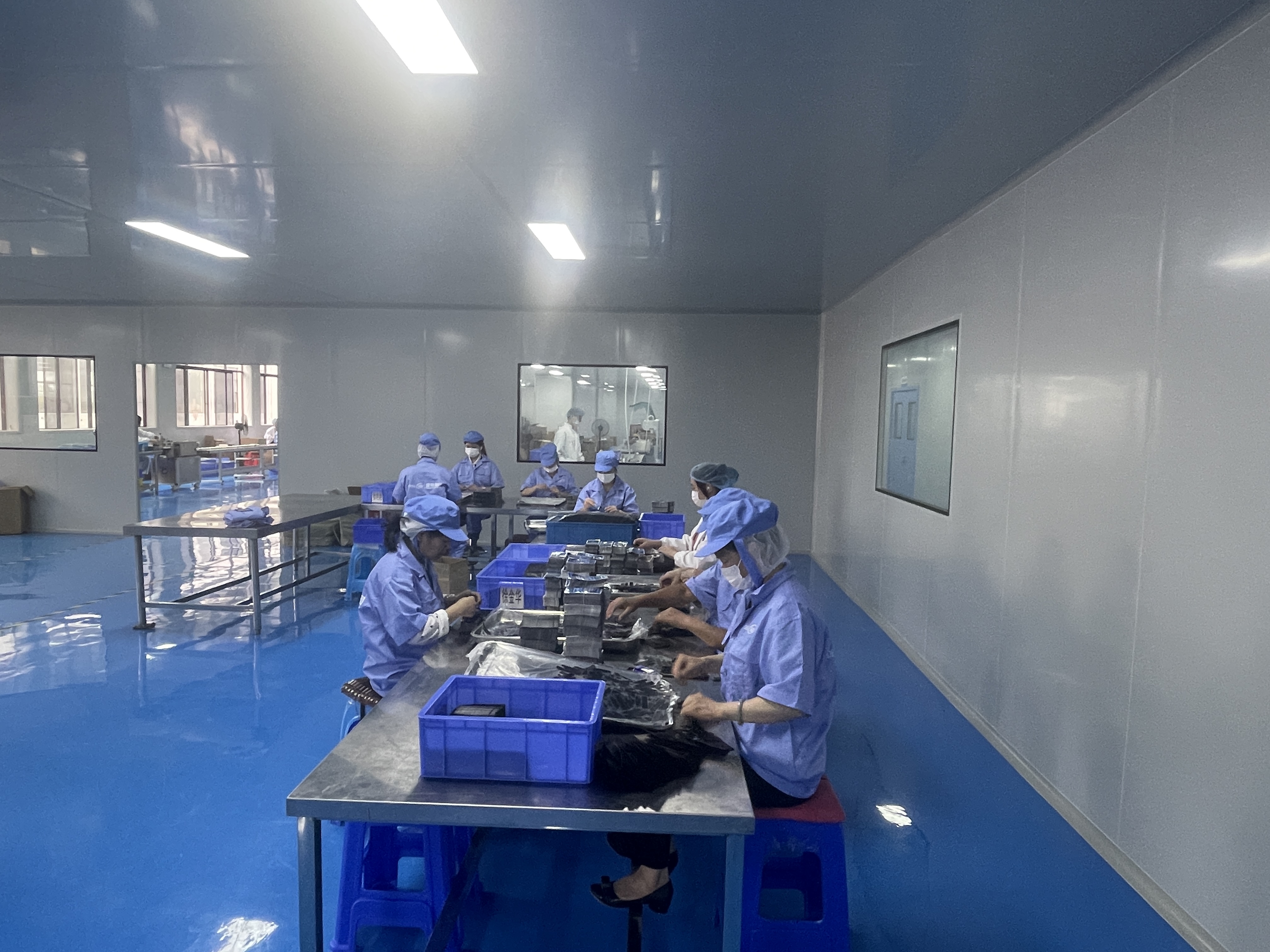
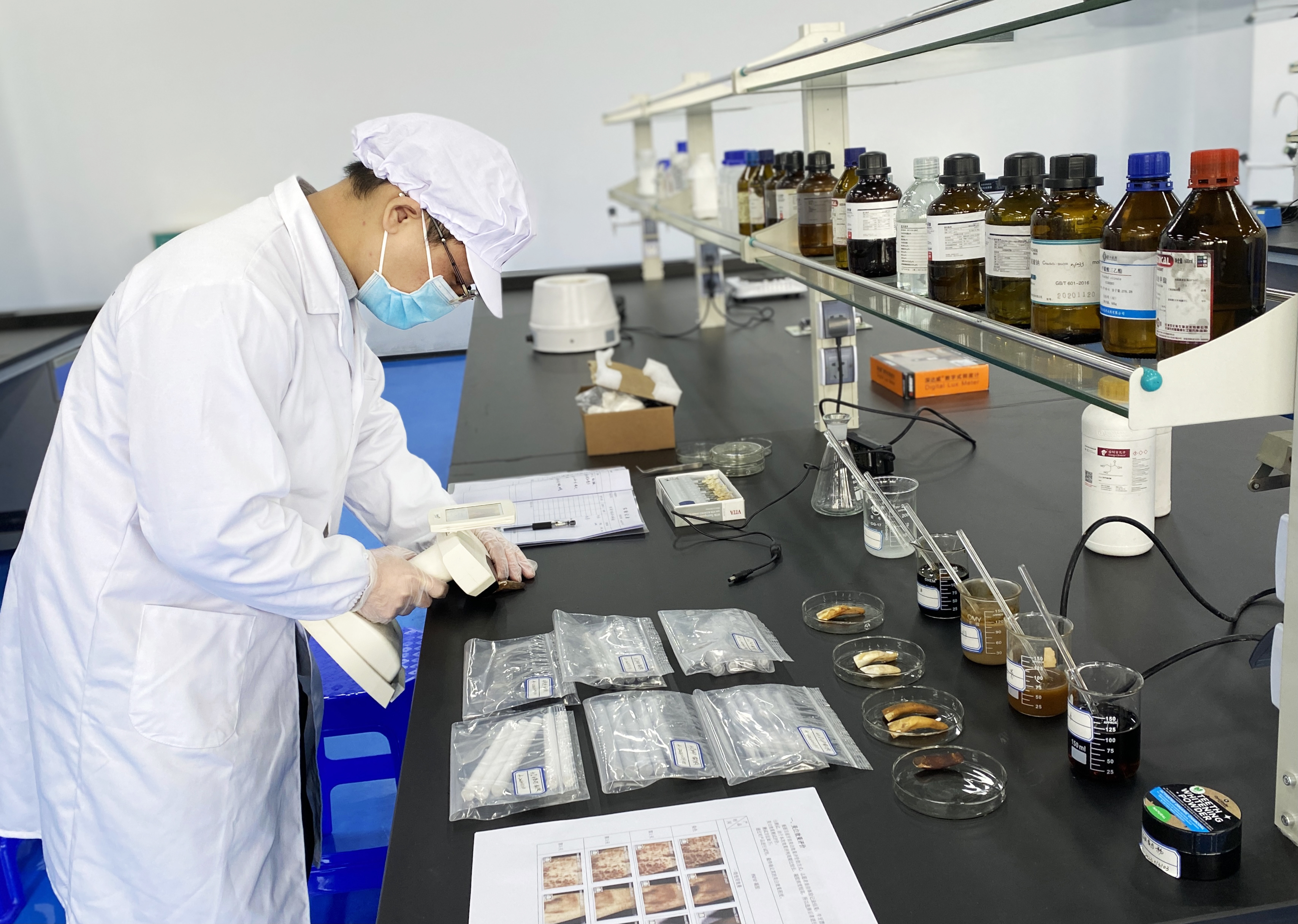
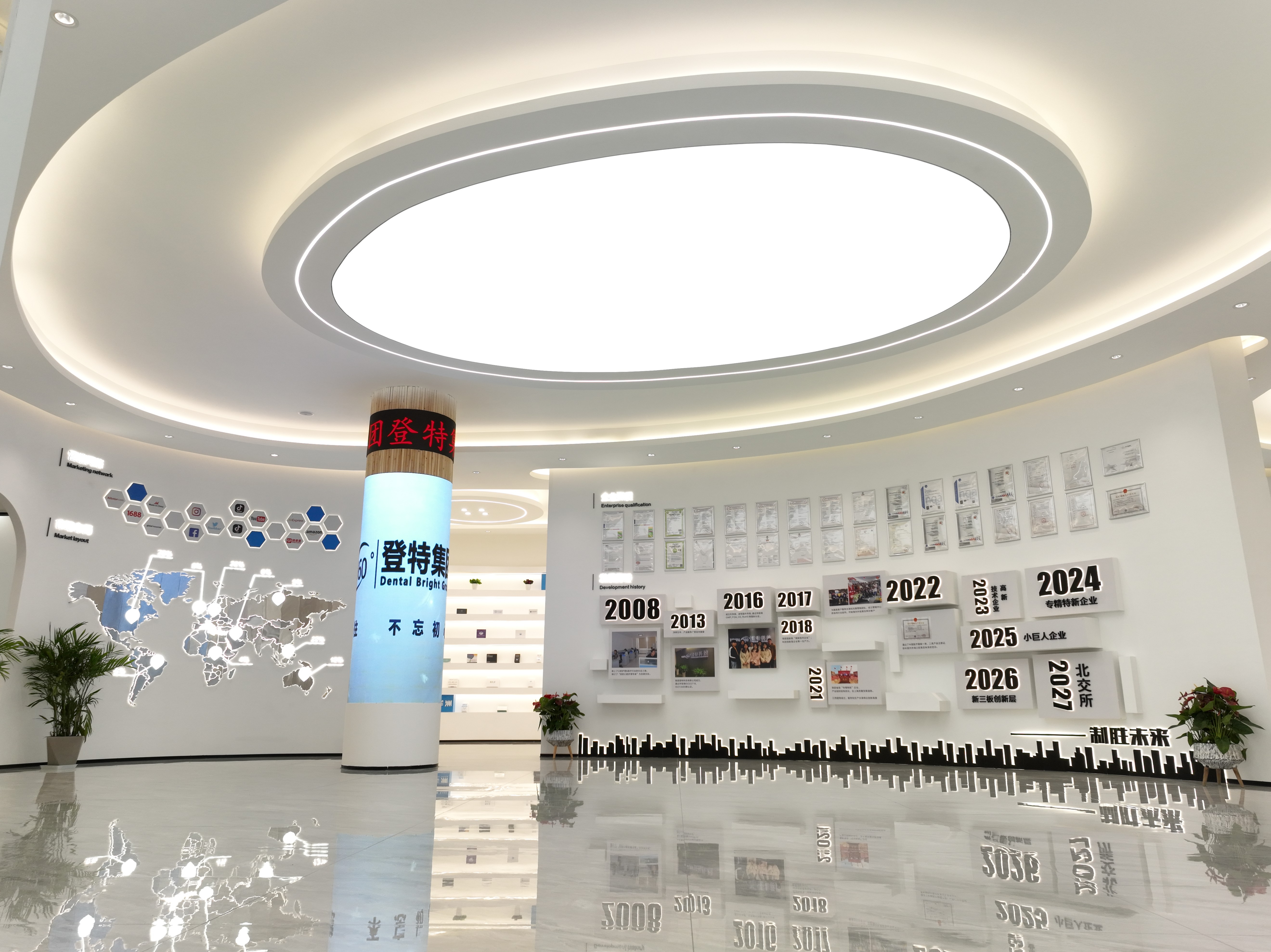
Capacity numbers become operational only when the facility backs them up. GlorySmile reports a 36,000 m² facility with 20,000 m² of 100,000-class cleanrooms and a 1,000 m² laboratory that includes a 100-class cleanroom for microbiological testing of raw materials, semi-finished goods, and finished products. The site employs 256 people, including 17 R&D engineers and 11 QC specialists. The same facility reports exporting to 102 countries, with a 90% export ratio and main markets in the EU, USA, and UK.
2. MOQ Logic: Three Variables Buyers Should Separate
MOQ is often presented as one number, but it is determined by three variables: product category, customization level, and production line configuration. That structure is what makes MOQ a negotiation topic rather than a fixed figure.
For teeth whitening kits, a standard order using existing packaging can start from as few as 5 boxes, while OEM orders with customized packaging typically range from 100 to 1,000 boxes depending on the product. The wide range exists because the underlying floor is set by packaging and component minimums — pouch, label, housing, and insert print runs usually fix the lower bound.
Buyers should require the supplier to separate the three variables in writing:
- Product category — kit-only versus strip-plus-kit combination, or sachet-plus-bottle combination.
- Customization — existing packaging versus custom housing, print, manual, and manual compliance labels.
- Production line configuration — whether line changeover cost can be absorbed at the target order volume.
GlorySmile states the same logic: MOQ is determined by product category, customization requirements, and production line configuration, with the exact quantity confirmed during the quotation and sampling phase. Buyers should ask for a written MOQ breakdown before sampling and re-confirm it after the sample is approved.
3. Lead Time as a Function, Not a Promise
Lead time should be treated as a function of order volume, determined by specification and customization complexity, and influenced by current production schedule. A supplier should name each of those variables rather than promise a single fixed number of days.
GlorySmile states lead time as follows: it varies depending on order volume, product specifications, customization complexity, and current production schedule, with a precise delivery timeline provided upon order confirmation. For a buyer in the evaluation stage, that statement is a signal, not a defect. It means the supplier reviews the current schedule before confirming a date and will not commit to a lead time off a product description alone.
A practical way to evaluate that approach is to ask for:
- A typical production schedule for an order of the buyer's target size.
- Which customization elements — housing, print, LED configuration, manual labels — drive critical-path time.
- Confirmation points before order confirmation, during production, and before shipment.
- Packaging and transport timing for the specific goods format, whether sachet, bottle, or kit bundle.

4. Compliance and Product Documentation
In teeth whitening kit sourcing, compliance documents are not optional. At a minimum, buyers should request the following:
- Material Safety Data Sheet (MSDS) — available from GlorySmile on request.
- Certification list — factory certificates: CE, FDA, CPSR, CPNP, PIF, SCPN, MSDS, COA, RoHS, HALAL, Vegan; product certificates: GMP, ISO 22716, ISO 13485, MDSAP, BSCI.
- EU compliance — for cosmetic products, CPNP notification, CPSR, and PIF can be arranged; medical-device products can be supported with CE-MDR certification, complete Technical File, and appointed EU Responsible Person.
- US compliance — MoCRA-compliant cosmetic facility registration and teeth-whitening strip product listing are already completed; FDA-certified scope covers medical devices, cosmetics, and OTC drugs; whitening lights, electric toothbrushes, and oral irrigators hold FDA medical device registration; silicone rubber impression material has completed 510(k) registration.
- Formula information — PAP (peroxide-free), Hydrogen Peroxide (HP), or Carbamide Peroxide (CP) gel. Formula choice affects the regulatory path (cosmetic versus drug) and suitability for sensitive teeth. GlorySmile offers PAP and low-sensitivity formulas designed for sensitive teeth.
Buyers should have the supplier confirm which of those documents apply to the specific SKU under evaluation, which are new, and who is the appointed responsible person. A generic certification list is not an evaluation; a SKU-specific one is.
Step-by-Step Supplier Evaluation Breakdown
Step 1 — Request a format-level capacity table. Ask for monthly sachet, bottle, kit, and strip/gel/pen capacities. Require the supplier to identify the production lines, cleanrooms, and lab assets that support each number.
Step 2 — Confirm MOQ logic in writing. Ask for a written MOQ breakdown by product category, customization, and line configuration. Identify which components — pouch, housing, label — set the order floor.
Step 3 — Map lead-time variables. Ask the supplier to list the critical-path steps and confirm how order volume, specification, and customization affect the timeline.
Step 4 — Verify compliance and formula documentation. Request MSDS, CE/FDA/MoCRA status, CPSR/CPNP/PIF status, and PAP versus peroxide formula options. Match each document to the specific SKU.
Step 5 — Request sampling before bulk production. Ask for a sample matched to the target SKU including packaging and manual. Confirm that sampling is intended to finalize MOQ and specification, not serve as an afterthought.
Step 6 — Confirm the production schedule before bulk commitment. Ask for the production schedule and shipment window before placing the order. Re-confirm MOQ and lead time after order confirmation.
Use Cases: How the Evaluation Plays Out
Private-label brand launching a sachet-based teeth whitening kit in the EU. The brand needs sachet capacity at the 2,500,000-per-month level and requires CPSR, CPNP, PIF, and MSDS documentation. The deciding factor between two supplier options is whether the capacity table specifies the sachet line and whether the manufacturer supports PAP or peroxide formulations. GlorySmile reports 2,500,000 sachet capacity per month, 105,000 kit assemblies per month, and PIF and CPNP documentation applicable to EU-market SKUs.
US importer evaluating a PAP gel pen and kit bundle. The importer needs a peroxide-free formulation alongside FDA registration status, MoCRA-compliant cosmetic facility registration, and a complete MSDS. The critical check is whether the manufacturer's FDA-certified scope covers the specific SKU under evaluation. GlorySmile reports FDA-certified scope across medical devices, cosmetics, and OTC drugs, MoCRA-compliant facility registration, and PAP plus low-sensitivity formulas.
Distributor testing a short-window promotional kit. The distributor needs sachet and bottled teeth whitening kit output on a short window. The evaluation turns on MOQ flexibility and lead-time clarity. GlorySmile reports 2,500,000 sachet units per month and 416,000 bottles per month, with MOQ confirmed during quotation and sampling, and with delivery timing provided upon order confirmation.
Supplier Evaluation Comparison Table
| Evaluation Dimension | What the Buyer Should Request | GlorySmile Reported (from factory data) |
|---|---|---|
| Sachet line capacity | Monthly sachet output | 2,500,000 sachets/month |
| Bottle line capacity | Monthly bottle output | 416,000 bottles/month |
| Home kit assembly | Monthly kit sets | 105,000 sets/month |
| Strip and pen line | Monthly piece output | 29,200,000 strips/month; 21,000,000 pens/month |
| Factory footprint | Total area | 36,000 m² |
| Cleanroom | 100,000-class area | 20,000 m² |
| Lab and QC | In-house testing and team | 1,000 m² lab with 100-class cleanroom; 17 R&D; 11 QC; 256 employees total |
| Export experience | Countries served | 102 countries; 90% export ratio; EU, USA, UK as main markets |
| Certification | Quality and product systems | MDSAP, ISO 13485, ISO 22716, US GMP, BSCI, HALAL, VEGAN; CE, FDA, CPSR, CPNP, PIF, SCPN, MSDS, COA, RoHS |
| MOQ logic | Category + customization + line configuration | Standard 5 boxes; OEM 100–1,000 boxes; final quantity at quotation/sampling |
| Lead time | Order volume, specification, customization, production schedule | Agreed at order confirmation |
FAQ: OEM Teeth Whitening Kit Manufacturer for Private-Label Brands
Q1: What compliance documents should an OEM teeth whitening kit manufacturer provide?
An OEM teeth whitening kit manufacturer should provide MSDS, certification details, and formula information. At GlorySmile, factory certificates include CE, FDA, CPSR, CPNP, PIF, SCPN, MSDS, COA, RoHS, HALAL, and Vegan; product certificates include GMP, ISO 22716, ISO 13485, MDSAP, and BSCI. For the EU market, CPNP notification, CPSR, and PIF can be arranged, plus CE-MDR documentation and an appointed EU Responsible Person for medical-device products. For the US market, MoCRA-compliant cosmetic facility registration and teeth-whitening strip product listing are already completed, and medical-device products hold FDA medical device registration.
Q2: How can capacity be verified for a teeth whitening kit supplier?
Ask for monthly capacity data broken down by format. GlorySmile reports 2,500,000 sachets per month and 416,000 bottles per month on its sachet and bottle filling lines, 105,000 home kit assemblies per month, 29,200,000 whitening strips per month, and 8,330,000 whitening gel sets per month. These numbers are supported by a 36,000 m² facility including 20,000 m² of 100,000-class cleanrooms. Buyers should require those numbers separated by format rather than presented as a single factory total.
Q3: What is the MOQ for a private-label teeth whitening kit?
MOQ is determined by product category, customization requirements, and production line configuration. For regular orders using existing packaging, the MOQ can start from 5 boxes, while OEM orders with customized packaging typically range from 100 to 1,000 boxes depending on the product. The exact quantity is confirmed during the quotation and sampling phase, because pouch, label, and housing minimums usually determine the order floor.
Q4: Can a buyer request a sample before placing a bulk order?
Yes. Free sampling is part of the OEM/ODM service at GlorySmile. Sampling also serves as the confirmation step for MOQ, because custom appearance, LED configuration, housing, packaging structure, and user manual are finalized alongside the sample. Buyers typically place the bulk order after the sample is approved and the MOQ is re-confirmed.
Q5: What is the lead time for an OEM teeth whitening kit order?
Lead time is not fixed. It varies depending on order volume, product specifications, customization complexity, and the current production schedule. A precise delivery timeline is provided upon order confirmation. Supplier evaluation should therefore focus on whether the supplier can name those variables and whether a process exists for reviewing the production schedule before the order is confirmed. Buyers who need an actual date should request a structured quotation and sampling schedule from the manufacturer directly — for GlorySmile, contact Tasha at tasha@enjoywhite.com or via WhatsApp on +86 177 7911 0152.
Conclusion
A teeth whitening kit supplier evaluation that ignores capacity specifics, MOQ logic, and lead-time variables leaves the buyer exposed to delays and dead stock. The same evaluation run in the right order — format capacity first, MOQ logic second, lead-time variables third, and documentation fourth — turns a sourcing decision into a manageable checklist.
The template above works because it does not rely on a single claim. It relies on format-level capacity numbers, a three-variable MOQ structure, a lead-time model tied to order volume and scheduling, and document-level compliance. Buyers who run that checklist can tell a real supplier from a well-written brochure.
Next Step: Request a Quotation and Sampling Schedule
GlorySmile Factory (Jiangxi DentalBright Technology Co.,Ltd.) provides OEM, ODM, and private-label manufacturing for teeth whitening kits, strips, pens, gel, powder, toothpaste, mouthwash, electric toothbrushes, and dental impression materials. Free sampling is available. To receive a structured quotation and confirm sampling, contact Tasha:
Email: tasha@enjoywhite.com
WhatsApp: +86 177 7911 0152
Website: www.glorysmile.com
Download the product catalog: GlorySmile Catalog (PDF)
Have Questions or Need More Details?
Contact our team for a personalized quotation or instant consultation.
Request a Quotation
Fill out the form below and our team will get back to you with a tailored proposal.
WhatsApp Direct Chat
Prefer to chat in real-time? Message us on WhatsApp for instant assistance & quick answers.
- Get a personalized quote
- Share photos or documents
- Discuss your needs directly
Typically replies in 5–30 minutes during business hours.