Beyond MOQ: How to Evaluate Teeth Whitening Strip Suppliers for Delivery Assurance
The short answer: judge a teeth whitening strip supplier on five verifiable pillars — certificate scope, a fixed product identity, an MOQ structure that matches your channel, documented customization capability, and written delivery, warranty and after-sales terms. MOQ is only the smallest order a factory will accept. It says nothing about whether that order reaches your warehouse with the same gel, the same film and the same paperwork as the sample you approved.
That gap is where private label launches quietly lose money. A buyer compares two quotations, both at 200 pieces, both at a similar unit price, and picks one. Weeks later the strip film feels different, the flavour runs sweeter, and artwork approval has eaten the production slot. The order quantity was never the risk. The absence of a verification method was.
This guide sets out that method. It uses Glorysmile — the export brand of Jiangxi Dentalbright Technology Co., Ltd., an oral care manufacturer founded in 2008 whose current 36,000 m² factory was completed in 2013 — as a worked example, because a supplier evaluation framework is only useful when it can be tested against real documents and real product codes.
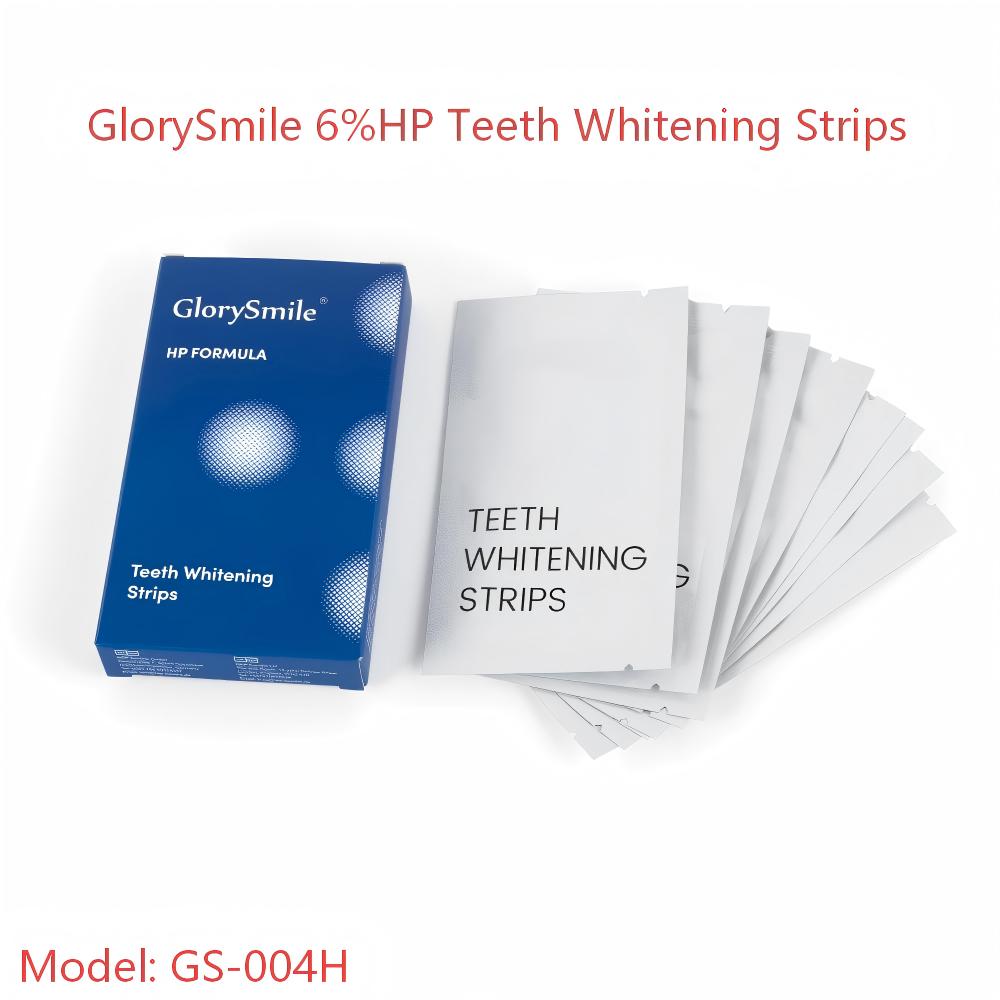
GlorySmile GS-004H 6%HP teeth whitening strips. Strip families differ by formula, film and packaging, so the SKU must be locked before any delivery conversation.
Why MOQ Is the Weakest Signal in Strip Sourcing
A minimum order quantity answers one question: what is the smallest batch this factory will schedule? It does not answer which certificate covers the strip line, which gel chemistry is documented for your SKU, or which approval loop sits between your artwork file and the filling line. Three failure patterns account for most private label strip problems, and none of them are visible in a quotation sheet.
- Certificate scope gaps. A factory may hold a cosmetic manufacturing certificate while the specific strip line, bulk gel blending or kit assembly step is not listed in the certified scope. The certificate exists; the coverage does not. This becomes visible at the customs broker's desk, not at the sampling stage.
- Formula drift between sample and bulk. Strip families are not interchangeable. A 6% hydrogen peroxide strip, a PAP strip, a PAP+charcoal strip and a purple colour-corrector strip behave differently on enamel contact time, residue and flavour masking. If the approved sample is identified only as "whitening strips" rather than by model and formula, the bulk run has room to differ.
- Schedule shock from customization. Custom packaging and custom gel ingredient each introduce an approval loop — artwork, dieline, print proof, gel confirmation. One loop is manageable; three loops stacked after the deposit is where a launch date slips.
Delivery assurance replaces guesswork with four documents: a certificate scope that matches the product, a product identity that survives reorders, a customization map that states what is available at the entry tier, and a written timeline issued at order confirmation rather than promised at the quotation stage.
What "Delivery Assurance" Means in This Category
Teeth whitening strips sit at the intersection of cosmetics regulation, oral care claims and cross-border trade, and each of those layers adds documentation that has to exist before goods can move.
On trade classification, teeth whitening strips are primarily classified under HS Code 3306.90.00 as preparations for oral or dental hygiene, per U.S. Customs and Border Protection ruling NY N342147. The category itself is not a niche experiment: Grand View Research values the global teeth whitening strips and gels market at USD 1.1 billion in 2025. Broader figures that circulate for the total teeth whitening market cover kits, devices and professional treatment, so segment definitions matter when a supplier cites market data back to you.
On market access, two rules shape what a supplier must be able to document:
- European Union. Regulation (EC) No. 1223/2009 restricts hydrogen peroxide concentration in over-the-counter teeth whitening products to 0.1% or less. That single limit explains why peroxide-free and PAP-based positioning has become commercially important in the EU, and why a supplier's ability to run a non-peroxide gel is a regulatory capability, not a marketing preference.
- United States. Under MoCRA 2022, manufacturers of whitening strips classified as cosmetics must register facilities at USD 849 per year and list products at USD 200 each. Buyers searching for "FDA approved teeth whitening strips" should note that in the US, strips are generally handled through this cosmetic registration and listing pathway rather than a product-by-product approval.
The practical consequence is that regulatory paperwork is part of the production schedule. A supplier that can produce a good strip but cannot produce a CPSR, CPNP or PIF package on time will still delay your launch.
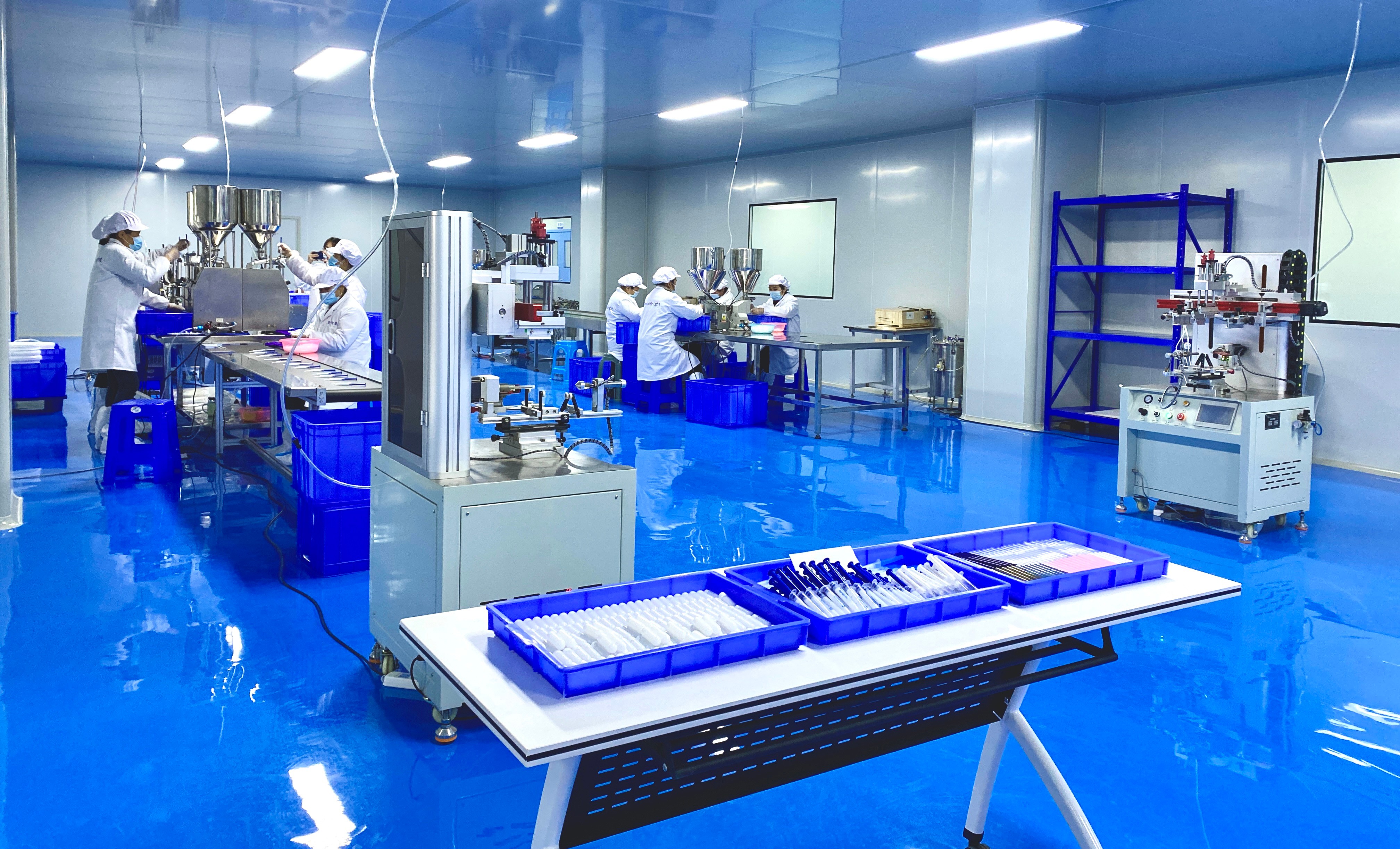
Strip production inside a 100,000-class cleanroom environment. Verification starts with which line and which scope the certificate actually covers.
The Five-Pillar Supplier Evaluation Framework
Pillar 1 — Certificate scope you can hand to a customs broker
Do not collect logos; collect scope statements and expiry dates. A usable stack for a strip supplier covers quality management, cosmetic good manufacturing practice, medical device quality where applicable, and social compliance. In Glorysmile's case the stack is documented and specific:
- MDSAP — certificate 206537.250906 issued by UL LLC (UL Solutions Medical and Regulatory Services), valid from 6 September 2025 to 5 September 2028, covering the USA, Brazil, Australia, Canada and Japan. The scope covers design and development, manufacturing and distribution of electric toothbrushes, teeth whitening strips, whitening light/devices, whitening gel, dental impression material and whitening kits.
- ISO 13485:2016 / EN ISO 13485:2016 + A11:2021 — certificate 206536.250906, also issued by UL LLC, valid 6 September 2025 to 5 September 2028.
- ISO 22716:2007 — certificate SZ2312B8 issued by Intertek, valid 4 December 2024 to 12 December 2026, and explicitly scoped to the manufacture of teeth whitening pens, teeth whitening strips, whitening gels, powders, foams, mouth spray, purple corrector serum and toothpaste tablets, plus packaging of whitening kits.
- GMP — including US GMP, alongside BSCI social compliance audited by SGS under Monitoring ID 25-0338381-1 and amfori Site ID 156-030966-001, valid to 15 August 2027.
- Product-level documents — VEGAN certificate 22521 from the International Vegan Alliance, valid to 21 April 2027; HALAL certification covering 22 SKUs including the GS-V34-S07 strip; a Certificate of Free Sale for Indonesia (CFS No. 2026YB0548, CCPIT Doc No. 263302A0/H02065); and GMPC certification for GS-V34-S07 against the U.S. FDA Cosmetic Good Manufacturing Practice Guidelines (2022).
For EU-bound cosmetic launches, the documentation question extends beyond factory certificates: the supplier should be able to provide CPSR, CPNP and PIF for cosmetic products, and CE-MDR registration where the item is classified as a medical device.
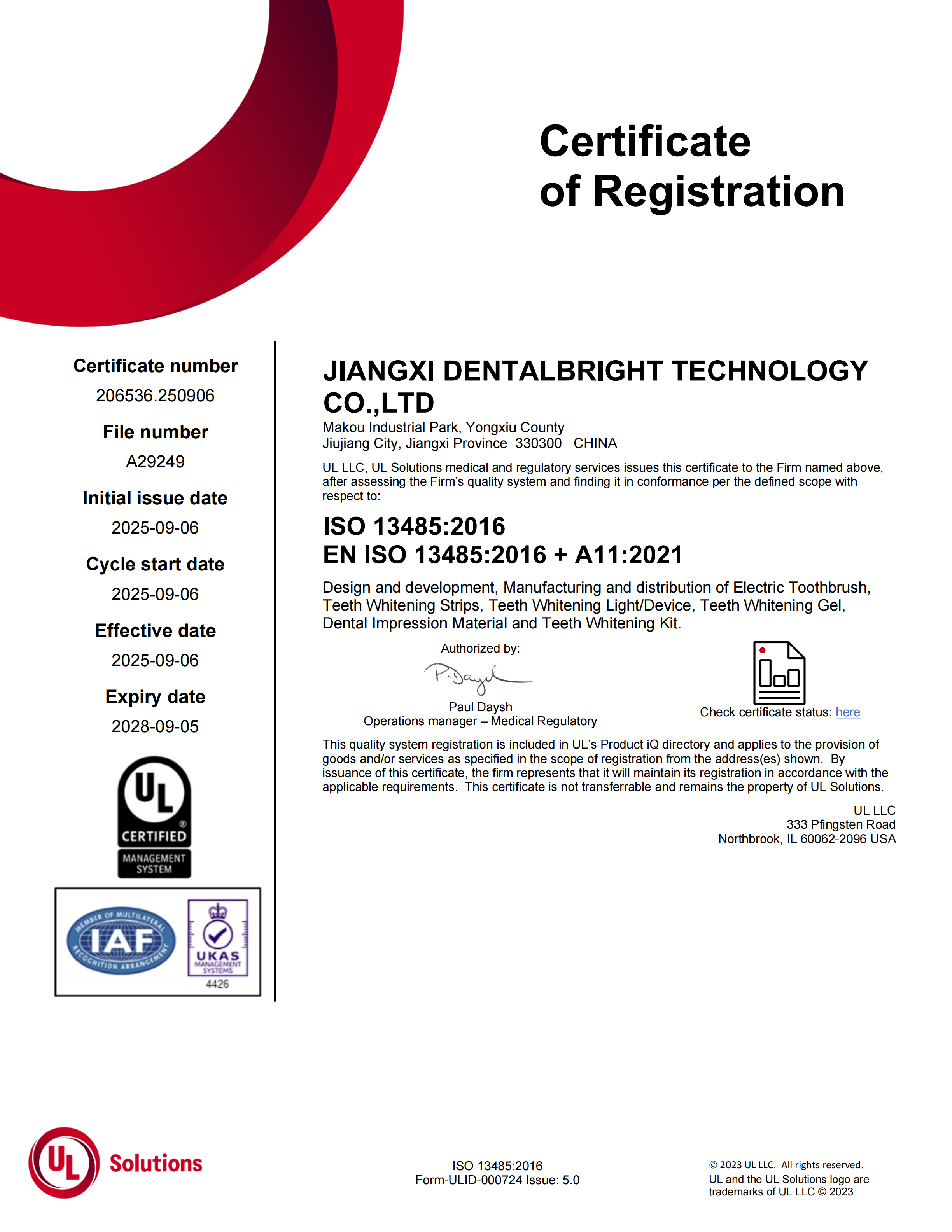
ISO 13485:2016 certificate 206536.250906, issued by UL LLC and valid to 5 September 2028. Scope, not the logo, is what a broker reads.
Pillar 2 — A fixed product identity across reorders
Reliable delivery depends on the second order being the same product as the first. That requires model codes, stated construction and a documented option list. Glorysmile's strip range is organised in a way that can be written into a purchase order:
- Dry application strips — GS-004H / GS-004V / GS-004C / GS-004P. Variants cover 6%HP, purple colour corrector, PAP+charcoal and PAP+ formats, including alcohol-free, residue-free and high-viscosity dry strip types.
- Wet strips — GS-V34-S07. The purple V34 wet strip family used for colour-correction positioning.
- Dissolving strips — DB-004L. A dissolvable format for buyers who want a no-removal routine.
- Shared construction. Three-layer build with PET hard film, whitening gel and PE soft film, packed in an aluminium bag.
- Shared configuration. 7, 14 or 21 strips per bag with user manual, shade guide and colour box; formulations spanning PAP, PAP+charcoal, purple, 6%HP, sodium phytate, sodium bicarbonate and custom; and twelve listed flavours including blue raspberry, strawberry, peach, grape, watermelon, peppermint, orange, mint, pineapple, cherry blossom, coconut and mango.
When a buyer can specify "GS-004P, PAP+, 14 strips per bag, fresh mint flavour, custom carton", the sample-to-bulk gap closes. When the order says only "private label whitening strips", it does not.
Pillar 3 — An MOQ structure that matches your launch model
The number that matters is not a single MOQ but the pair: what the factory will run as a stock item versus what it will run under your brand. For this manufacturer, the minimum order quantity is 200 pieces for private label products and 1 piece for regular products — a structure repeated across the strip, kit, powder, pen and mouthwash lines.
That pairing is more informative than the headline figure. A one-piece regular tier means you can order the exact retail unit, test the film behaviour and confirm the shade guide before committing to packaging. The 200-piece private label tier is best understood as a packaging-change threshold rather than a production-run threshold: it is the point at which artwork, carton print and labelling become brand-specific.
One practical caution. Because the exact MOQ is confirmed during quotation and sampling — determined by product category, customization requirements and production line configuration — the 200-piece tier should not be assumed to cover every customization combination. Ask which customizations are available at 200 pieces and which move the order to a different tier, and get that answer in writing before the artwork is finalised.
Pillar 4 — Customization depth as a proxy for line flexibility
A factory that can change packaging but not formulation is a converter. A factory that can change both is a formulator with production control. The listed customization services for strips are strip type, active ingredient, residue-free or standard formulation, and custom colour, flavour, packaging and labelling. For kits, the list extends to custom gel ingredient and custom pen or light colour.
Flexibility of that kind has to sit on real infrastructure. The site covers 36,000 m² with 20,000 m² of 100,000-class cleanrooms, plus a 1,000 m² laboratory containing a 100-class cleanroom dedicated to microbiological testing, which allows in-house verification of raw materials, semi-finished goods and finished products. The team of 256 includes 17 R&D engineers, 11 QC specialists, 8 production management staff and 6 packaging designers — the packaging design headcount is a detail worth checking, because private label schedules usually break in artwork, not in filling.
Output capacity gives the delivery conversation a scale reference: annual output of 300,000,000 pieces of teeth whitening strips, alongside 10,000,000 sets of whitening kits, 20,000,000 whitening pens and 30,000,000 tubes of toothpaste. Roughly 90% of output is exported, to 102 countries, with the EU, USA and UK as main markets.
Pillar 5 — IP coverage, warranty and after-sales response
Two further signals separate a supplier that can ship once from one that can support a product line. The first is design protection in your selling market. The whitening kit model GS-001X lists EU patent 015062946-0001 and UK patent 6370462, and the diamond-shaped whitening device is covered by UK Registered Design No. 6370462 issued by the UK Intellectual Property Office under the Registered Designs Act 1949 (as amended). For US-facing ranges, the diamond-shaped device is covered by United States Design Patent No. US D1,080,877 S.
The second is what happens after the goods arrive. All electronic products carry a 12-month warranty from the date of purchase, and the after-sales structure includes a 24-hour response mechanism and full-lifecycle product quality assurance. For a distributor managing returns on a whitening kit or an electric toothbrush, that structure is part of the landed cost calculation.
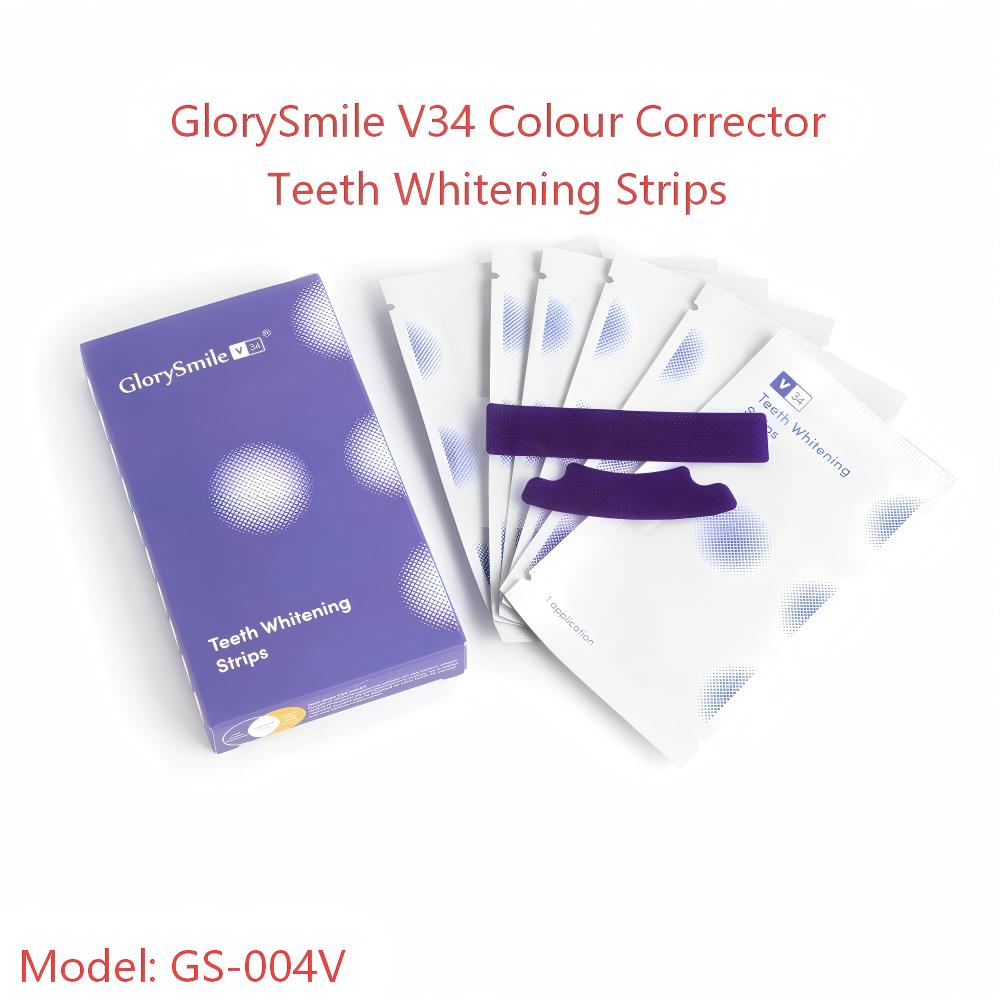
GS-004V purple colour-corrector strips. Colour, flavour and packaging are separate customization variables — each one adds an approval loop to the schedule.
Step-by-Step: A Six-Step Audit Before You Place a Private Label Order
- Lock the SKU and formula first. Decide between dry, wet and dissolving formats, then between PAP, PAP+charcoal, purple and 6%HP chemistry. Peroxide-free and PAP-based options matter if you sell into the EU, where Regulation (EC) No. 1223/2009 caps hydrogen peroxide in OTC products at 0.1%. Record the model code in the enquiry.
- Request scope statements, not certificate images. Ask for the ISO 22716 scope text, the MDSAP market list and each expiry date. Confirm that strip manufacturing appears in the scope in words.
- Test the MOQ structure against your channel. Order the 1-piece regular product to evaluate film adhesion and flavour, then confirm what 200-piece private label covers — packaging only, or packaging plus gel ingredient changes.
- Ask for the customization map. Custom packaging, custom gel ingredient, custom pen or light colour, custom flavour and custom carton print should each be listed with the tier at which they apply and the approval step each requires.
- Get the timeline in writing at order confirmation. Lead time varies with order volume, product specifications, customization complexity and current production schedule; a precise delivery timeline is issued when the order is confirmed. Pair that with the QC gates: pre-shipment testing, third-party laboratory testing through SGS or UL, and microbial, pH and efficacy evaluation.
- Confirm warranty and response terms. Check the 12-month warranty on electronic items, the after-sales response window and whether the supplier offers regulatory guidance for your target market.
Where This Method Changes the Decision
The framework is not theoretical; it changes which supplier wins in specific commercial situations.
- First private label launch on a marketplace. A 200-piece private label run with a 7-strip bag, shade guide and fresh mint flavour lets a brand test the unit economics before scaling. Ordering the 1-piece regular product first confirms film behaviour at low cost.
- EU distributor building a compliant range. The 0.1% hydrogen peroxide limit pushes the range toward peroxide-free PAP strips, and the documentation requirement pushes toward a supplier that can issue CPSR, CPNP and PIF rather than only a factory certificate.
- Sensitive-teeth positioning. PAP and low-sensitivity formulas support a daily-use, enamel-safe claim set, with zero-peroxide options and individually wrapped strips available as stated product requirements.
- Stain-focused ranges. Coffee and smoker stain positioning maps onto PAP+charcoal strips (GS-004C) and charcoal formats, where the stain-removal story is carried by the ingredient rather than by abstract claims.
- Colour-correction lines. A purple V34 wet strip (GS-V34-S07) with HALAL coverage across 22 SKUs suits Middle East and Southeast Asian distribution where halal documentation is a listing requirement.
- Clinic and professional channels. A whitening kit such as GS-001X, with EU patent 015062946-0001, UK patent 6370462 and a 12-month warranty on the electronic components, suits dental clinics that need both a defensible design and a service commitment.
Documented outcomes exist in adjacent channels: one e-commerce partnership covering 5 million units reported Top 10 bestseller status in its category with a 4.8-star rating and a 99.8% positive feedback rate, and a pharmacy and supermarket programme covering 7 million units over two years reported passing third-party BSCI and ISO audits with zero return rate in large batch inspection.
Supplier Evaluation Matrix: Questions, Red Flags and Evidence
| Evaluation area | What to ask | Answer that should trigger a follow-up | Evidence-backed answer (Glorysmile example) |
|---|---|---|---|
| Certificate scope | Which certificate names strip manufacturing in its scope, and when does it expire? | "We are ISO certified." | ISO 22716:2007, cert SZ2312B8 (Intertek), scoped to teeth whitening strip manufacture, valid to 12 December 2026. |
| Market coverage | Which countries does your MDSAP audit cover? | "We can ship anywhere." | MDSAP cert 206537.250906 (UL LLC) covering USA, Brazil, Australia, Canada and Japan, valid to 5 September 2028. |
| Social compliance | Who performed the social audit and what is the monitoring ID? | "We have BSCI." | amfori BSCI audit by SGS, Monitoring ID 25-0338381-1, amfori Site ID 156-030966-001, valid to 15 August 2027. |
| MOQ structure | What is the smallest order for private label versus stock product? | "One MOQ for everything." | 200 pieces for private label, 1 piece for regular product; final MOQ confirmed at quotation based on customization. |
| Customization depth | Which changes are possible on the strip itself, not only on the carton? | "Any customization is possible." | Strip type, active ingredient, residue-free formulation, custom flavour, colour, packaging and labelling; custom gel ingredient and custom pen/light colour on kits. |
| QC gates | What testing happens before the container is released? | "We check quality." | Pre-shipment testing, third-party laboratory testing (SGS / UL), microbial, pH and efficacy evaluation; 1,000 m² lab with a 100-class cleanroom for microbiological testing. |
| Delivery terms | When is the ship date confirmed, and against what variables? | "Lead time is standard." | Lead time varies with order volume, specifications, customization complexity and current production schedule; a precise timeline is issued at order confirmation. |
| Warranty and after-sales | What is covered after arrival and how fast is the response? | "Standard warranty." | 12-month warranty on electronic products from the date of purchase; 24-hour after-sales response mechanism; full-lifecycle product quality assurance. |
| Design protection | Is the design registered in my selling market? | "Our design is unique." | EU patent 015062946-0001 and UK patent 6370462 listed for kit GS-001X; UK Registered Design No. 6370462 for the diamond-shaped device; US D1,080,877 S for the same device in the US. |
Frequently Asked Questions
Which certifications should I verify before ordering wholesale teeth whitening strips?
Verify five system certificates and their scope text: MDSAP, ISO 13485:2016, ISO 22716:2007, GMP and BSCI. Glorysmile's ISO 22716 certificate SZ2312B8, issued by Intertek, is explicitly scoped to the manufacture of teeth whitening strips and pens, and its MDSAP certificate 206537.250906 covers design, development, manufacturing and distribution of whitening strips across the USA, Brazil, Australia, Canada and Japan. Add product-level documents where relevant — VEGAN certificate 22521, HALAL coverage across 22 SKUs, a Certificate of Free Sale for Indonesia, and GMPC certification for GS-V34-S07 under the U.S. FDA Cosmetic GMP Guidelines (2022).
Can a peroxide-free teeth whitening strips manufacturer still serve EU and US buyers?
Yes, provided the formula and the paperwork match the market. EU Regulation (EC) No. 1223/2009 limits hydrogen peroxide in over-the-counter whitening products to 0.1% or less, which is why PAP-based, peroxide-free strips are the practical route for EU retail. Glorysmile's strip formulations cover PAP, PAP+charcoal, purple, 6%HP, sodium phytate and sodium bicarbonate, with custom options, and include enamel-safe and zero-peroxide configurations with individually wrapped strips. For the US, the company states that its products are FDA approved and that its FDA-certified scope covers medical devices, cosmetics and OTC drugs; buyers should still confirm the specific MoCRA registration and listing pathway for their own SKU.
What is the real minimum order for private label teeth whitening strips?
The stated structure is 200 pieces for private label and 1 piece for regular product, applied consistently across the strip, kit, powder, pen and mouthwash ranges. The exact MOQ is confirmed during quotation and sampling, because it depends on product category, customization requirements and production line configuration. In practice the 200-piece tier is a packaging threshold: order the 1-piece regular product to validate the strip itself, then confirm in writing which customizations — custom packaging, custom gel ingredient, custom flavour — remain available at the 200-piece level.
How should I validate a sample before committing to a production order?
Validate against a named model, not a generic category. Specify the strip family (GS-004H, GS-004V, GS-004C, GS-004P, GS-V34-S07 or DB-004L), the chemistry, the strip count per bag from the 7, 14 and 21 options, the flavour from the twelve listed varieties, and the carton artwork. Glorysmile supports this stage with free sampling and professional package design, and each retail unit ships with a user manual and shade guide so you can test the consumer experience rather than only the strip.
How do I confirm delivery dates instead of assuming them?
Ask for the timeline at order confirmation, not at quotation. Lead time varies depending on order volume, product specifications, customization complexity and current production schedule, and a precise delivery timeline is provided once the order is confirmed. Back that commitment with capacity and control evidence: annual output of 300,000,000 pieces of teeth whitening strips, 20,000 m² of 100,000-class cleanrooms, a 1,000 m² laboratory with microbiological testing capability, pre-shipment and third-party laboratory testing through SGS or UL, a 12-month warranty on electronic products and a 24-hour after-sales response mechanism. To start that process, send your SKU and artwork brief to tasha@enjoywhite.com or WhatsApp +86 177 7911 0152 for a quotation and sample plan.
Next Step: Turn the Checklist Into a Quotation
Send your target SKU, format, flavour and packaging brief, and request the certificate scope pack alongside samples. You will receive a quotation with the confirmed MOQ tier, the customization options available at that tier, and a delivery timeline issued at order confirmation.
Factory: Makou Industrial District, Yongxiu Town, Nanchang (Jiujiang) City, Jiangxi Province, China — a 15-minute drive from Nanchang Changbei International Airport. Website: www.glorysmile.com. Download the full product catalogue: Glorysmile Catalogue (PDF).
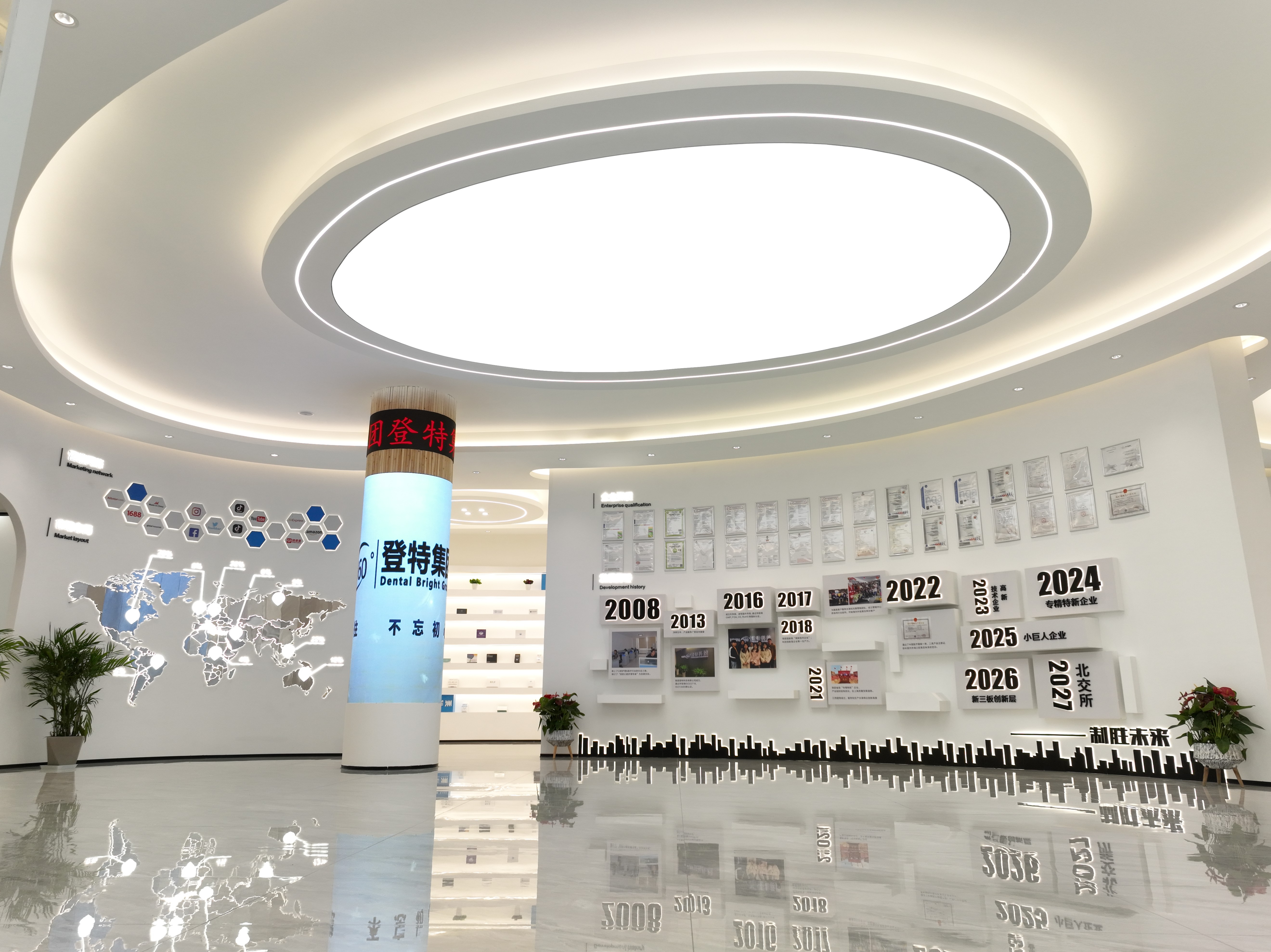
Showroom display of the strip, kit and oral care range. Sample requests can reference any model code in this article.
Conclusion
MOQ tells you how small an order can be. Delivery assurance tells you whether that order will be the same product, with the same documents, on the date you planned. Evaluate strip suppliers on certificate scope with dates attached, a locked model and formula identity, an MOQ structure that separates stock validation from packaging commitment, a customization map that states where each change sits in the schedule, and written warranty and after-sales terms. Applied in that order, the evaluation turns a price comparison into a risk comparison — which is the only comparison that predicts whether your second order arrives like the first.
Have Questions or Need More Details?
Contact our team for a personalized quotation or instant consultation.
Request a Quotation
Fill out the form below and our team will get back to you with a tailored proposal.
WhatsApp Direct Chat
Prefer to chat in real-time? Message us on WhatsApp for instant assistance & quick answers.
- Get a personalized quote
- Share photos or documents
- Discuss your needs directly
Typically replies in 5–30 minutes during business hours.