Teeth Whitening Kit Compliance Documents: MSDS, Certifications, and Regional Approvals
Buyer Guide · Compliance Documents · Teeth Whitening Kits
Short answer: A teeth whitening kit compliance pack is not one certificate. It is a set of documents that answer different questions: what is in the product and how it must be handled (MSDS/SDS), whether a specific batch matches the specification (COA), whether the factory system is audited (ISO 13485, ISO 22716, GMP, MDSAP, BSCI), whether the product can be placed in a market (CPSR, PIF, CPNP, CE-MDR, FDA status), and whether electrical or claim-related requirements are covered (RoHS, HALAL, Vegan). Buyers should request a document matrix by SKU and market, not a folder of logos.
Problem Definition: Why Compliance Documents Are Hard to Compare
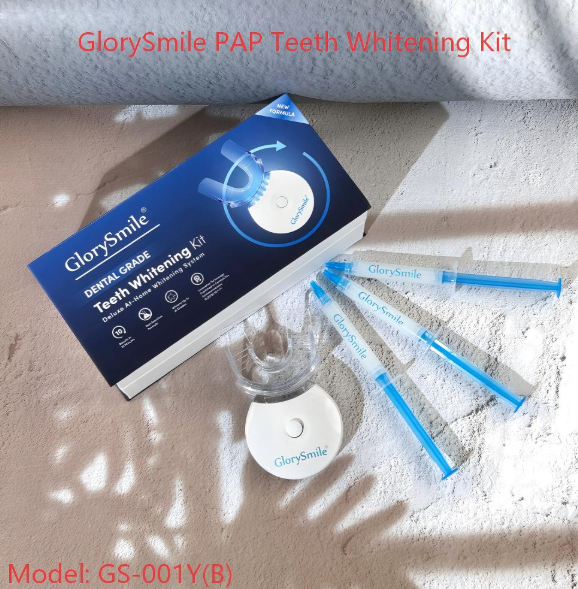
A teeth whitening kit can contain a gel, a tray, an LED light, a pen or syringe, a shade guide, a gift box, and sometimes a battery. Each element can trigger a different document. A supplier may send a CE certificate, an ISO 13485 certificate, an MSDS, and a CPSR in one email, but the buyer still cannot tell which document covers which model, which market, and which legal manufacturer.
The result is a common sourcing problem: the buyer asks, “Is the product FDA approved?”, “Can you provide MSDS?”, “What certifications do your products have?”, or “Is it compliant for the EU market?” — and receives a reassuring answer without a traceable document. For a private label brand, that gap becomes a launch risk. For a distributor, it becomes a due-diligence risk. For an e-commerce seller, it becomes a listing-risk and customs-risk issue.
Industry Background: Why This Question Is Growing
At-home whitening is a large and expanding category. The global teeth whitening market was valued at USD 8.93 billion in 2025 and is projected to reach USD 14.31 billion by 2034, according to Fortune Business Insights. The individual/at-home segment accounted for 68.67% of the teeth whitening market in 2024, based on Straits Research data. More at-home kits mean more private-label buyers, more cross-border shipments, and more requests for documents that sit between a factory and a retailer.
Regulatory expectations are also more visible. In the EU, teeth whitening products containing between 0.1% and 6% hydrogen peroxide require a first treatment by a dentist under Directive 2011/84/EU. In the US, the FDA recognizes ISO 28399:2021 as a consensus standard for external tooth bleaching products. Customs classification also matters: a US Customs ruling applied GRI 3(b) to teeth whitening strips from China and identified the whitening strips as the essential character for subheading 3306.90.0000. These are different layers of compliance — product safety, market access, and trade — and they do not collapse into a single certificate.
Detailed Solution: The Document Stack for a Teeth Whitening Kit
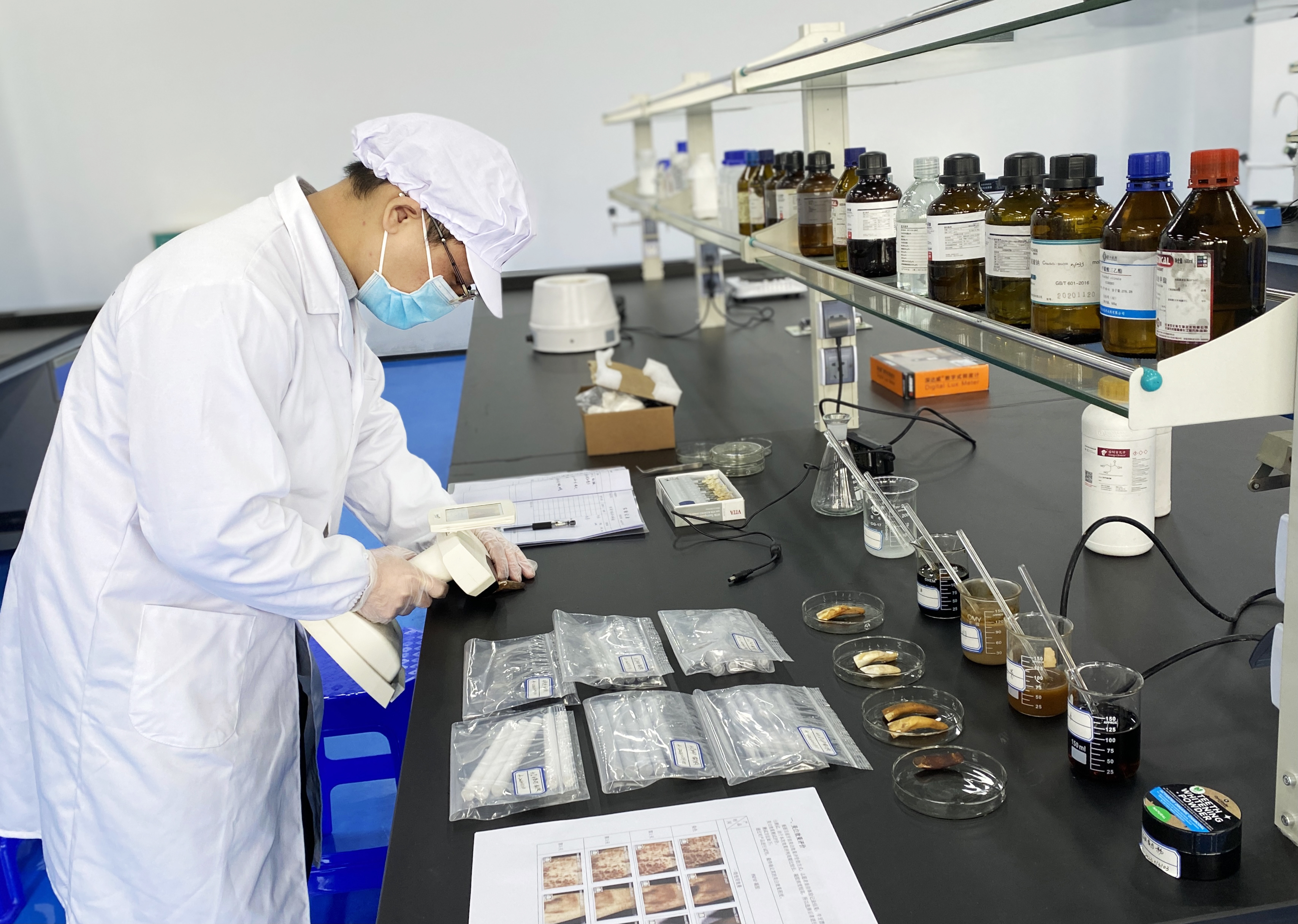
The useful way to evaluate a supplier is to build a document stack. The stack below reflects the document categories that Jiangxi DentalBright Technology Co., Ltd. (GlorySmile Factory) lists in its provided FAQ and company profile. GlorySmile Factory is an oral care manufacturer founded in 2013, operating a 36,000 m² facility with 20,000 m² of 100,000-class cleanrooms, and exporting to 102 countries with major markets in the EU, USA, and UK.
1. MSDS / SDS: The Safety and Handling File
MSDS is the term many buyers still use; SDS is the newer term for the same type of safety data sheet. It explains the product’s hazard information, handling, storage, transport considerations, and emergency measures. For a whitening kit, the MSDS should match the gel formula and the packaging format, not just the brand name. A hydrogen peroxide gel, a carbamide peroxide gel, and a PAP-based peroxide-free gel are different formulations, so a generic MSDS for “whitening gel” is weaker than a formula-specific document.
GlorySmile’s provided FAQ states that MSDS is available. That is a starting point, not the end of the check. Ask for the MSDS revision date, the product name and model it covers, the legal manufacturer, and whether it covers the exact gel concentration and pen/syringe format you are buying.
2. COA: The Batch-Level Certificate of Analysis
A COA is a batch-specific record. It tells the buyer what was tested or confirmed for a production lot. A COA is different from a factory certificate because it follows the shipment. When a buyer receives a COA, the useful questions are: which batch number does it reference, which specification does it test against, and does the batch number match the cartons and the packing list? A COA without a batch link is just a template.
3. CPSR, PIF, and CPNP: The EU Cosmetic Route
For cosmetic products in the EU, the document language changes. CPSR refers to the Cosmetic Product Safety Report; PIF refers to the Product Information File; CPNP refers to the EU cosmetic product notification process. These are not interchangeable. A CPSR supports the safety assessment. A PIF holds the product information. CPNP relates to notification. GlorySmile’s provided FAQ states that it can offer CPSR, CPNP, and PIF for cosmetic products.
For a whitening kit sold as a cosmetic, the buyer should ask which legal entity is the responsible person, which product name and variant are covered, and whether the file matches the label claims. If the product is positioned as a medical device, the route is different.
4. CE-MDR: The EU Medical Device Route
CE-MDR is the EU medical device regulation pathway. It is not a generic “CE certificate” that can be pasted onto any oral care product. GlorySmile’s provided FAQ states that for medical devices, the company has completed CE-MDR registration. A buyer should still request the document that shows the scope: which device, which class, which legal manufacturer, and which certificate or declaration supports the claim. The point is not to doubt the statement; the point is to file the correct evidence with the correct SKU.
5. FDA Status: Ask What the Status Actually Covers
“FDA approved” is one of the most misunderstood phrases in oral care sourcing. In the US, cosmetics, medical devices, and OTC drugs do not follow the same FDA pathway. A cosmetic product is not “approved” in the same way as a medical device or an OTC drug. GlorySmile’s provided FAQ states that its products are FDA approved and that its FDA-certified scope covers medical devices, cosmetics, and OTC drugs. That statement is useful, but the buyer should ask a narrower question: Which FDA record applies to this SKU and this claim?
Depending on the product, the relevant evidence may be a facility registration, a product listing, a device clearance or approval, or an OTC monograph reference. The document name matters less than the link between the document and the product. If a supplier cannot explain the category, the “FDA approved” line is not yet a compliance answer.
6. ISO 13485, ISO 22716, GMP, MDSAP, and BSCI: The System Layer
Factory-system certificates answer a different question: can this manufacturer consistently control quality, hygiene, and social compliance? ISO 13485 is a medical device quality management system standard. ISO 22716 is a cosmetics good manufacturing practice standard. GMP refers to good manufacturing practice. MDSAP is the Medical Device Single Audit Program. BSCI is a social compliance audit framework. GlorySmile’s provided FAQ lists GMP, ISO 22716, ISO 13485, MDSAP, and BSCI as product/factory certificates, and its company profile also lists MDSAP, ISO 13485, ISO 22716, US GMP, BSCI, HALA, and VEGEA.
These documents support supplier qualification. They do not replace a product-specific CPSR, CE-MDR document, or FDA record. A factory can have a strong quality system and still need a separate market-access file for a specific kit.
7. RoHS, HALAL, and Vegan: Claim-Support Documents
Kits with an LED light or a charging case can trigger electrical and substance-related questions. RoHS is listed among GlorySmile’s available factory certificates. HALAL and Vegan are also listed. These are claim-support documents: they help a brand substantiate a marketing or procurement requirement. They should still be checked for scope — which product, which site, which validity period, and which claim is actually covered.
8. Regional Approvals: EU and US Are Not the Same File
The EU and US routes should be separated in the buyer’s file. In the EU, the first question is classification: cosmetic or medical device. For cosmetics, CPSR, PIF, and CPNP are relevant. For medical devices, CE-MDR is relevant. For bleaching concentration, the 0.1%–6% hydrogen peroxide rule under Directive 2011/84/EU affects how the product is positioned and whether a first treatment by a dentist is required. In the US, the FDA status depends on whether the product is a cosmetic, a medical device, or an OTC drug. ISO 28399:2021 is recognized by the FDA as a consensus standard for external tooth bleaching products. MoCRA has also raised expectations around cosmetic facility registration and product listing; MoCRA is a regulatory framework, not a certificate a supplier can simply “have.”
| Region / route | What to request | Why it matters | Source basis |
|---|---|---|---|
| EU cosmetic | CPSR, PIF, CPNP support; label and responsible-person details | Supports cosmetic market access and safety documentation | GlorySmile FAQ; EU cosmetic framework |
| EU medical device | CE-MDR registration evidence and scope | Separates device claims from cosmetic claims | GlorySmile FAQ |
| EU bleaching concentration | Formula concentration and first-treatment-by-dentist rule check | 0.1%–6% hydrogen peroxide triggers the dentist-first rule | Directive 2011/84/EU (VD-TWK-004) |
| US FDA | Category-specific FDA record; facility registration or product listing where applicable | “FDA approved” must be tied to the right category and SKU | GlorySmile FAQ; US FDA framework |
| US standard | ISO 28399:2021 reference for external tooth bleaching products | Recognized consensus standard for the product category | US FDA (VD-TWK-005) |
| US import | HS classification review; ruling example for whitening strips | Trade classification can affect entry and documentation | US CBP ruling NY N342147 (VD-TWK-006) |
Step-by-Step Breakdown: How to Request and Evaluate the Pack
- Classify the SKU before you ask for documents. Write down the product format: gel kit, strip kit, pen kit, LED kit, clinic kit, or bundle. Note the formula family: hydrogen peroxide, carbamide peroxide, PAP, or peroxide-free. Note the market: EU, US, UK, or another destination. Note the claim: cosmetic whitening, medical device, professional use, or sensitivity-focused. The classification determines which documents are relevant.
- Ask for a document matrix, not a ZIP file. A simple matrix with columns for document name, document number, issuer, product/model, market, issue date, expiry date, and scope is more useful than a folder of unnamed PDFs. Ask the supplier to mark each row as “available,” “not applicable,” or “available on request.”
- Match the product identity. Check the model name, gel concentration, packaging format, legal manufacturer, brand owner, and label version. A GS-001J plug-and-play kit is not the same as a DB-001M battery-powered kit; the electrical and transport documentation may differ. The document should name the exact model or a clearly defined product family.
- Verify the issuer and scope. For system certificates, check the certification body, certificate number, scope, and site address. For product files, check the legal manufacturer and the responsible person. For market-access documents, check the product name and the market. Do not accept a certificate for a different factory site without an explanation.
- Check dates and batch linkage. Confirm the issue date, expiry date, and revision number. For the COA, match the batch number to the packing list. For the MSDS, confirm the revision matches the current formula. For the label, confirm the warning language matches the intended age group. GlorySmile’s application data specifies labeling for adults and children 16+ and a BPA-free tray requirement for kits.
- Cross-check the label and the claims. If the label says “enamel safe,” “peroxide free,” “sensitive teeth,” or “professional use,” the document pack should support that claim. A PAP-based peroxide-free formula and a hydrogen peroxide formula need different claim discipline. The same logic applies to Vegan, HALAL, RoHS, and “FDA approved” language.
- File a market-access pack and set a review date. Keep one folder per SKU and market. Record the document version, the date received, and the next review date. Compliance documents are not a one-time purchase; they are a maintained file.
Use Cases: How Different Buyers Use the Same Document Stack
Use Case 1: EU Private-Label Cosmetic Launch
A brand owner plans a private-label whitening kit for the EU cosmetic market. The buyer should request CPSR, PIF, and CPNP support, plus MSDS and COA. If the gel contains 0.1%–6% hydrogen peroxide, the buyer must also check the Directive 2011/84/EU first-treatment-by-dentist rule and reflect it in the label and claims. The supplier’s cosmetic route and the product’s actual concentration must agree. GlorySmile’s FAQ states that CPSR, CPNP, and PIF can be offered for cosmetic products, which gives the buyer a starting document list, but the SKU-level match still has to be confirmed.
Use Case 2: US E-Commerce or Retail Listing
An e-commerce seller needs a kit that can pass retailer onboarding and customs review. The buyer should clarify whether the product is being sold as a cosmetic, a medical device, or an OTC drug, then request the FDA record that matches that category. The pack should also include MSDS, COA, and RoHS for the electrical parts. If the product is a battery-powered kit such as DB-001M with a 450mAh lithium ion battery, the transport and electrical documentation should match that model. If it is a plug-and-play USB kit such as GS-001J with no built-in battery, the file should reflect that design.
Use Case 3: Distributor or Clinic Due Diligence
A distributor or dental clinic buyer is often asked by its own customers for proof. In that case, the factory-system layer matters: ISO 13485, ISO 22716, GMP, MDSAP, and BSCI. A clinic buyer may also need CE-MDR evidence if the product is positioned as a medical device. The distributor should build a one-page supplier summary that lists the document, the scope, and the market it supports. That summary is more useful than forwarding a 30-page PDF without explanation.

Comparison Table: What Each Document Proves — and What It Does Not
| Document | Primary question answered | What to verify | What it does not replace |
|---|---|---|---|
| MSDS / SDS | How should this formula be handled, stored, and transported? | Formula match, revision date, model, manufacturer | CPSR, CE-MDR, FDA status, or COA |
| COA | Does this batch meet the specification? | Batch number, test items, specification, release date | Factory system certificate or market authorization |
| CPSR | Is the cosmetic product safety-assessed? | Product name, responsible person, formula, label | CE-MDR or FDA device status |
| PIF | Is the product information file complete? | Product identity, safety report, label, manufacturing details | Batch COA or MSDS |
| CPNP | Has the EU cosmetic notification been handled? | Product name, responsible person, market | Medical device registration |
| CE-MDR | Is the medical device CE-marked under MDR? | Device scope, class, legal manufacturer, certificate | Cosmetic CPSR or FDA cosmetic listing |
| FDA status | What US FDA record applies to this product category? | Category, facility registration, product listing, clearance/approval if applicable | EU CPSR or CE-MDR |
| ISO 13485 | Is there a medical device quality system? | Certification body, site, scope, expiry | Product-specific safety or market file |
| ISO 22716 / GMP | Is the cosmetics manufacturing practice controlled? | Site, scope, audit date, certificate status | Product notification or batch release |
| MDSAP | Has the medical device QMS been audited under MDSAP? | Site, scope, audit report, validity | CE-MDR certificate or FDA clearance |
| BSCI | Is the site socially compliant? | Audit date, grade, site, scope | Product safety or market access |
| RoHS / HALAL / Vegan | Are specific substance, religious, or claim requirements supported? | Product scope, certificate body, validity, claim wording | General product safety or FDA status |
Practical Checklist for Buyers
- Create a SKU-level document matrix before the first sample order.
- Ask for the legal manufacturer name, factory address, and certificate scope — not just the brand name.
- Request MSDS, COA, and label artwork for the exact formula and pack.
- For the EU, separate cosmetic documents (CPSR, PIF, CPNP) from medical device documents (CE-MDR).
- For the US, separate cosmetic, medical device, and OTC drug pathways before accepting “FDA approved” language.
- Check the hydrogen peroxide concentration against the 0.1%–6% EU rule when relevant.
- Keep a revision log and re-check documents before each renewal or packaging change.
- Use the supplier’s catalog and sample process to confirm that the document pack matches the commercial SKU.
FAQ
Can you provide MSDS for a teeth whitening kit?
Yes. GlorySmile’s provided FAQ states that MSDS is available. The buyer should request the MSDS version that matches the exact gel formula, concentration, and packaging format, and should check the revision date and legal manufacturer. An MSDS supports safe handling and transport; it is not a market authorization or a substitute for CPSR, CE-MDR, or an FDA record.
What certifications do your products have?
GlorySmile’s provided FAQ lists factory certificates including CE, FDA, CPSR, CPNP, PIF, SCPN, MSDS, COA, RoHS, HALAL, and Vegan, and product certificates including GMP, ISO 22716, ISO 13485, MDSAP, and BSCI. Buyers should ask for the certificate scope, site, product link, and validity date, because a certificate name alone does not prove that a specific SKU is covered.
Is the product FDA approved?
GlorySmile’s provided FAQ states that its products are FDA approved and that its FDA-certified scope covers medical devices, cosmetics, and OTC drugs. Because those US categories follow different FDA pathways, the buyer should ask which record applies to the specific SKU: facility registration, product listing, device clearance or approval, or an OTC monograph reference. The answer should identify the product and the category, not only the phrase “FDA approved.”
Is it compliant for the EU market?
GlorySmile’s provided FAQ states that it can offer CPSR, CPNP, and PIF for cosmetic products, and that for medical devices it has completed CE-MDR registration. The buyer should also check the formula: under Directive 2011/84/EU, teeth whitening products containing between 0.1% and 6% hydrogen peroxide require a first treatment by a dentist. The correct EU file therefore depends on both the product classification and the gel concentration.
Can you support private-label documentation and samples?
GlorySmile’s provided information states that OEM/ODM services include product formulation, customization, free sampling, and package design. For many kit models, the product specification lists private-label MOQ at 200 pcs and regular product MOQ at 1 pc; confirm the exact model and packaging. A practical next step is to request a sample and a SKU-level document matrix together, so the sample, the formula, the packaging, and the compliance file are reviewed as one package. You can contact Tasha at tasha@enjoywhite.com or +86 177 7911 0152, and download the catalog at GlorySmile Catalog.pdf.

Conclusion
Compliance documents for a teeth whitening kit should be treated as a stack, not a trophy. MSDS explains handling. COA follows the batch. CPSR, PIF, and CPNP support the EU cosmetic route. CE-MDR supports the EU medical device route. FDA status depends on the US category. ISO 13485, ISO 22716, GMP, MDSAP, and BSCI support the factory-system layer. RoHS, HALAL, and Vegan support specific claims. The buyer’s job is to match each document to the product, the market, and the claim — and to keep the file current.
Jiangxi DentalBright Technology Co., Ltd. (GlorySmile Factory) provides a starting point: a manufacturer founded in 2013, with a 36,000 m² facility, 256 staff, 17 R&D engineers, 11 QC specialists, and a stated document list that includes MSDS, COA, CPSR, CPNP, PIF, CE-MDR, FDA status, ISO 13485, ISO 22716, GMP, MDSAP, BSCI, RoHS, HALAL, and Vegan. The next step is not to ask for “all certificates.” It is to ask for the right document matrix for your SKU and market.
Request a Sample + Document Matrix
If you are evaluating a private-label or wholesale teeth whitening kit, request a sample together with the SKU-level compliance document list. Include your target market, formula preference (hydrogen peroxide, carbamide peroxide, or PAP), packaging format, and whether you need cosmetic or medical-device positioning.
Contact: Tasha · tasha@enjoywhite.com · WhatsApp +86 177 7911 0152 · Download Catalog

Have Questions or Need More Details?
Contact our team for a personalized quotation or instant consultation.
Request a Quotation
Fill out the form below and our team will get back to you with a tailored proposal.
WhatsApp Direct Chat
Prefer to chat in real-time? Message us on WhatsApp for instant assistance & quick answers.
- Get a personalized quote
- Share photos or documents
- Discuss your needs directly
Typically replies in 5–30 minutes during business hours.