Dental Clinic Take-Home Whitening Kit Application Guide: Impression Workflows and OEM/ODM
Clinics that sell take-home whitening are not simply reselling a box. They are delivering a clinical outcome that starts with an impression, continues through a patient kit, and is protected by a maintenance routine. When those three parts are specified separately, the program usually develops gaps: a tray that does not seat well, a gel that is too strong for a sensitive patient, or a kit whose instructions and labeling do not match the clinic's brand.
Jiangxi Dentalbright Technology Co., Ltd., which operates as Glorysmile Factory, is an oral care manufacturer based in Jiangxi, China. Its portfolio covers teeth whitening kits, whitening strips, whitening pens, toothpaste, mouthwash, electric toothbrushes, oral irrigators and silicone dental impression material. That combination matters to clinic programs because the impression record, the whitening kit and the maintenance items can be specified as one system rather than assembled from unrelated suppliers.
Problem Definition: Why Clinic Take-Home Programs Stall
Most clinic whitening programs do not fail because the gel is weak. They fail because the workflow is incomplete. Five gaps appear repeatedly when clinics and private-label brands plan a take-home offer.
- Tray fit is treated as a purchasing detail. The impression is the clinical record that determines whether a tray seats predictably. If the impression material is chosen only on price, the clinic loses control over fit, border detail and patient comfort.
- Formula and sensitivity are decided after the kit is chosen. A patient with a history of sensitivity may need a PAP or low-sensitivity option rather than a peroxide formula. If the formula decision comes after packaging is printed, the clinic is forced into a compromise.
- The maintenance bundle is assembled from unrelated suppliers. An electric toothbrush from one vendor, toothpaste from another and mouthwash from a third create inconsistent quality documents, manuals and brand presentation.
- MOQ and lead time are assumed rather than confirmed. Minimum order quantity is determined by product category, customization requirements and production line configuration. Lead time depends on order volume, specifications, customization complexity and the current production schedule.
- Compliance documents are requested at the end. CPSR, CPNP, PIF, CE-MDR, FDA documentation and labeling reviews take time. When they are treated as an afterthought, the launch date moves.
The practical fix is to plan the impression, the kit and the maintenance items as one program, with a single technical contact and a documented specification for each layer.
Industry Background: Why Clinic-Guided Take-Home Models Fit the Market
Fortune Business Insights values the global teeth whitening market at USD 8.93 billion in 2025 and projects USD 14.31 billion by 2034. Different research houses define the category differently, and some include professional in-office services, so the figure should be read as directional rather than as a clinic-level forecast.
The at-home format is a large part of that market. Straits Research places the individual and at-home segment at 68.67% of the teeth whitening market in 2024. Facts & Stats reports that Asia Pacific held a 33.80% share in 2025. For clinics, the implication is straightforward: patients already accept at-home treatment, but they still want clinical guidance on fit, formula and duration.
Formula preference is also shifting. Commercial research from The Insight Partners describes rising demand for PAP+ peroxide-free whitening kits as an alternative to traditional peroxide because of sensitivity concerns. A clinic program that offers both peroxide and PAP options can serve a wider patient base without changing the entire kit platform.
Regulation shapes the delivery model. In the European Union, teeth whitening products containing between 0.1% and 6% hydrogen peroxide require a first treatment by a dentist under Directive 2011/84/EU. A clinic-led take-home model is structurally aligned with that requirement when the formula falls inside that band. In the United States, the FDA recognizes ISO 28399:2021 as a consensus standard for external tooth bleaching products.
The market context supports a clinic-guided model, but it does not remove the need for product discipline. The clinic still has to choose an impression material, a kit platform, a formula and a maintenance bundle that can be documented and repeated.
Detailed Solution: A Three-Layer Clinic Take-Home Model
The model below separates clinical control from patient use. The clinic controls the impression, tray fit, formula selection and patient instruction. The patient controls daily application at home and uses the maintenance items between treatments.
Layer 1: Impression and Tray Record
The impression record is the clinical anchor of the program. It can be used to fabricate or verify a custom tray, or to confirm that a supplied tray seats correctly. A precise record also gives the clinic a baseline for discussing fit, comfort and compliance with the patient.
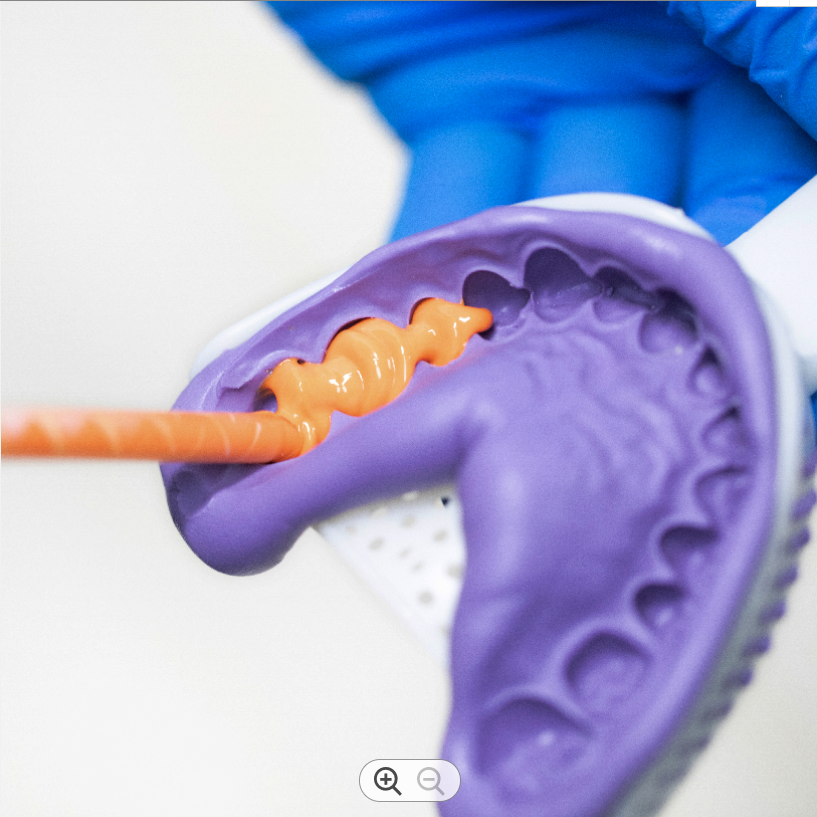
The GS-009 silicone dental impression material is specified with hardness 60, a working time of 1 minute and an intraoral cure time of 2.5 minutes. It uses a fine, high-precision formulation with no oil seepage. Putty weights include 25g, 28g, 30g and 500g, with custom weights available. Putty colors include blue, white, orange and purple, with custom colors available. The material is food-grade silicone with high dimensional stability and a fast setting profile. It is mixed manually as Putty A+B and self-cures at room temperature. Upper and lower impression trays and instructions are required supporting equipment.
The same material is used in professional whitening labs and dental clinic OEM service projects, and it is designed for high-precision impressions for accurately fitted crowns, bridges and restorations. For a whitening program, that precision is the point: the tray should follow the gingival margin and the vestibular border without excessive bulk. Private-label MOQ is listed at 200 pcs, with 1 pc for regular product. Custom formula, custom packaging, custom printing and custom putty color are available.
Layer 2: Take-Home Whitening Kit
The kit is the part the patient sees every day, so the platform should match the clinic's patient profile. A 10-minute, 5-LED kit suits a straightforward maintenance program. A 16-minute, 32-LED kit with a charging and sterilization case suits a clinic that wants a more controlled hygiene story. A plug-and-play USB kit suits travel and telehealth follow-up because it has no built-in battery.
The GS-001B and GS-001Y kits use a 5-LED light, one mouth tray, three 3ml whitening syringes, a shade guide, a user manual and a gift box. The GS-001B is specified for 40 treatments at 10 minutes each and uses two CR2032 batteries. The GS-001Y is specified for 30 treatments at 10 minutes each and uses two CR2450 batteries. Both support custom packaging, custom gel ingredient and custom syringe color.
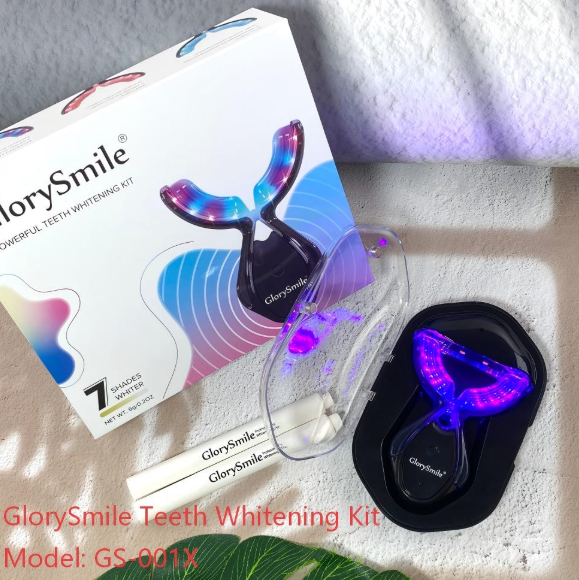
The GS-001X uses a 32-LED light, two 3ml whitening pens, a charging and sterilization case with cable, a shade guide, a user manual and a gift box. The timer is 16 minutes, the battery is 150mAh, charging takes 4 hours, battery life is up to 5 uses on a full charge, and the disinfection cycle is 3 minutes. It carries EU patent 015062946-0001 and UK patent 6370462. The DB-001M also uses a 32-LED light but includes four 2ml whitening pens, a storage case with charging cable, a shade guide, a user manual and a gift box. Its timer is 16 minutes, the battery is 450mAh, charging takes 2–3 hours, and battery life is up to 8 uses on a full charge. It carries US Patent No. US D1,128,065 S, EU Patent No. 015065790-0001 and UK Patent No. 6377277.
The GS-001J uses a 16-LED light, with 24 and 32 LEDs optional, four 2ml whitening pens, a dust-free cover, four adapters for iPhone, Android, Type-C and USB, a shade guide, a user manual and a gift box. The recommended treatment time is 16 minutes per day. It is plug-and-play and is powered through USB from a phone, laptop or power bank, with no built-in battery.
Formula options across the kit range include Hydrogen Peroxide, Carbamide Peroxide, PAP, Sodium Phytate, Sodium Bicarbonate, Charcoal and custom formulations. PAP is the peroxide-free option, and low-sensitivity formulas are available for patients with a sensitivity history. The broader kit application profile is once per day for 10–30 minutes with anti-sensitivity protection, while individual models set a 10-minute or 16-minute timer. Electronic products carry a 12-month warranty from the date of purchase.
Layer 3: Maintenance Bundle
Maintenance is not an upsell. It is how the whitening result is protected between treatments. The clinic can send the patient home with a brush, a compatible toothpaste and a rinse that matches the whitening protocol rather than leaving the patient to choose unrelated products.
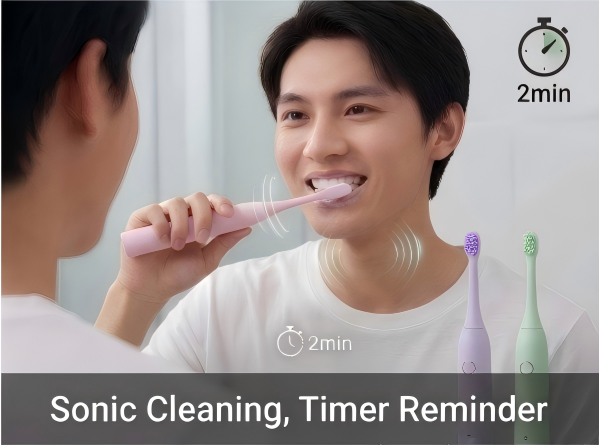
The GS-K5 electric toothbrush offers five modes: Gentle at 39,000 times per minute, Everyday at 41,000, Intense at 43,000, Whitening at 39,000 and Custom at 40,000. It uses a 600mAh lithium-ion battery, charges in 3–4 hours via USB-C and runs up to 60 days on a full charge. The GS-K9P offers four modes, three speed settings, IPX7 waterproofing and 33,000–38,000 vibrations per minute. It uses an 800mAh battery, charges in 4 hours via USB-C or 15 hours via wall charger, and runs up to 30 days on a full charge. It carries EU Patent No. 015075898-0001, with US and UK patents pending.
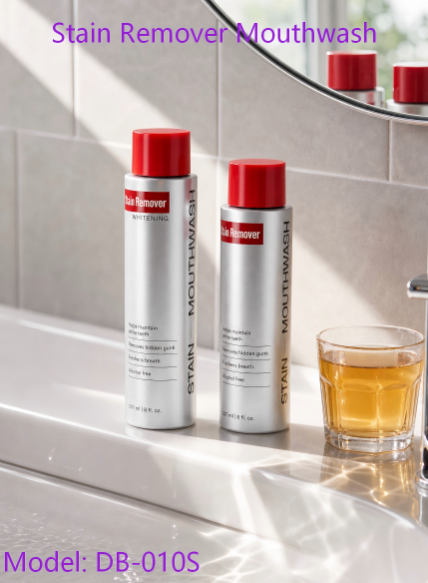
For daily brushing, the GS-007D toothpaste is a 100g tube with PAP and Hydrogen Peroxide in a spearmint or custom flavor. The DB-007P purple colour corrector toothpaste is available in 65g or 120g with mint or custom flavor. For rinsing, the DB-010S is a 237ml alcohol-free liquid mouthwash positioned for breath freshening and stain removal. The DB-010P coconut mouthwash is supplied as 20 packs of 12ml sachets. The GS-010F foam mouthwash is applied as two pumps, swished for 30–60 seconds and expelled. The GS-011 mouth spray is a 17ml portable option in mint, lime, peach, chocolate, vanilla, banana, grape, peppermint, coconut or kiwifruit.
OEM/ODM, Private Label and Custom Formulation
Glorysmile Factory offers OEM, ODM, private-label and custom-formulation services across the program. For electric toothbrushes, customization covers appearance, LED features, charging mode, brush head, color, packaging, branding and logo. For whitening kits, customization covers LED wavelength configuration, housing color, logo printing, packaging structure, kit composition, custom user manuals and compliance labeling. For toothpaste and mouthwash, customization covers formula, flavor, color, tube or bottle design, carton artwork and packaging format. For impression material, customization covers formula, packaging, printing and putty color.
The factory holds MDSAP, ISO 13485, ISO 22716, US GMP, BSCI, HALAL and Vegan credentials, along with medical device and cosmetics production licenses. Factory certificates include CE, FDA, CPSR, CPNP, PIF, SCPN, MSDS, COA and RoHS. Product certificates include GMP, ISO 22716, ISO 13485, MDSAP and BSCI. The company reports an FDA-certified scope covering medical devices, cosmetics and OTC drugs, and states that CE-MDR registration has been completed for medical devices.
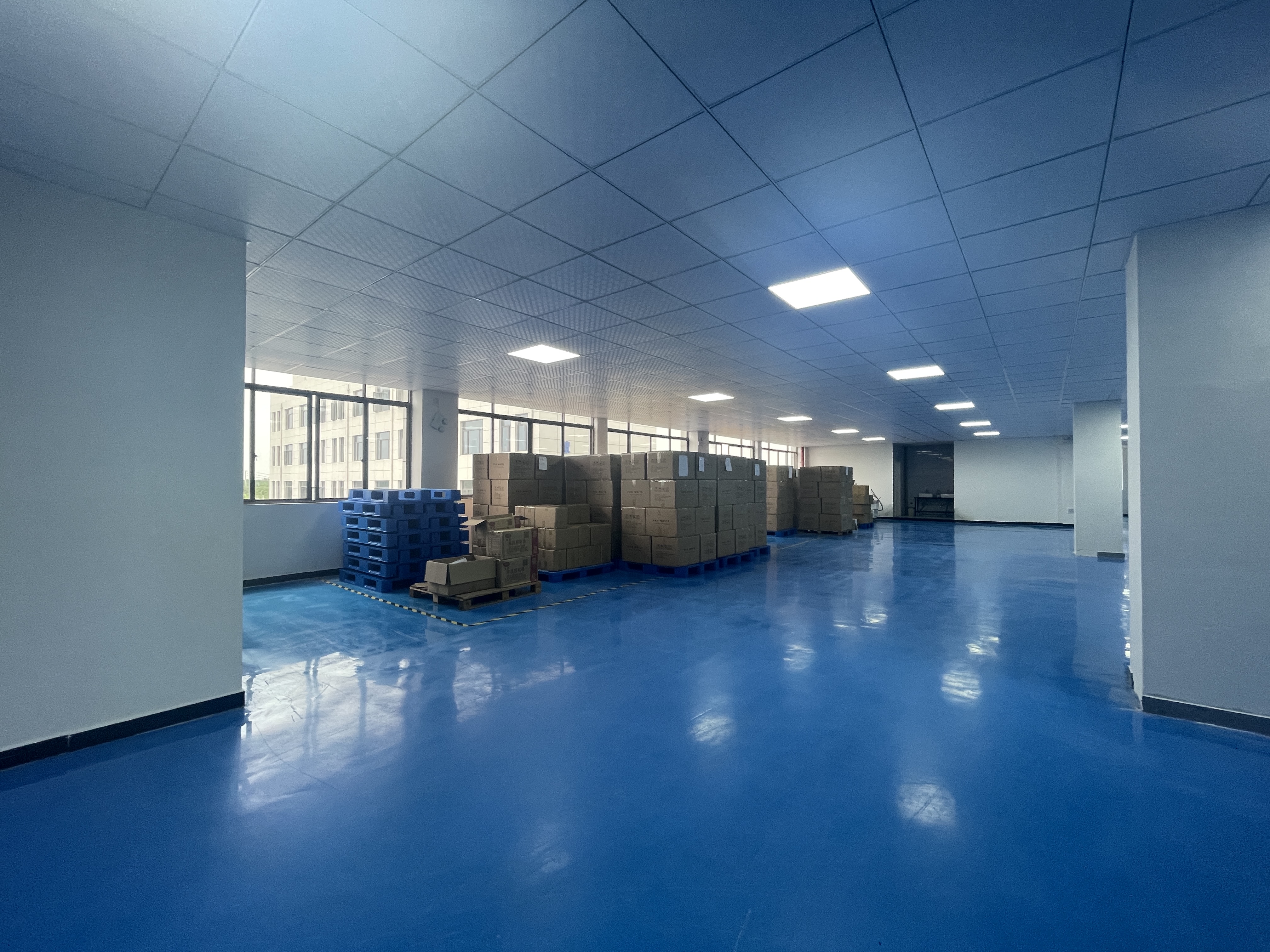
Quality control is not limited to final inspection. The 36,000 m² facility includes 20,000 m² of 100,000-class cleanrooms and a 1,000 m² laboratory with a 100-class cleanroom for microbiological testing. The team includes 256 employees, 17 R&D engineers and 11 QC specialists. Electronic products carry a 12-month warranty, and after-sales response is handled through a 24-hour mechanism with full-lifecycle product quality assurance. Long-term partners can receive market intelligence briefings and national regulatory compliance guidance.
Step-by-Step Breakdown: Building the Program
Step 1: Define the Clinical Protocol and Patient Selection
Start with the patient profile, not the product. Confirm that the formula and labeling are appropriate for adults and children 16+. Decide whether the clinic will offer a peroxide formula, a PAP peroxide-free formula or both. For EU programs, confirm whether the selected formula falls within the 0.1%–6% hydrogen peroxide band that requires a first treatment by a dentist under Directive 2011/84/EU. Record the sensitivity history and the shade baseline before the first kit is dispensed.
Step 2: Take the Impression and Verify Tray Fit
Select the upper and lower trays, mix the Putty A+B by hand, load the tray and seat it. Observe the 1-minute working time and the 2.5-minute intraoral cure. Inspect the set for voids, drags and border detail. Pour or scan the record, then verify that the tray or the supplied mouth tray seats without pressure points. Document the result in the patient file.
Step 3: Choose the Kit Platform
Match the kit to the patient and the clinic's operating model. A 10-minute, 5-LED kit with 30–40 treatments suits a straightforward take-home program. A 16-minute, 32-LED kit with a sterilization case suits a clinic that wants a stronger hygiene routine. A USB plug-and-play kit suits patients who travel or who are followed remotely. Confirm the number of pens or syringes, the shade guide, the manual and the gift box before printing packaging.
Step 4: Select the Formula
Choose from Hydrogen Peroxide, Carbamide Peroxide, PAP, Sodium Phytate, Sodium Bicarbonate, Charcoal or a custom formulation. Use PAP or a low-sensitivity formula where the patient history calls for it. Keep the formula, the label and the instruction manual aligned. If the clinic makes a peroxide-free claim, confirm that the claim is supported by the formula and the compliance file.
Step 5: Build the Maintenance Bundle
Select one toothbrush platform, one daily toothpaste and one rinse format. The GS-K5 or GS-K9P can anchor the bundle. The GS-007D, DB-007P or GS-007F can cover daily brushing. The DB-010S, DB-010P, GS-010F or GS-011 can cover rinsing and portable refreshment. Keep the bundle small enough to explain at the chair and complete enough to support the whitening protocol.
Step 6: Lock Packaging, Manuals and Compliance
Finalize the brand name, pack structure, carton artwork and multi-language manual. Confirm the labeling requirements for the target market. For cosmetics, the document set may include CPSR, CPNP and PIF. For medical devices, CE-MDR registration may apply. For the US, confirm the FDA documentation and the ISO 28399:2021 reference for external tooth bleaching products. Do not print claims that are not supported by the formula and the regulatory file.
Step 7: Confirm MOQ, Sampling and Lead Time
Request samples before committing to packaging. Free sampling and professional package design support are available. The product pages list MOQ at 200 pcs for private label and 1 pc for regular product on several SKUs, while the exact MOQ is confirmed during quotation because it depends on product category, customization requirements and production line configuration. Lead time varies with order volume, specifications, customization complexity and the current production schedule. A precise delivery timeline is provided upon order confirmation.
Step 8: Plan Reorder and Clinic Support
Set a reorder point before the first patient kit is dispensed. Use the monthly capacity figures to plan the first production run and the replenishment run. Keep the 12-month electronic warranty and the 24-hour after-sales response channel visible to the clinic team. If the clinic operates in multiple markets, request the multi-language manual and the compliance guidance early.
Use Cases
Single Clinic Launching a Branded Take-Home Kit
A single clinic can start with a 10-minute, 5-LED kit, the GS-009 impression material and a small maintenance bundle. The clinic controls the impression and the patient instruction, while the manufacturer supplies the kit, the packaging and the manual. This model keeps the initial order manageable and gives the clinic a clear protocol to repeat.
Multi-Site Dental Group Standardizing the Protocol
A multi-site group needs the same tray record, the same kit platform and the same maintenance items across locations. Standardizing on one impression material and one or two kit platforms reduces variation between clinicians. The 16-minute, 32-LED GS-001X or DB-001M can serve as the standard kit, with the GS-001B or GS-001Y as a lower-cost alternative for maintenance patients.
Private-Label Brand Supplying Clinics
A private-label brand can combine the whitening kit, impression material and maintenance items under one brand and one manual. OEM/ODM customization covers the kit composition, LED configuration, housing color, logo, packaging, gel formula and putty color. The brand can position the program as a clinic-only line and use the factory's compliance documents to support the clinic's own review.
Dental Clinic and Beauty Salon Program
The case record for a dental clinic and beauty salon program covers 500,000 units over two years. The recorded result lists teeth whitened by 5–8 shades in one treatment and zero sensitivity reports from more than 5,000 patients. The case summary also references a high-concentration peroxide-free formula, a cool-light configuration and an ergonomic tray design. These are case-record claims, not a guarantee for every patient, but they show how a clinic-oriented program can be structured.
Retail and Pharmacy Gift Sets
A separate case record covers 7 million units over two years for supermarket chains and corporate gift buyers. The project passed third-party factory audits for BSCI and ISO, recorded zero return rate in large batch inspection, and used a one-stop solution from design to logistics with multi-language manual customization. A clinic can use the same logic for seasonal patient gift sets or pharmacy retail bundles.
Comparison Table: Clinic Take-Home Kit Configurations
The table below compares the kit platforms using the specifications listed in the product data. It is a configuration comparison, not a ranking of clinical outcomes.
| Model | Light | Timer | Power and use cycle | Kit contents | Customization |
|---|---|---|---|---|---|
| GS-001B | 5 LED | 10 minutes | 2 x CR2032; 40 treatments | 1 mouth tray, 3 x 3ml syringes, shade guide, manual, gift box | Packaging, gel ingredient, syringe color |
| GS-001Y | 5 LED | 10 minutes | 2 x CR2450; 30 treatments | 1 mouth tray, 3 x 3ml syringes, shade guide, manual, gift box | Packaging, gel ingredient, syringe color |
| GS-001X | 32 LED | 16 minutes | 150mAh; 4-hour charge; up to 5 uses per charge; 3-minute disinfection cycle | 2 x 3ml pens, charging and sterilization case, shade guide, manual, gift box | Packaging, gel ingredient, pen or light color |
| DB-001M | 32 LED | 16 minutes | 450mAh; 2–3-hour charge; up to 8 uses per charge | 4 x 2ml pens, storage case with cable, shade guide, manual, gift box | Packaging, gel ingredient, pen or light color |
| GS-001J | 16 LED, 24 or 32 optional | 16 minutes per day | USB plug-and-play; no built-in battery | 4 x 2ml pens, dust-free cover, 4 adapters, shade guide, manual, gift box | Packaging, gel ingredient, pen or light color |
Patent notes: GS-001X carries EU patent 015062946-0001 and UK patent 6370462. DB-001M carries US Patent No. US D1,128,065 S, EU Patent No. 015065790-0001 and UK Patent No. 6377277. The other models in this table do not list a patent in the product data.
Comparison Table: Maintenance Bundle Components
| Item | Model | Key specification | Role in the program |
|---|---|---|---|
| Silicone dental impression material | GS-009 | Hardness 60; 1-minute working time; 2.5-minute intraoral cure; 25g, 28g, 30g, 500g or custom; blue, white, orange, purple or custom | Tray record and fit verification |
| Electric toothbrush | GS-K5 | 5 modes, 39,000–43,000 times per minute; 600mAh; up to 60 days per charge | Daily plaque control |
| Electric toothbrush | GS-K9P | 4 modes, 3 speeds; IPX7; 33,000–38,000 vibrations per minute; up to 30 days per charge | Daily plaque control and travel |
| Toothpaste | GS-007D | 100g; PAP and Hydrogen Peroxide; spearmint or custom flavor | Daily brushing with a whitening-compatible paste |
| Toothpaste | DB-007P | 65g or 120g; purple colour corrector; mint or custom flavor | Daily tone maintenance |
| Mouthwash | DB-010S | 237ml; alcohol-free; breath freshener and stain remover | Rinsing after meals |
| Foam mouthwash | GS-010F | Two pumps; swish 30–60 seconds | On-the-go refreshment |
| Mouth spray | GS-011 | 17ml; multiple flavors | Portable refreshment |
FAQ
Which compliance documents should a clinic take-home whitening kit carry for the EU and US?
The document set depends on the formula, the claims and the classification. Factory certificates include CE, FDA, CPSR, CPNP, PIF, SCPN, MSDS, COA, RoHS, HALAL and Vegan. Product certificates include GMP, ISO 22716, ISO 13485, MDSAP and BSCI. For EU cosmetics, CPSR, CPNP and PIF are the relevant documents. For medical devices, CE-MDR registration may apply. In the EU, products containing between 0.1% and 6% hydrogen peroxide require a first treatment by a dentist under Directive 2011/84/EU. In the US, the FDA recognizes ISO 28399:2021 as a consensus standard for external tooth bleaching products.
Can one OEM/ODM supplier deliver the whitening kit, impression material and maintenance items together?
Yes. Glorysmile Factory produces teeth whitening kits, whitening strips, whitening pens, toothpaste, mouthwash, electric toothbrushes, oral irrigators and silicone dental impression material. The factory supports OEM, ODM, private-label and custom-formulation projects, with customization across kit composition, LED configuration, housing color, logo, packaging, gel formula, putty color, brush head, charging mode and flavor. Products are exported to 102 countries, with a 90% export ratio and main markets in the EU, USA and UK.
What drives the unit cost of a clinic take-home whitening kit?
Cost is driven by the kit composition, LED count, battery or plug-and-play power design, gel formula, number of pens or syringes, inclusion of impression material, putty weight and color, packaging structure, manual language and order volume. A PAP formula, a sterilization case or a custom printed gift box will change the cost base compared with a standard 5-LED kit. A quote should be built per configuration rather than per category, and the exact MOQ is confirmed during quotation and sampling.
How should a clinic validate samples before placing an order?
Start with the impression material: mix a sample, check the 1-minute working time, the 2.5-minute intraoral cure, the detail reproduction and the tray fit. Then test the kit platform for timer, light output, battery or USB power, and pen or syringe handling. Review the manual, the shade guide and the labeling with the clinic team. Free sampling and professional package design support are available, and regular product can be ordered at 1 pc for evaluation. Private-label MOQ is listed at 200 pcs on several SKUs, with the final MOQ confirmed per project.
How is lead time confirmed for a clinic take-home program?
Lead time varies depending on order volume, product specifications, customization complexity and the current production schedule. A precise delivery timeline is provided upon order confirmation. Monthly capacity includes 105,000 whitening kit sets, 2,500,000 mouthwash sachets, 416,000 bottled mouthwash units, 300,000 electric toothbrushes and 830,000 toothpaste tubes. To move from specification to sample to production, contact the Glorysmile team with the kit model, formula direction, impression material weight and color, maintenance bundle items and target market.
Conclusion
A clinic take-home whitening program is a system, not a single SKU. The impression record controls tray fit. The kit controls the patient experience and the formula decision. The maintenance bundle protects the result between treatments. When all three are specified together, the clinic can explain the protocol, the patient can follow it, and the brand can support it with consistent manuals, packaging and compliance documents.
For clinics and private-label brands, the practical next step is to define the patient profile, select the impression material and kit platform, choose the formula, build the maintenance bundle and confirm MOQ, sampling and lead time per product. That sequence keeps the clinical workflow and the commercial workflow aligned.
Next Step: Sample, Quote or Catalog
To evaluate a clinic take-home program, request a sample set or a configuration quote from Jiangxi Dentalbright Technology Co., Ltd. (Glorysmile Factory). Include the kit model, formula direction, impression material weight and color, maintenance items and target market so the team can confirm MOQ and lead time accurately.
Contact: Tasha | Email: tasha@enjoywhite.com | Tel and WhatsApp: +86 177 7911 0152
Address: Makou Industrial District, Yongxiu Town, Nanchang(Jiujiang) City, Jiangxi Province, China
Catalog download: Glorysmile product catalog (PDF)
Have Questions or Need More Details?
Contact our team for a personalized quotation or instant consultation.
Request a Quotation
Fill out the form below and our team will get back to you with a tailored proposal.
WhatsApp Direct Chat
Prefer to chat in real-time? Message us on WhatsApp for instant assistance & quick answers.
- Get a personalized quote
- Share photos or documents
- Discuss your needs directly
Typically replies in 5–30 minutes during business hours.