Dry Strips vs. Wet Strips: Head-to-Head Adhesion Analysis
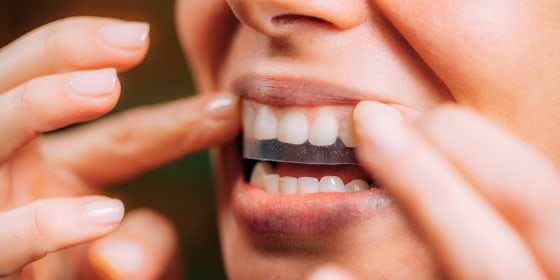
Dry strips and wet strips are two delivery formats for the same whitening-strip category, not two automatic claims of superiority. The useful difference sits in positioning behaviour, gel handling, residue profile, active release and packaging execution. For a formulation lab, the decision should be framed as a validation brief: which format can meet the product story with the fewest compromises?
This guide is written for R&D teams and private-label buyers comparing teeth whitening strips before a sample round. It separates documented strip-platform facts from the tests a lab should run. It does not publish comparative lab results that are not in the approved source material.
Problem Definition: The Format Choice Is a Lab Brief, Not a Slogan
The question What is the difference between dry strips and wet strips? usually arrives after a brand has already chosen a supplier or a retail price band. That is too late. Format affects how the strip is positioned on the tooth surface, how the gel layer behaves during wear, how much residue remains, and how the product is packaged for wholesale retail programs.
A common error is to compare a dry strip from one formula against a wet strip from another formula and attribute every difference to the format. That mixes three variables: strip base, gel formulation and user wear conditions. A second error is to treat dry application whitening strips and wet teeth whitening strips as if one must be gentler, stronger or cleaner. Those are performance claims that require controlled testing, not naming logic.
The practical decision rule is this: define the consumer and compliance brief first, lock the formula family second, and only then compare dry and wet strip bases under the same test protocol.
Industry Background: Why Strip-Format Decisions Now Reach the Formulation Lab
The category is large enough to support specialised format decisions. Grand View Research values the global teeth whitening strips and gels market at USD 1.1 billion in 2025. Teeth whitening strips are primarily classified under HS Code 3306.90.00 as preparations for oral or dental hygiene.
Regulatory boundaries also shape format choice. EU Regulation (EC) No. 1223/2009 restricts hydrogen peroxide in over-the-counter teeth whitening products to 0.1% or less. In the US, MoCRA 2022 requires manufacturers of whitening strips classified as cosmetics to register facilities at $849 per year and list products at $200 each. A 6%HP strip formula and a PAP strip formula therefore sit in different commercial and compliance conversations before the lab even compares adhesion.
That is why a format comparison should not start with a generic claim such as dry is cleaner or wet is more comfortable. It should start with the intended market, the active system, the wear time and the retail channel.
Detailed Solution: How to Compare Dry and Wet Strips Without Mixing Up Properties
1. What the two formats share
Glorysmile is the brand of Jiangxi Dentalbright Technology Co., Ltd. (Glorysmile Factory), an oral-care manufacturer based in Jiangxi, China, serving EU, USA and UK markets. Its strip range includes dry, wet and dissolving formats.
The shared platform matters because it removes some variables. Glorysmile dry strips model GS-004H/V/C/P, wet strips model GS-V34-S07 and dissolving strips model DB-004L all use a three-layer strip construction: PET hard film, whitening gel and PE soft film. They are packed in aluminium bags with 7, 14 or 21 bag strips, a user manual, a shade guide and a colour box.
The listed formula options across the strip range include PAP, PAP+charcoal, Purple, 6%HP, Sodium Phytate, Sodium bicarbonate and custom formulations. Listed flavours include Blue Raspberry, Strawberry, Peach, Grape, Watermelon, Peppermint, Orange, Mint, Pineapple, Cherry Blossom, Coconut and Mango. Available service modes include OEM, ODM and dealer supply.
2. What makes the dry-strip platform distinct
The dry-strip platform is not one product. Glorysmile lists several dry-strip design options: high-viscosity dry strips, residue-free dry strips and alcohol-free dry strips. These are format descriptors that a formulation lab should translate into test questions, not assume as outcomes.
For example, a residue-free dry strip brief should trigger a residue test after wear and rinse. An alcohol-free dry strip brief should trigger a compatibility check with the chosen flavour and active system. A high-viscosity dry strip brief should trigger an adhesion and gel-migration test. The name alone does not replace the data.
Glorysmile's strip application profile also references a no-slip dry adhesive technology for once-daily use. In a lab comparison, that claim should be checked through initial tack, edge lift and retention after a wet challenge, not accepted as a universal result across every formula.
3. What makes the wet-strip format distinct
The wet-strip format is represented by Glorysmile V34 wet-strip model GS-V34-S07. A wet strip keeps the gel layer in a pre-hydrated state. That changes the starting condition at the tooth surface and can affect initial tack, gel migration and the feel during the first minutes of wear.
This does not mean wet strips are better or worse. It means they should be tested as a separate format. If a dry strip and a wet strip carry the same PAP formula, the lab can isolate the effect of the strip base. If they carry different actives, the test is a formula comparison with a format label, not a clean format comparison.
4. Adhesion analysis: what to measure, not what to assume
Adhesion variability is the central performance question in this comparison. A useful lab panel can be built around six measures:
- Initial tack: peak force needed to remove the strip from a reference surface under controlled temperature and humidity.
- Edge lift: visible lifting at the strip perimeter after a defined wear interval.
- Retention after wet challenge: change in adhesion after exposure to artificial saliva or a controlled moisture challenge.
- Gel migration: spread of the gel layer beyond the strip perimeter during wear.
- Residue: visible film or tackiness after removal and rinsing.
- Lot consistency: the same test repeated across at least three production lots.
These measures do not require a claim that dry strips always outperform wet strips. They produce a format-specific evidence pack. That evidence pack is more useful to a private-label buyer than a generic statement about comfort.
5. Active-ingredient release: separate formula from format
Active release depends on both the gel formulation and the strip base. The Glorysmile strip range offers PAP, PAP+charcoal, Purple, 6%HP, Sodium Phytate and Sodium bicarbonate options. PAP is described by Glorysmile as a peroxide-free formula option. A 6%HP formula is a hydrogen peroxide system and must be assessed against the target market's regulatory limit.
For the EU over-the-counter cosmetic route, the 0.1% hydrogen peroxide limit under Regulation (EC) No. 1223/2009 is a hard constraint. A 6%HP strip cannot be treated as a standard OTC cosmetic under that limit without confirming the correct regulatory pathway. This is a compliance decision before it is an adhesion decision.
When comparing dry and wet formats, hold the formula constant. Use the same active level, the same flavour system and the same wear time. Then measure active release from the strip into a receptor medium or from a defined gel extract. If the formula changes between formats, the lab cannot isolate the format effect.
6. Comfort, residue and sensitive-teeth positioning
Comfort is not a single property. It includes strip thickness, edge feel, gel mobility, flavour intensity and residue after removal. Glorysmile's strip range lists multiple flavours, including fresh mint profiles and fruit profiles, so flavour can be matched to the target user without changing the strip base.
For sensitive-teeth positioning, Glorysmile offers PAP and low-sensitivity formulas designed for sensitive teeth. The strip application profile also lists an enamel-safe formula and a zero-peroxide option as special requirements. These are positioning options to validate with the chosen formula, not automatic claims for every strip in the range.
A dry strip may suit a brief that prioritises clean handling and a residue-free or alcohol-free design option. A wet strip may suit a brief that prioritises a pre-hydrated feel at application. A dissolving strip may suit a brief that prioritises a no-removal residue story. The final choice should be based on the sample panel, not the label alone.
7. Decision summary for formulation labs
Choose the dry-strip platform when the brief requires: a dry application format, access to high-viscosity, residue-free or alcohol-free dry-strip options, and a clean handling story that can be validated by adhesion and residue testing.
Choose the wet-strip format when the brief requires: a pre-hydrated strip feel, a separate wet-format sample for consumer sensory work, and a test programme that controls for gel migration and initial tack.
Keep the dissolving strip as a third option when the brief requires: a dissolving strip format rather than a remove-and-rinse step.
In all three cases: lock the formula family first, run the same adhesion and release protocol, and confirm the regulatory route for the target market.
Step-by-Step Breakdown: A Practical Comparison Workflow
- Write the format brief. State the target user, the market, the active system, the wear time and the retail channel. Include whether the product is for daily use, sensitive teeth, coffee stains, smokers or travel retail.
- Lock the formula family. Decide whether the project uses PAP, PAP+charcoal, Purple, 6%HP, Sodium Phytate, Sodium bicarbonate or a custom formula. Do not compare formats across different actives and call it a format result.
- Select the strip base. Request dry strips GS-004H/V/C/P, wet strips GS-V34-S07 and, if relevant, dissolving strips DB-004L. Ask for the specific dry-strip variant: high-viscosity, residue-free or alcohol-free.
- Design the adhesion panel. Define initial tack, edge lift, retention after wet challenge, gel migration and residue. Use the same reference surface, temperature, humidity and wear interval for every sample.
- Design the release test. Use a consistent active level and a defined receptor or extraction method. Record the method so the result can be repeated across lots.
- Run a comfort and residue panel. Assess flavour, edge feel, gel mobility and rinse behaviour. Keep the panel size and instructions consistent between formats.
- Check compliance. Confirm the EU cosmetic route, the US MoCRA route and any medical-device route before the packaging text is written. Glorysmile can provide CPSR, CPNP and PIF for cosmetic products and has completed CE-MDR registration for medical devices.
- Pilot with the OEM programme. Move from sample to pilot with a defined packaging format: 7, 14 or 21 bag strips, user manual, shade guide and colour box. Confirm MOQ, lead time and artwork approval before mass production.
Use Cases: Where Dry or Wet Strip Formats Fit
Private-label daily-use line
A daily-use private-label line can use the dry-strip platform with a PAP or low-sensitivity formula. The dry format supports a clean handling story, and the available residue-free or alcohol-free options give the brand a specific product claim to validate. For private label teeth whitening strips, the pack can be built as 7, 14 or 21 strips with a shade guide and user manual.
Sensitive-teeth positioning
A teeth whitening strips for sensitive teeth brief should start with the formula, not the format. Glorysmile offers PAP and low-sensitivity formulas designed for sensitive teeth. The lab should compare the selected dry or wet strip base with the same low-sensitivity formula and document comfort and residue.
Coffee-stain and smoker-stain communication
For teeth whitening strips for coffee stains and teeth whitening strips for smokers, the product story is stain removal rather than format novelty. The strip format should support the claimed wear routine and the chosen active system. PAP+charcoal and Purple options are available in the formula list, but the final claim should match the approved formula and market rules.
Travel and wholesale retail programmes
For travel size teeth whitening strips and wholesale teeth whitening strips programmes, the 7-strip pack is a practical unit, while 14 and 21 strips support longer routines. Individually wrapped strips are listed in the strip application profile as a special requirement. A wet strip can also be packed in the same aluminium bag and colour box format.
OEM and custom packaging launches
For OEM teeth whitening strips and custom packaging teeth whitening strips, the format decision should be made before artwork is finalised. The strip base affects the product name, the usage instruction and the sensory brief. Glorysmile offers OEM, ODM and dealer service, custom formulation, custom flavour and custom packaging support.
Comparison Table: Documented Dry, Wet and Dissolving Strip Properties
The table below uses only approved product facts. It does not assign a winner, because the winner depends on the validated brief.
| Parameter | Dry strips: GS-004H/V/C/P | Wet strips: GS-V34-S07 | Dissolving strips: DB-004L |
|---|---|---|---|
| Format descriptor | Dry strip platform; high-viscosity, residue-free and alcohol-free dry-strip options | Wet strip format | Dissolving strip format |
| Construction | PET hard film + whitening gel + PE soft film | PET hard film + whitening gel + PE soft film | PET hard film + whitening gel + PE soft film |
| Formula options | PAP, PAP+charcoal, Purple, 6%HP, Sodium Phytate, Sodium bicarbonate, custom | PAP, PAP+charcoal, Purple, 6%HP, Sodium Phytate, Sodium bicarbonate, custom | PAP, PAP+charcoal, Purple, 6%HP, Sodium Phytate, Sodium bicarbonate, custom |
| Listed flavours | Blue Raspberry, Strawberry, Peach, Grape, Watermelon, Peppermint, Orange, Mint, Pineapple, Cherry Blossom, Coconut, Mango | Same listed flavour set | Same listed flavour set |
| Pack count | 7, 14 or 21 bag strips | 7, 14 or 21 bag strips | 7, 14 or 21 bag strips |
| Pack components | User manual, shade guide, colour box; aluminium bag | User manual, shade guide, colour box; aluminium bag | User manual, shade guide, colour box; aluminium bag |
| Service mode | OEM, ODM, dealer | OEM, ODM, dealer | OEM, ODM, dealer |
| Strip certifications | BSCI, GMP, ISO 22716, ISO 13485, MDSAP | BSCI, GMP, ISO 22716, ISO 13485, MDSAP | BSCI, GMP, ISO 22716, ISO 13485, MDSAP |
| Regulatory note | Formula-dependent; EU OTC hydrogen peroxide limit is 0.1% or less | Formula-dependent; EU OTC hydrogen peroxide limit is 0.1% or less | Formula-dependent; EU OTC hydrogen peroxide limit is 0.1% or less |
Manufacturer Capability Behind the Comparison
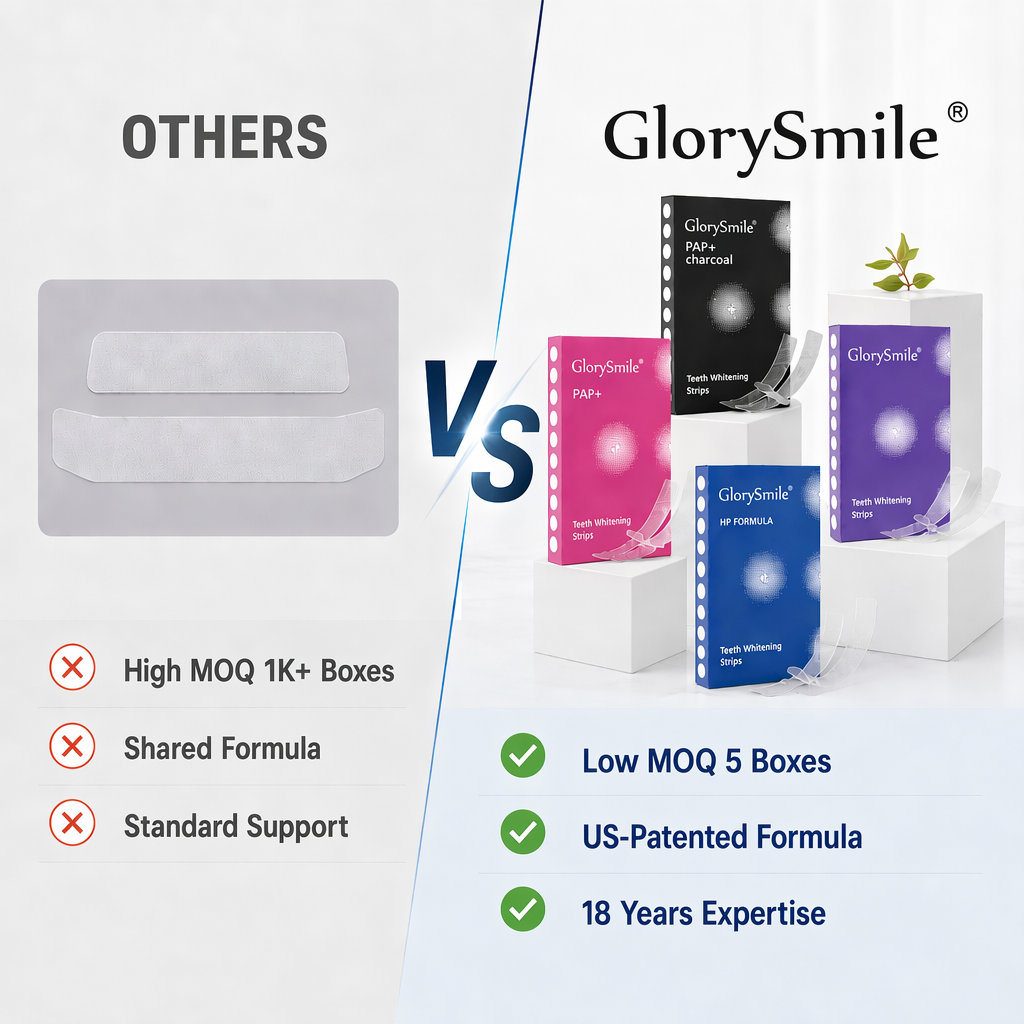
Glorysmile Factory operates a 36,000 m² facility with 20,000 m² of 100,000-class cleanrooms and a 1,000 m² laboratory. The company employs 256 people, including 17 R&D engineers, 11 QC specialists, 8 production management staff and 6 packaging designers. Strip monthly capacity is 29.2 million pieces.
Certifications include MDSAP, ISO 13485, ISO 22716, US GMP, BSCI, HALAL and Vegan. Factory certificates include CE, FDA, CPSR, CPNP, PIF, SCPN, MSDS, COA, RoHS, HALAL and Vegan. Product certificates include GMP, ISO 22716, ISO 13485, MDSAP and BSCI. Glorysmile states that its products are FDA approved and that its FDA-certified scope covers medical devices, cosmetics and OTC drugs.
For OEM and private-label programmes, Glorysmile offers custom formulation, custom flavour, custom packaging, free sampling and professional package design. The stated OEM MOQ range for custom packaging is 100 to 1,000 boxes depending on the product; regular orders in existing packaging have a 5-box MOQ. Lead time varies with order volume, product specifications, customisation complexity and the current production schedule, with a precise timeline provided upon order confirmation.
Documented programme examples: a cross-border e-commerce platform project reached 1 million units over 2 years, maintained a Top 3 sales rank in the Oral Care category, achieved a 99.8% positive feedback rate and recorded zero safety or compliance incidents. An e-commerce seller project reached 5 million units over 2 years, achieved Top 10 Bestseller status and a 4.8-star user rating, and used a low MOQ for initial testing. A supermarket and corporate gift programme reached 7 million units over 2 years, passed third-party BSCI/ISO audits and recorded zero return rate in large batch inspection.
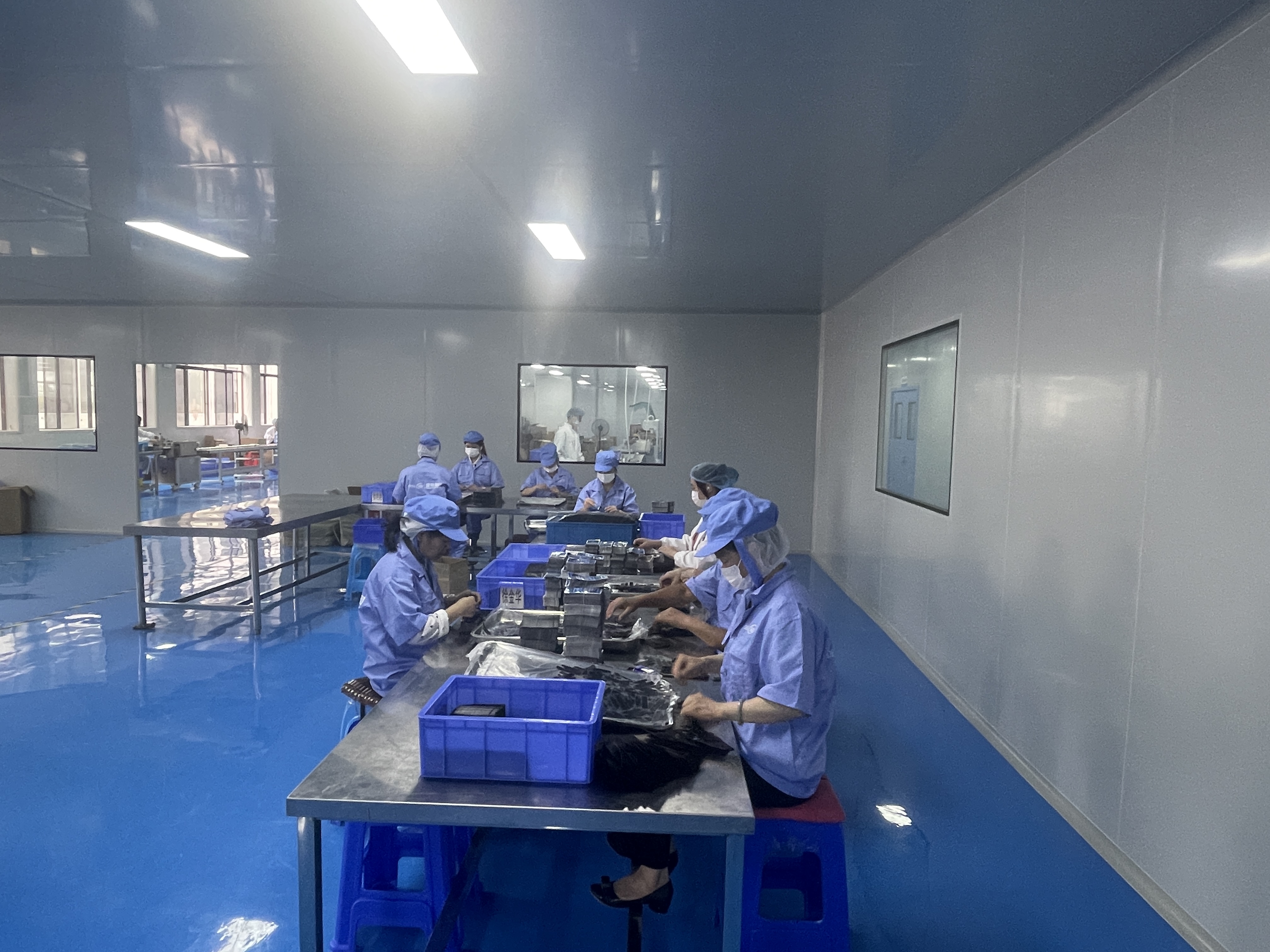
Products are exported to 102 countries, with a 90% export ratio and main markets in the EU, USA and UK. The company also operates a 24-hour after-sales response mechanism, full-lifecycle product quality assurance and regulatory compliance guidance for long-term partners.
FAQ
Are dry and wet whitening strips compliant for the EU and US markets?
Glorysmile can provide CPSR, CPNP and PIF for cosmetic products and has completed CE-MDR registration for medical devices. For the EU, Regulation (EC) No. 1223/2009 restricts hydrogen peroxide in over-the-counter teeth whitening products to 0.1% or less. For the US, MoCRA 2022 requires cosmetics manufacturers to register facilities at $849 per year and list products at $200 each. The exact route depends on the formula and claims.
Can Glorysmile supply both dry and wet strip formats for private label?
Yes. The strip range includes dry strips GS-004H/V/C/P, wet strips GS-V34-S07 and dissolving strips DB-004L. Service modes include OEM, ODM and dealer supply. Custom formulation, custom flavour and custom packaging are available. Strip monthly capacity is 29.2 million pieces.
What is the MOQ for custom dry or wet strips?
For regular orders in existing packaging, the stated MOQ is 5 boxes. For OEM orders with customised packaging, the MOQ varies by product from 100 to 1,000 boxes. The exact MOQ is confirmed during quotation and sampling.
Can we request samples to compare adhesion and active release?
Yes. Glorysmile offers free sampling and professional package design as part of its OEM/ODM service. A sample request should specify the strip base, formula family, flavour, pack count and target market so the sample pair matches the intended comparison.
What lead time should a wholesale retail programme plan for, and how do we choose a manufacturer?
Lead time varies depending on order volume, product specifications, customisation complexity and the current production schedule. A precise delivery timeline is provided upon order confirmation. For a teeth whitening strips manufacturer for wholesale retail programs, verify the strip format, formula route, certification pack, MOQ, sample process and after-sales response. Glorysmile provides a 24-hour after-sales response mechanism and full-lifecycle product quality assurance. To request a dry/wet sample pair, a quote or the catalog, contact Tasha at tasha@enjoywhite.com or WhatsApp +86 177 7911 0152.
Conclusion
Dry strips and wet strips should not be chosen by adjective. They should be chosen by a validated brief. The dry-strip platform gives formulation labs access to high-viscosity, residue-free and alcohol-free dry-strip options. The wet-strip format gives labs a pre-hydrated strip base to test as a separate wear experience. The dissolving strip remains a third format for a different residue story.
The decisive work happens in the sample panel: hold the formula constant, measure initial tack, edge lift, retention after wet challenge, gel migration, residue and active release, and confirm the compliance route before packaging is written. That is how a strip comparison becomes a product decision rather than a label debate.
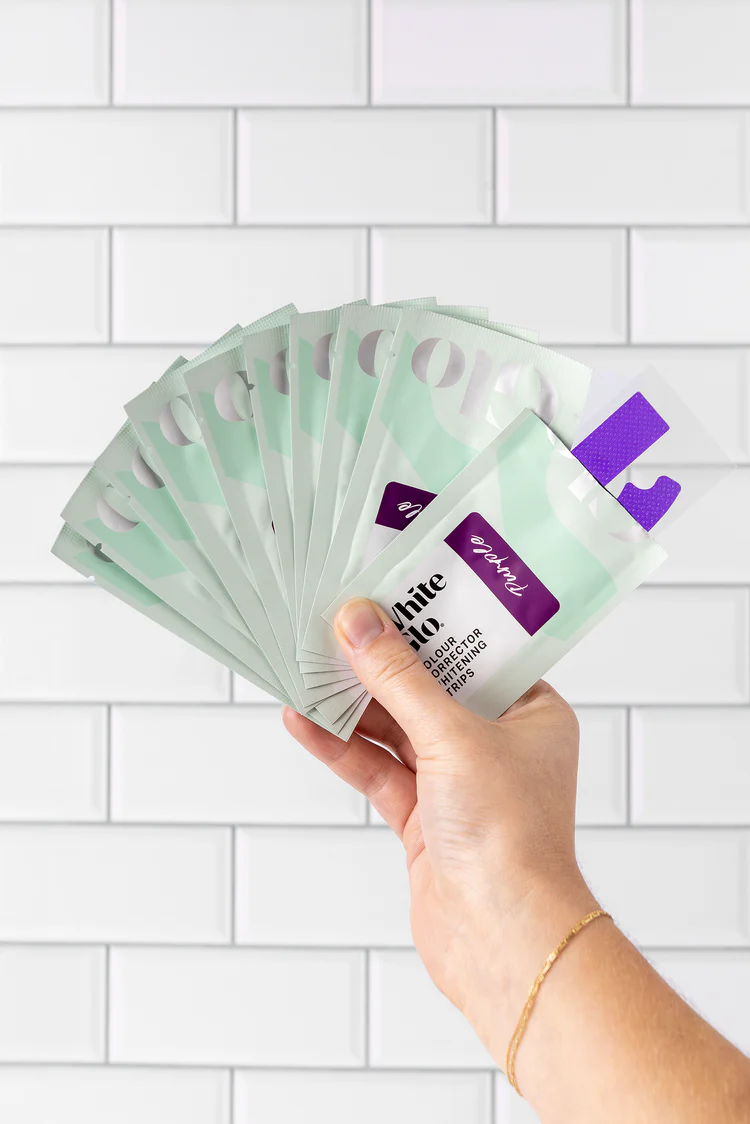
Next step for formulation labs and private-label buyers: request a dry/wet strip sample pair, a private-label quote, or the Glorysmile catalog. Include your target market, formula route, flavour, pack count and expected order volume so the sample and quotation match your programme.
Email: tasha@enjoywhite.com | WhatsApp: +86 177 7911 0152 | Catalog: download the Glorysmile catalog
Address: Makou Industrial District, Yongxiu Town, Nanchang(Jiujiang) City, Jiangxi Province, China. Website: www.glorysmile.com.
Have Questions or Need More Details?
Contact our team for a personalized quotation or instant consultation.
Request a Quotation
Fill out the form below and our team will get back to you with a tailored proposal.
WhatsApp Direct Chat
Prefer to chat in real-time? Message us on WhatsApp for instant assistance & quick answers.
- Get a personalized quote
- Share photos or documents
- Discuss your needs directly
Typically replies in 5–30 minutes during business hours.