Beyond the Kit: Why Oral Care Devices and Cosmetics Form a Complete Whitening Regime
Most whitening decisions are made at the kit. Most whitening results are decided everywhere else.
A teeth whitening kit is a concentrated, time-boxed treatment: an LED light or tray paired with a gel, pen or syringe, applied over a defined number of sessions. It is not a cleaning product, and it is not designed to be used every day forever. That single fact is what creates the gap most brands and distributors inherit — a customer buys the kit, finishes the course in two to four weeks, and then returns to whatever toothpaste happens to be in the bathroom cabinet.
The rest of the oral care cabinet is where stain control either continues or stops. Powders, toothpaste, mouthwash, sprays, toothpaste tablets and powered devices do different jobs on a different schedule. None of them replaces the kit. None of them is replaced by it.
GlorySmile is the trading name of Jiangxi Dentalbright Technology Co., Ltd., an oral care manufacturer based in Makou Industrial District, Yongxiu Town, Nanchang (Jiujiang) City, Jiangxi Province, China. The company operates a 36,000 m² facility, exports to 102 countries with an export ratio of 90%, and supplies whitening kits, strips, pens, powders, toothpaste, mouthwash, oral spray, electric toothbrushes, oral irrigators and dental impression materials to distributors, brand owners and dental professionals under OEM and ODM arrangements.
A note on what this article does not claim. Nothing below asserts a verified synergistic clinical effect between any two products in the range. The argument is narrower and more useful for buyers: a whitening kit performs one job, the surrounding categories perform different jobs, and the sourcing question is whether one supplier can cover the whole routine with consistent documentation.
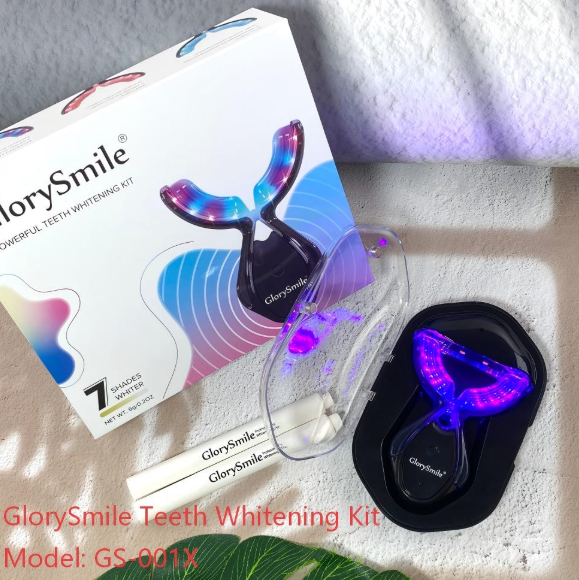
GlorySmile Teeth Whitening Kit Model GS-001X — 32-LED light, two 3 ml whitening pens and a charging and sterilization case.
The Problem: A Kit Is a Sprint, a Smile Is a Schedule
Whitening kits are sold as courses. The GlorySmile GS-001B, for example, is specified for 40 uses at 10 minutes per treatment. The GS-001Y is specified for 30 uses with a 10-minute light timer. The GS-001X and DB-001M run a 16-minute timer per session. The GS-001J recommends 16 minutes per day. Every one of those numbers describes a finite treatment window.
What happens after the window closes is a routine problem, not a whitening problem. Coffee, tea and tobacco exposure continues. Surface deposits rebuild. A customer who has just completed a course is at the highest-intent moment in the entire category — and most brands have nothing to sell them at that moment except another kit they are not yet ready to re-buy.
For a distributor or brand owner, the gap shows up in three places:
- Repurchase cadence. A single kit SKU produces a long, silent gap between purchases. Adjacent daily-use categories fill that gap on a weekly or monthly cadence instead of a quarterly one.
- Shelf presence. One facing in one sub-category is fragile. A coherent set of related SKUs occupying cleaning, rinsing and finishing positions is harder to displace.
- Supplier complexity. Sourcing a kit from one factory, toothpaste from a second and mouthwash from a third multiplies documentation work — certificates, safety data sheets, artwork approvals and batch records — across three compliance systems that may not align.
The problem is therefore not that kits are inadequate. It is that a kit has been asked to carry a category by itself.
Industry Background: What the Market and the Rulebook Are Saying
Fortune Business Insights valued the global teeth whitening market at USD 8.93 billion in 2025 and projects it to reach USD 14.31 billion by 2034. Straits Research estimated that the individual and at-home segment accounted for 68.67% of the teeth whitening market in 2024. Two separate research houses, two different measurements — but they point at the same commercial reality: the majority of whitening activity happens outside a dental chair, in a bathroom, on a schedule the consumer controls.
Regional share is contested. Some sources place Asia Pacific in the lead with 33.80% of the market in 2025, while others place North America first in earlier years. The discrepancy usually comes down to whether a study counts professional in-office services alongside retail products. For a product supplier, the practical takeaway is not who leads — it is that demand is distributed enough that a single-market assumption is a poor basis for portfolio planning.
On formulation, industry research from The Insight Partners observes rising demand for PAP+ (phthalimidoperoxycaproic acid) based peroxide-free kits as an alternative to traditional peroxide, driven largely by sensitivity concerns. That is a commercial trend observation, not a clinical finding, and it should be treated as a signal about what buyers are asking for rather than proof of equivalence.
The regulatory layer is less negotiable. Within the European Union, teeth whitening products containing between 0.1% and 6% hydrogen peroxide require the first treatment to be carried out by a dentist, under Directive 2011/84/EC. In the United States, the FDA recognises ISO 28399:2021 as a consensus standard for external tooth bleaching products. US Customs and Border Protection, ruling on teeth whitening strips imported from China under GRI 3(b), identified the whitening strips as giving the goods their essential character and classified them under subheading 3306.90.0000.
Concentration, classification and standard recognition are not marketing details. They determine which SKU can enter which market, under which label, with which claims. A brand assembling a full regime has to solve this once per product category — which is a strong argument for solving it with one supplier rather than four.
The Four Working Layers of a Whitening Regime
Strip away the marketing and an oral care regime has four functional layers. Each layer answers a different question.
Layer 1 — Periodic intensive treatment
This is the kit layer. It asks: how do we move shade in a defined window? Delivery is via LED light plus gel, pen or syringe, on a fixed session length. The variations inside this layer are mechanical rather than conceptual: 5 LEDs versus 32 LEDs, a 10-minute timer versus 16 minutes, a plug-and-play USB supply versus an internal lithium battery, a 30-use course versus 40. GlorySmile's kit range spans the GS-001B and GS-001Y (5 LEDs, 10-minute timer), the GS-001J (16 LEDs, USB plug-and-play with no built-in battery, four adapters for iPhone, Android, Type-C and USB), and the GS-001X and DB-001M (32 LEDs, 16-minute timer, charging case).
Layer 2 — Daily cleaning base
This layer asks: what is on the brush, twice a day, for the other 50 weeks of the year? It includes toothpaste, toothpaste tablets and powered devices. The GlorySmile GS-007D is a 100 g double-tube toothpaste formulated with PAP and hydrogen peroxide in a spearmint flavour. The GS-007F is a 60 g fruity paste built without SLS, without PEGs and without added sugar, and is not tested on animals. The GS-008 toothpaste tablet comes in 30 or 60 count in mint, with purple, charcoal and sakura variants, packaged in plastic, glass or aluminium jars, kraft bags or custom formats. On the device side, the GS-K5 electric toothbrush runs five modes between 39,000 and 43,000 movements per minute from a 600 mAh battery rated at up to 60 days per charge, and the GS-K9P offers four modes with three speed settings, IPX7 waterproofing and an 800 mAh battery rated at up to 30 days.
Layer 3 — Rinse and on-the-go maintenance
This layer asks: what happens between brushes? Mouthwash, foam mouthwash and oral spray answer it. The DB-010S is a 237 ml alcohol-free liquid mouthwash positioned for breath freshening and stain removal. The DB-010P delivers coconut-flavoured mouthwash as 20 sachets of 12 ml, an aluminium-packed format aimed at travel and sampling. The GS-010F is a foam mouthwash applied as two pumps, swished for 30 to 60 seconds and expelled. The GS-011 oral spray is a 17 ml bottle available across ten flavours from mint and peppermint to peach, grape, coconut and kiwifruit.
Layer 4 — Surface correction and finishing
This layer asks: how is the visible surface managed in between courses? Whitening powders and colour-correcting products sit here. The GS-005P is a PAP-based whitening powder at 12 g net weight, with 15 g, 30 g, 40 g and 100 g options. The GS-005C is a 30 g activated charcoal powder in mint, rose, strawberry or lemon. The GS-005V is a purple colour-correcting powder, and the DB-007P a purple colour-correcting toothpaste at 65 g or 120 g. The mechanism behind the purple format is stated plainly in the product specification: purple sits directly opposite yellow on the colour wheel, so a water-soluble purple dye is applied to cancel yellow undertones. That is a cosmetic colour-correction principle, not a bleaching action, and it should be positioned accordingly.
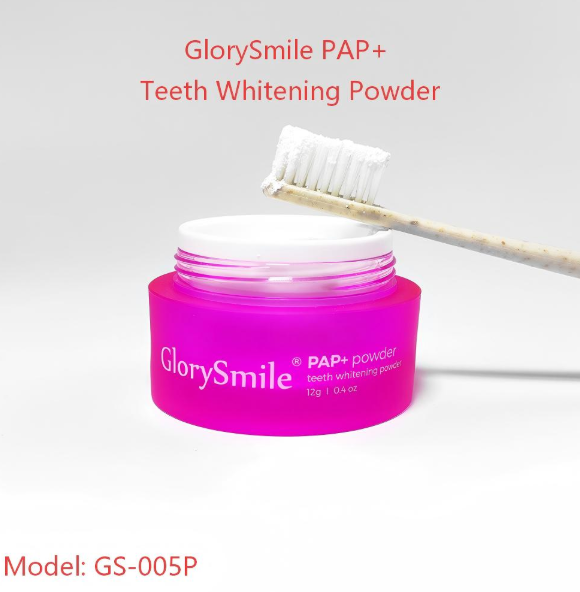
PAP+ Teeth Whitening Powder Model GS-005P — 12 g net weight, with 15 g, 30 g, 40 g and 100 g options available.
Where Each Product Sits in the Regime
The table below maps the functional layer to a representative SKU and a verifiable specification. It is a sourcing map, not a treatment protocol.
| Layer | Job in the routine | Representative SKUs | Verifiable specification |
|---|---|---|---|
| 1. Intensive treatment | Defined course of LED-assisted whitening sessions | GS-001B, GS-001Y, GS-001J, GS-001X, DB-001M | 5 to 32 LEDs; 10 or 16-minute timers; food-grade TPE trays; 30 to 40 sessions per kit |
| 1a. Professional take-home | Clinician-supplied course with barrier protection | GS-001L | 35% hydrogen peroxide dual-barrier gel 5 ml; gum protector 3 ml with 2 curved needles; M-size cheek retractor; 10 saliva towels |
| 2. Daily cleaning base | Mechanical and surfactant cleaning twice daily | GS-007D, GS-007F, GS-008, GS-K5, GS-K9P, GS-V2 | 100 g PAP + HP double tube; 60 g SLS-free paste; 30/60-count tablets; 39,000–43,000 rpm; IPX7; 280 ml irrigator tank at 20–120 PSI |
| 3. Rinse and on-the-go | Between-brush freshness and loose debris removal | DB-010S, DB-010P, GS-010F, GS-011 | 237 ml alcohol-free liquid; 20 × 12 ml sachets; 2-pump foam with 30–60 second swish; 17 ml spray in 10 flavours |
| 4. Surface correction | Polish and cosmetic tone correction between courses | GS-005P, GS-005C, GS-005V, DB-007P, GS-006V | 12 g PAP powder; 30 g charcoal powder; purple corrector paste at 65 g / 120 g; 30 ml corrector foam |
Building the Regime Step by Step
A brand or distributor assembling this portfolio can work through five decisions in order. Skipping a step usually means reworking packaging later.
Step 1 — Fix the market and the formulation path
Decide which markets the regime is entering, then choose the chemistry. Within the EU, any product between 0.1% and 6% hydrogen peroxide carries the requirement that the first treatment be performed by a dentist, which shapes both labelling and channel. Peroxide-free PAP formats avoid that specific threshold entirely and align with the sensitivity-driven demand trend reported by The Insight Partners. The GlorySmile range supports hydrogen peroxide, carbamide peroxide, PAP, sodium phytate, sodium bicarbonate and charcoal formulations across kits, strips, powders and pastes, so the decision can be made per market rather than per supplier.
Step 2 — Specify the kit mechanics
Within the kit layer, the variables are concrete. LED count: 5, 16, 32, with 24 and 32 offered as options on the GS-001J platform. Session length: 10 or 16 minutes. Power: a plug-and-play USB supply drawing from a phone, laptop or power bank, or an internal battery — the DB-001M carries a 450 mAh cell rated for up to 8 sessions per charge with a 2 to 3-hour charge time, while the GS-001X carries a 150 mAh cell rated for up to 5 sessions with a 4-hour charge time and a 3-minute disinfection cycle that starts automatically when the case is closed. All kit trays in the range are food-grade TPE.
Step 3 — Fill the daily and between-brush layers
Choose one cleaning SKU and one rinse SKU at minimum, then decide whether a powder or corrector belongs in the line-up. The design question here is flavour and format consistency, not chemistry: a mint-led regime reads as clinical, a fruit-led regime reads as consumer beauty. GlorySmile runs classic mint through strawberry, red velvet, mango sorbet, peach iced tea, grape bubblegum, watermelon, vanilla, banana, coconut whip and candy cane on the GS-007F platform, and ten spray flavours on the GS-011.
Step 4 — Align packaging and documentation
This is where single-supplier sourcing earns its place. Custom packaging, custom printing, custom label and custom bottle colour are offered across the range, and the packaging design team numbers six people alongside 17 R&D engineers, 11 quality specialists and 8 production managers. Documentation is drawn from one system: MDSAP, ISO 13485, ISO 22716, US GMP, BSCI, HALAL and VEGAN certifications, plus medical device and cosmetics production licences. Products are stated to comply with FDA, CE, CPSR, PIF and CPNP requirements.
Step 5 — Sample, validate, then scale
Free sampling and professional package design are part of the OEM/ODM service. Validation should cover the mechanics as well as the formula: appearance, silicone hardness, noise level, leakage current and dielectric strength are checked in-process on the kit line, with batch release testing before shipment. Only after that does volume production make sense — the facility runs 20,000 m² of 100,000-class cleanrooms and a 1,000 m² laboratory with a 100-class cleanroom dedicated to microbiological testing.
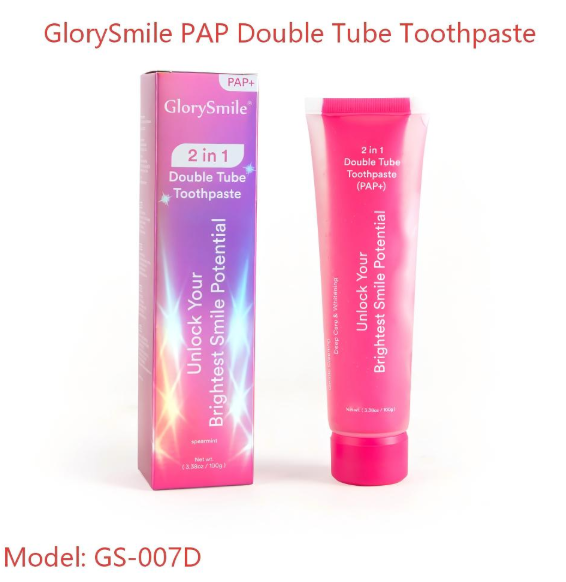
GlorySmile Double Tube Toothpaste — 100 g, spearmint, formulated with PAP and hydrogen peroxide.
Certification Coverage Across the Regime
Certificates are issued against scopes, not against brands. A buyer should check whether the specific SKU sits inside the scope, because a factory-level certificate that excludes the product in question is not evidence for that product.
| Certificate | Issuer / reference | Scope in the range | Market |
|---|---|---|---|
| ISO 13485:2016 / EN ISO 13485:2016 + A11:2021 | UL LLC, cert. 206536.250906, valid 2025-09-06 to 2028-09-05 | Electric toothbrush, whitening strips, whitening light/device, whitening gel, dental impression material, whitening kits | EU, global |
| MDSAP | UL LLC, cert. 206537.250906, valid 2025-09-06 to 2028-09-05 | Design, development, manufacturing and distribution of the same device and kit scope | USA, Brazil, Australia, Canada, Japan |
| ISO 22716:2007 | Intertek, cert. SZ2312B8, valid 2024-12-04 to 2026-12-12 | Pens, strips, gels, powders, foams, mouth spray, purple corrector serum, toothpaste tablets; kit packaging | EU, USA, global |
| GMPC (FDA 2022) | Intertek, cert. SZ2312B9, valid 2024-12-04 to 2026-12-12 | Same cosmetic manufacturing scope, including kit packaging | USA |
| amfori BSCI | SGS, monitoring ID 25-0338381-1, valid 2026-06-26 to 2027-08-15 | Manufacturing of whitening gel, whitening light/device, strips, toothpaste, electric toothbrush, mouthwash | Global |
| VEGAN | International Vegan Alliance, cert. 22521, IVA/VAS2022:49 | 23 SKUs including the GS-001B whitening kit | Global |
| HALAL | Halal Foundation Center Hong Kong, cert. 52185957421871 | 22 SKUs across strips, mouthwash, toothpaste, powder, tablets, corrector foam and mouth spray | Middle East, Southeast Asia |
| Certificate of Free Sale (CFS) | CCCMHPIE / CCPIT, CFS 2026YB0548, valid 2026-03-01 to 2028-03-01 | Strips, whitening device, mouthwash, whitening kit, gel, mouth spray | Indonesia |
Design registrations sit alongside the management-system certificates: EU Registered Community Design No. 006537908-0001 covering teeth-whitening equipment in all 27 member states, EU RCD No. 015075898-0001 covering the electric toothbrush with integrated charger dock, US Design Patent US D864,399 S for teeth-whitening equipment, US Design Patent US D1,080,877 S covering the diamond-shaped whitening device valid to 2040-06-24, and US Utility Patent US 12,350,120 B1 for a gum-protecting residue-free whitening strip and its preparation method.
For a buyer, this matters for a specific reason: when four products in a regime come from four suppliers, the artwork, the safety data sheets and the certificate scopes rarely line up. Aligning them after the fact is slower and more expensive than choosing a supplier whose scope already covers the full range.
Four Use Cases for a Full Regime
E-commerce private label launch
The entry combination is a kit plus one paste plus one rinse. A recorded case describes a private label launch on an e-commerce platform for a platform-owned brand across 5 million units, where the reported outcome was Top 10 Bestseller status in its category and a 4.8-star user rating. For that case, the supplier highlighted eco-friendly packaging, FDA and CE compliant formulation and low MOQ for initial testing. A related case covering 1 million units for a platform brand reported maintaining Top 3 sales rank in the oral care category and a 99.8% positive feedback rate.
Pharmacy and supermarket gift sets
Gift and promotional sets benefit from format variety rather than formula variety. A kit, a 20-sachet coconut mouthwash pack, a toothpaste tablet jar and a 17 ml spray in a single box reads as a complete gift at a price point a single kit cannot reach. One recorded programme delivered 7 million units of promotional gift sets for pharmacy chain and supermarket retail across two years, with multi-language manual customisation and zero return rate in large-batch inspection reported.
Dental clinic take-home programmes
Clinics need a professional course plus a maintenance set the patient actually uses. The GS-001L clinic kit supplies 35% hydrogen peroxide dual-barrier gel, a gum protector with curved needles, an M-size cheek retractor, brush-ups, vitamin E swabs, saliva towels, gauze and a bib. Pairing it with the GS-005P PAP powder or the GS-007D double-tube paste gives the patient something to continue with after the chair visit. A recorded clinic and salon programme covering 500,000 units reported no sensitivity reports from more than 5,000 patients.
Travel and sampling formats
Travel formats serve both consumers and sampling programmes. The DB-010P 20 × 12 ml sachet pack, the GS-008 30-count tablet jar, the GS-010F foam bottle and the DB-012P pre-pasted disposable toothbrush at 14 per bag all travel without a liquid allowance problem. For brands testing a new market, these formats reduce the cost of putting a physical product in a buyer's hand before committing to a full kit order.
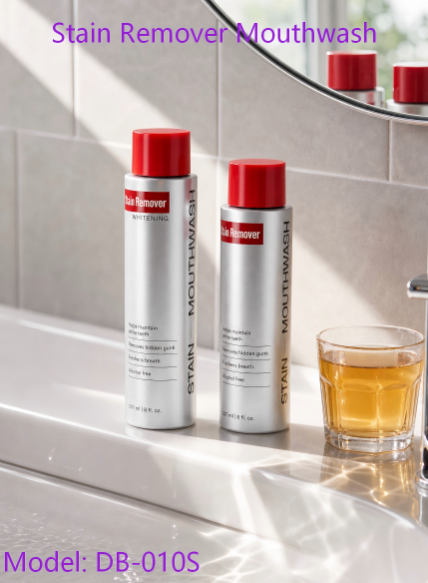
DB-010S Liquid Mouthwash — 237 ml, alcohol-free, positioned for breath freshening and stain removal.
What the Regime Does Not Claim
Credibility in this category depends on being precise about limits.
- No claim of additive effect between SKUs. The portfolio covers different functions on different schedules. Whether a specific combination produces a specific outcome is a clinical question, not a sourcing claim, and this article does not assert an answer.
- Peroxide-free is not automatically milder for every user. PAP formats address the sensitivity concern that drives much of the demand shift, but individual response varies. Low-sensitivity and PAP formulations are what the range offers; a guarantee of comfort is not part of the offer.
- Purple correction is cosmetic, not bleaching. It cancels yellow undertones on the colour wheel. It does not remove intrinsic stain.
- Concentration determines channel. The EU threshold for dentist-supervised first treatment applies regardless of how a product is marketed. The 35% hydrogen peroxide GS-001L is specified as a clinic-use kit for that reason.
- Certificate validity is time-bound. ISO 22716 and GMPC certificates in this range run to 2026-12-12; ISO 13485 and MDSAP to 2028-09-05. Buyers should request the current copy at order confirmation rather than relying on a catalogue.
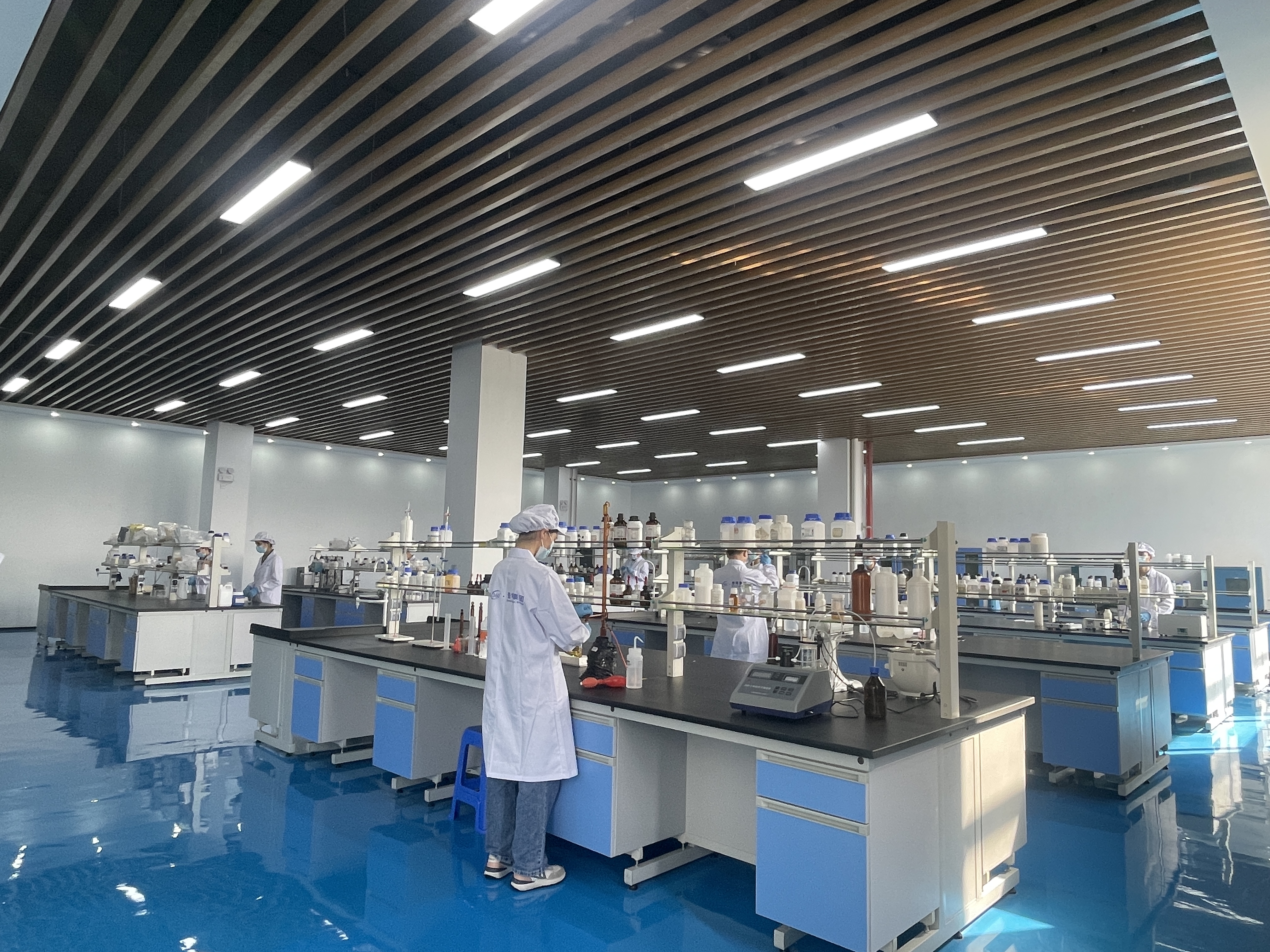
GlorySmile R&D Center — 17 R&D engineers and 11 quality specialists support formulation, design and batch release.
Frequently Asked Questions
What certifications should a CE-certified teeth whitening kit manufacturer actually hold?
CE marking is a declaration route, not a certificate in itself, so the useful question is which management-system and product documents sit behind it. For a kit entering the EU, look for ISO 13485:2016 or EN ISO 13485:2016 + A11:2021 covering the device scope, ISO 22716:2007 and GMPC covering cosmetic manufacturing and kit packaging, and CPSR, PIF and CPNP documentation for the cosmetic components. GlorySmile holds ISO 13485 under certificate 206536.250906 issued by UL, MDSAP under 206537.250906, ISO 22716 under Intertek certificate SZ2312B8 and GMPC under SZ2312B9, and states that CPSR, CPNP and PIF can be provided for cosmetic products. For medical devices, CE-MDR registration is also stated as completed.
Can one manufacturer supply both the whitening kit and the surrounding daily care products?
Yes, where the factory's certificate scope covers both device and cosmetic categories. GlorySmile holds both medical device and cosmetics production licences and manufactures whitening kits, strips, pens, powders, toothpaste, mouthwash, oral spray, electric toothbrushes, oral irrigators, toothpaste tablets and dental impression materials in one 36,000 m² facility, including 20,000 m² of 100,000-class cleanrooms and a 1,000 m² laboratory with a 100-class cleanroom for microbiological testing. Annual output is stated at 10,000,000 sets of whitening kits, 300,000,000 pieces of whitening strips, 18,000,000 boxes of whitening powder, 30,000,000 pieces of toothpaste and 90,000,000 pieces of 10 ml mouthwash. Because the scope is shared, artwork, safety data sheets and certificate references align across the regime rather than being reconciled afterwards.
What is the minimum order quantity for a private label regime?
Across the GlorySmile range, the stated MOQ is 200 pieces for private label and 1 piece for regular product, applied consistently to kits, strips, powders, toothpaste, mouthwash, sprays, tablets and electric toothbrushes. MOQ is ultimately determined by product category, customisation requirements and production line configuration, so the exact figure is confirmed at quotation and sampling. For a first regime build, this structure allows a brand to test a kit plus a paste plus a rinse in a single private-label run rather than committing to three separate supplier minimums.
Can buyers request samples before committing to production?
Free sampling is part of the OEM/ODM service, alongside professional package design and custom formulation, packaging, printing, label and bottle colour. Sampling is the point at which mechanical questions should be resolved: tray hardness, LED count and light output, timer behaviour, battery life, noise level and packaging structure. The kit line runs in-process checks on appearance, silicone hardness, noise, leakage current and dielectric strength before batch release, and all electronic products carry a 12-month warranty from the date of purchase. A sample request covering both the kit layer and the daily layer is the most efficient way to validate a regime before artwork is finalised.
How is lead time determined for a multi-SKU order?
Lead time varies depending on order volume, product specifications, customisation complexity and current production schedule, and a precise delivery timeline is provided upon order confirmation. Multi-SKU orders are governed by the slowest line, so custom formulation or bespoke packaging on one item sets the pace for the whole shipment. Buyers planning a coordinated launch should confirm the schedule SKU by SKU at quotation rather than applying a single lead time across the regime.
Next step: sample the layer you are missing
If you already have a kit and need the routine around it — or a routine and need the kit — request a sample set covering the SKUs you plan to launch. Include your target markets so the formulation path and certificate scope can be matched before sampling begins.
Contact: Tasha | Email: tasha@enjoywhite.com | Tel / WhatsApp: +86 177 7911 0152
Full product catalogue: download the GlorySmile catalogue (PDF) | Website: www.glorysmile.com
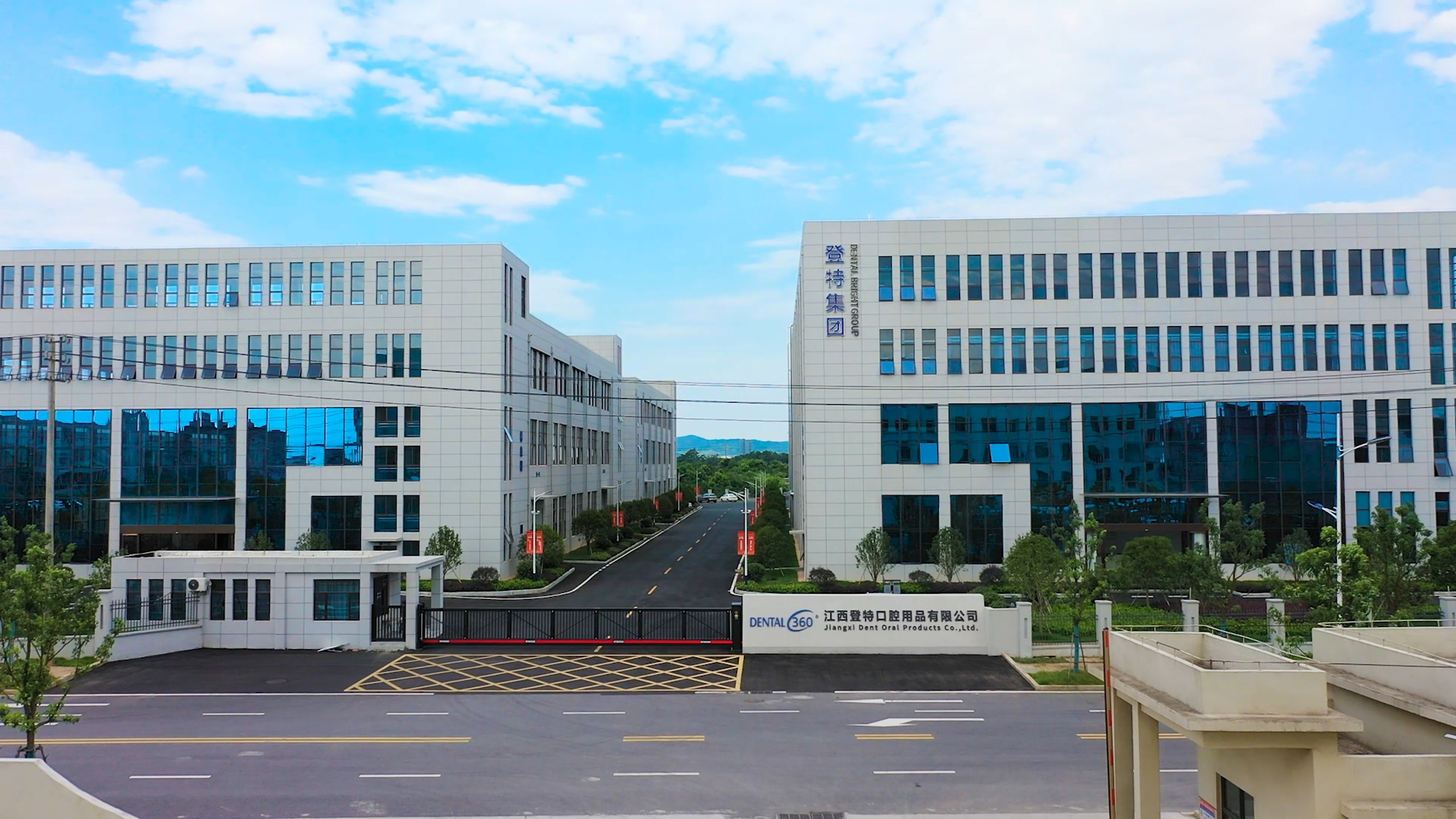
GlorySmile Factory, Makou Industrial District, Yongxiu Town, Nanchang (Jiujiang) City, Jiangxi Province — 15 minutes from Nanchang Changbei International Airport.
Conclusion
A teeth whitening kit is the sharpest tool in the category and the shortest-lived purchase in it. The brands that build durable positions are not the ones with the best single kit; they are the ones whose customers still have a reason to buy from them in week five, week twelve and week thirty.
That reason comes from the layers around the kit: a cleaning base that runs twice a day, a rinse that covers the gaps, a powder or corrector that manages the visible surface between courses, and — for clinics — a professional take-home course that hands the patient into a maintenance routine instead of out of the door.
The sourcing logic follows the same shape. One supplier covering device and cosmetic scopes means one documentation system, one artwork process and one point of contact when a certificate needs renewing or a market needs a different formulation path. Jiangxi Dentalbright Technology Co., Ltd., trading as GlorySmile Factory, has built its range around that structure since 2008, with the current 36,000 m² facility completed in 2013 and products exported to 102 countries.
The kit starts the regime. The regime is what keeps it working.
Have Questions or Need More Details?
Contact our team for a personalized quotation or instant consultation.
Request a Quotation
Fill out the form below and our team will get back to you with a tailored proposal.
WhatsApp Direct Chat
Prefer to chat in real-time? Message us on WhatsApp for instant assistance & quick answers.
- Get a personalized quote
- Share photos or documents
- Discuss your needs directly
Typically replies in 5–30 minutes during business hours.