Teeth Whitening Strips vs. Purple Colour Corrector Foam: Private-Label SKU Choice
A private-label oral care brand rarely has room for two whitening SKUs in the same launch. The choice between teeth whitening strips and a purple colour corrector foam is usually settled by three variables that have little to do with which formula sounds stronger: the claim the brand intends to print on pack, the market where the SKU will be registered and sold, and the documentation the supplier can hand over before the artwork is signed off.
The short answer.Teeth whitening strips fit a brand whose core promise is stain removal and visibly whiter teeth, in a market that permits a whitening claim and where the formula dossier — ingredient disclosure, MSDS, CPSR/PIF/CPNP or the US equivalent — can be assembled before launch. Purple colour corrector foam fits a brand whose promise is cosmetic correction of yellow tone, that wants a pigment-based rather than bleach-based positioning, or that operates where peroxide limits make a bleaching claim impractical. The two SKUs solve different problems, and stacking both into one launch doubles the per-SKU compliance cost without doubling the return.
This comparison is written for the buyer who is already past product discovery: an oral care brand owner, importer or distributor choosing which SKU to commit a private-label order to. It sets out what each product actually is, which claims each can carry, which documents each needs in the EU and the US, how sensitive-teeth positioning changes the formula decision, and how order size and turnaround differ. The conclusion is deliberately conditional, because the right SKU depends on the brand's claims, its target market and the evidence it can obtain.
What the two SKUs actually are
The format difference is not cosmetic. One SKU delivers an active gel to the tooth surface and supports a whitening claim; the other applies a pigment system that changes how tooth colour reads and supports an appearance-based claim. That single distinction drives almost every downstream decision — formula, packaging, market access and documentation.
Teeth whitening strips: a gel-delivery film with a whitening claim
Glorysmile teeth whitening strips are built as a three-layer laminate: a PET hard film backing, a whitening gel layer, and a PE soft film. Each strip is individually wrapped in an aluminium bag, and strips are packed in content options of 7, 14 or 21 bag strips per pack. The finished pack includes a user manual, a shade guide and a colour box. Strip formats in the current range include models GS-004H/V/C/P, and a dissolving strip variant, DB-004L.
Because the gel is the active element, the formula family is a first-order decision rather than a detail. Glorysmile lists hydrogen peroxide (HP), carbamide peroxide (CP) and peroxide-free PAP among its whitening formulas, alongside sodium phytate, sodium bicarbonate, charcoal and custom formulations. Flavour is a separate customisation axis, with options including Blue Raspberry, Strawberry, Peach, Grape, Watermelon, Peppermint, Orange, Mint, Pineapple, Cherry Blossom, Coconut and Mango. The supplier's application notes for the strip format describe no-slip dry adhesive technology for once-daily home use, with an enamel-safe formula option and a zero-peroxide option.
Purple colour corrector foam: a pigment-based appearance claim
Purple colour corrector foam sits in the V34 colour-corrector category, which is listed among Glorysmile's production lines. In that category, the documented function set is yellow tone neutralisation, stain removal and breath freshening — a cosmetic correction function, not a bleaching function. The supplier's category notes describe the formula as alcohol-free and require labelling for adults and children aged 16 and over.
Mechanically, the foam works on appearance: a violet-toned pigment counteracts the yellow cast of the teeth in the same way a corrective tone works in other cosmetic categories. In Glorysmile's comparison material, its V34 formula is described as a balanced pigment formula with a gentle tooth-colour correction effect, intended for long-term daily home use. That is a materially different product promise from "whitens teeth", and the wording on your pack has to reflect it.
The claim you write decides the SKU
In practice, private-label SKU selection should start from the claim on the front of the pack, not from the formula. Work backwards from the sentence you want the shopper to read, and the product choice usually resolves itself.
- "Whitens teeth" / "removes coffee, tea and tobacco stains" — this is a whitening claim and it belongs to the strip format, where the gel does the work. It also obliges you to disclose the active formula family and to hold substantiation for the specific wording you use.
- "Neutralises yellow tone" / "brighter-looking smile" — this is a correction claim and it belongs to the colour corrector foam. It describes appearance, not a change in tooth structure, and it needs its own evidence file.
- Shade-change numbers — Glorysmile's application scenarios for whitening strips reference stain removal and whitening of 5–8 shades. A figure like that is a performance claim: if you intend to print it, hold the test record that supports it for your formula, your application protocol and your test conditions, and keep those conditions with the claim.
- "Enamel safe", "for sensitive teeth", "peroxide free" — each is a separate claim, and each must be true of the specific formula you order, not of the range as a whole.
Practical rule: do not let a pigment product inherit a whitening claim, and do not use a whitening strip to make a correction claim. Mismatched copy is the fastest route to a listing problem, and it also mis-sets consumer expectations, which shows up later as returns and reviews.
Documentation is the real differentiator
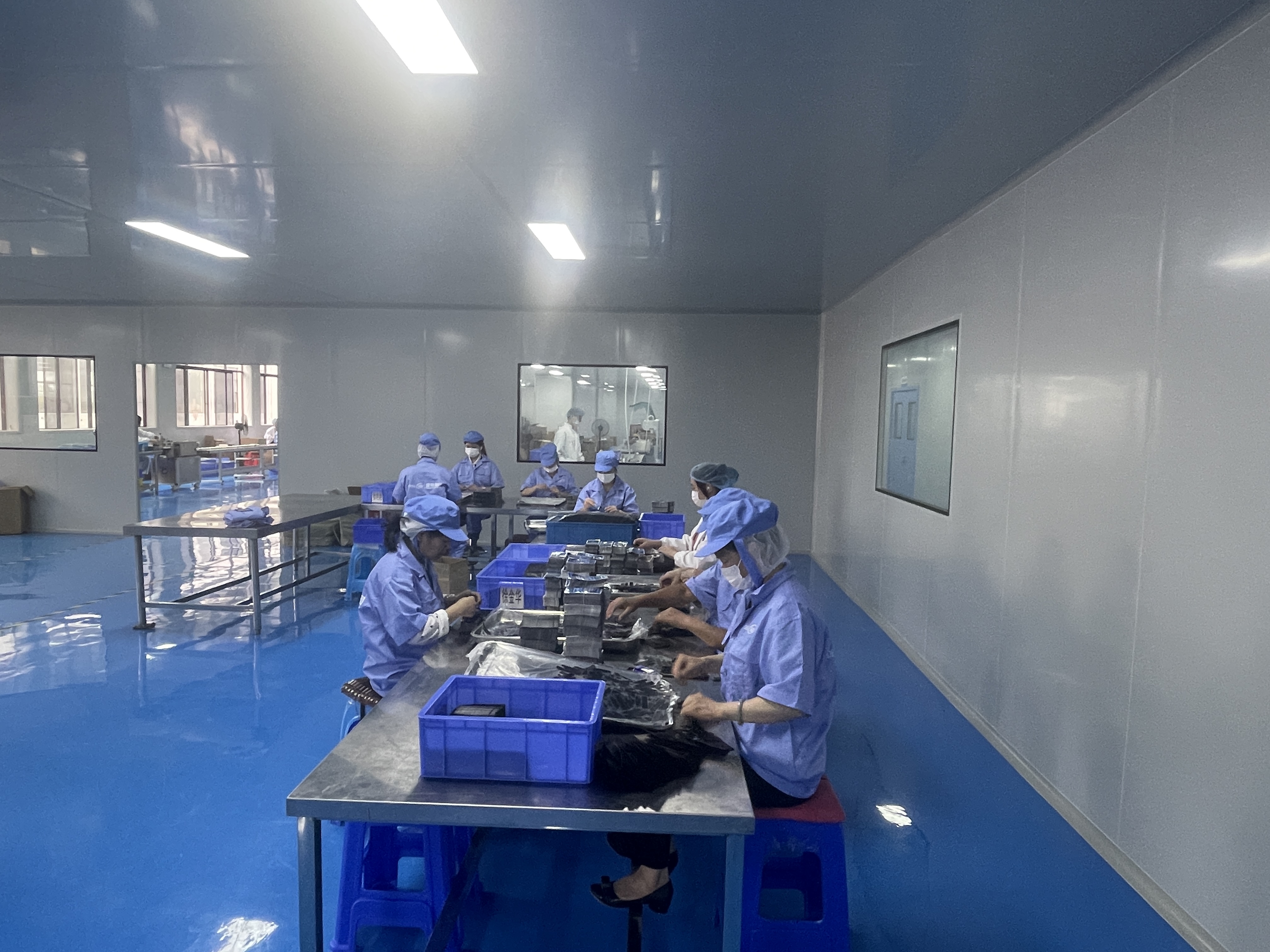
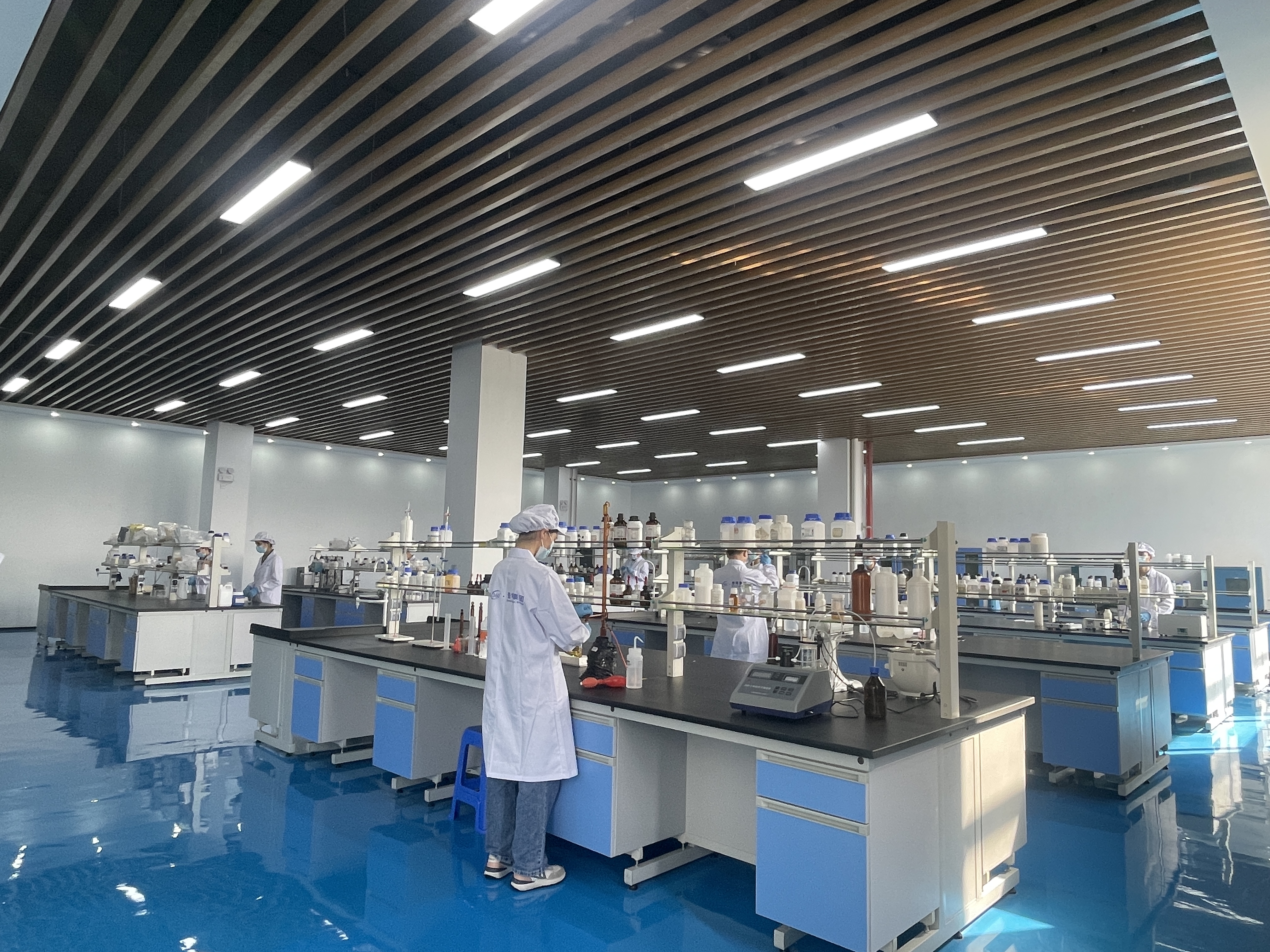
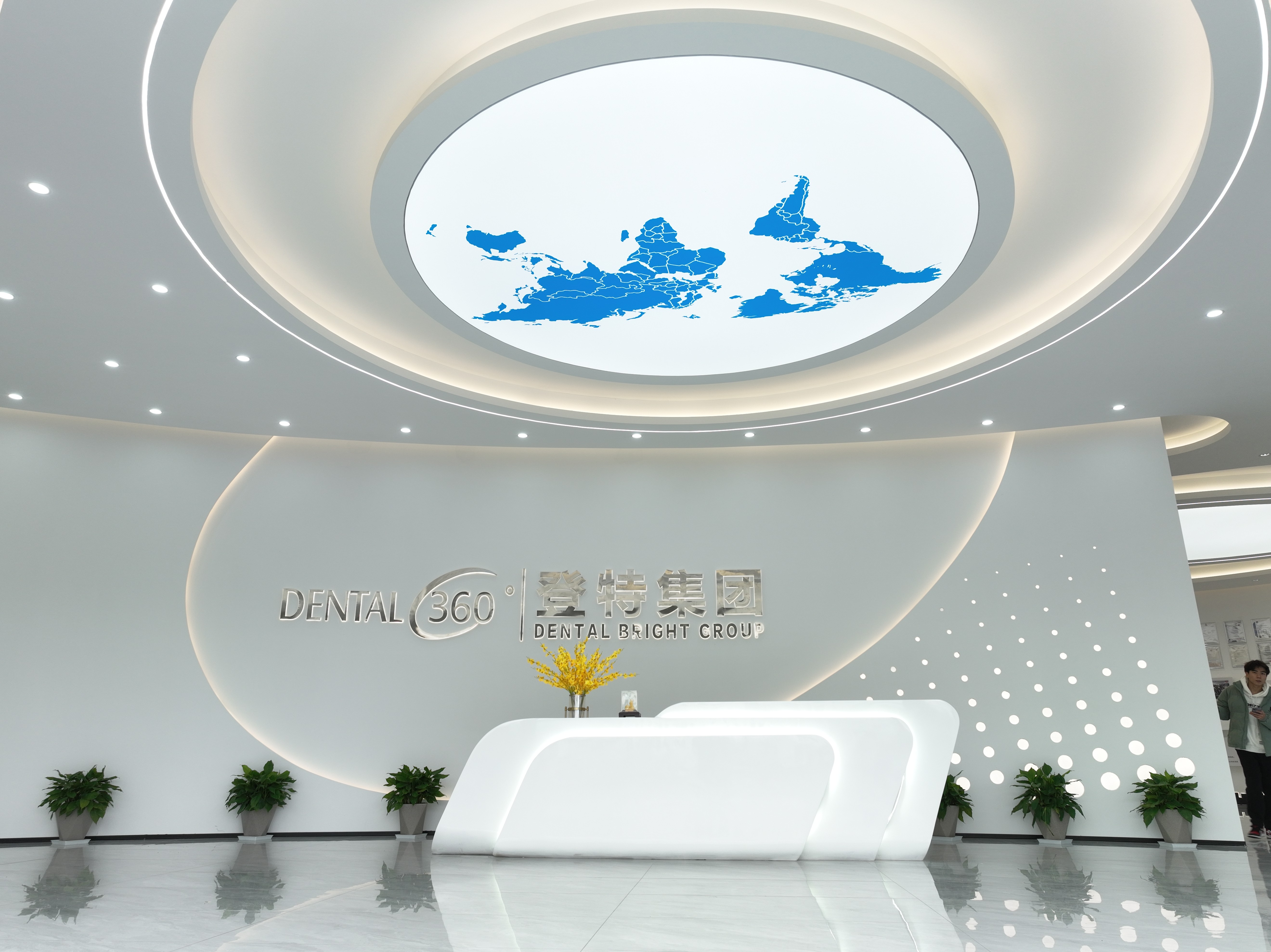
Both SKUs are manufacturable at scale. What separates them commercially is the paperwork a brand has to hold in each market. Jiangxi Dentalbright Technology Co., Ltd. (Glorysmile Factory) operates a 36,000 m² facility with 20,000 m² of 100,000-class cleanrooms and a 1,000 m² laboratory that includes a 100-class cleanroom for microbiological testing, and employs 256 people including 17 R&D engineers and 11 QC specialists. The factory holds MDSAP, ISO 13485, ISO 22716, US GMP, BSCI, HALAL and VEGAN credentials, together with both medical device and cosmetics production licences. Those credentials are shared across the range; the SKU-specific documentation is where the two products diverge.
EU documentation
The decisive number for the European market is not a marketing number. According to HPRA and European Commission guidance on Regulation (EC) No 1223/2009, hydrogen peroxide in over-the-counter teeth whitening products is restricted to 0.1% or less. That threshold effectively separates a peroxide-based whitening strip from the OTC cosmetic route described in that guidance, and it pushes brands toward a PAP (peroxide-free) or low-peroxide formula if they want ordinary retail distribution. A colour corrector foam is not built around peroxide bleaching, so the same threshold does not shape its formulation in the same way — but its pigment system, full ingredient list and labelling still need their own review.
On the dossier itself, Glorysmile's stated position is that CPSR, CPNP and PIF can be supplied for cosmetic products, and that CE-MDR registration has been completed for medical devices. For a whitening strip, ask which of those items apply to your specific SKU and formula; for the foam, ask the same question rather than carrying the strip answer across.
US documentation and FDA-related status
On the FDA question, Glorysmile's answer is that its products are FDA approved, with the FDA-certified scope covering medical devices, cosmetics and OTC drugs. Treat that as the supplier's stated position and attach it to your own regulatory review: the file you keep for a listing should identify the scope that applies to your SKU and formula, not a general statement covering the range.
Both products sit under cosmetics-style obligations in the US, which means facility registration and product listing under MoCRA 2022. Registrar Corp's MoCRA guidance lists the fees as USD 849 per year for facility registration and USD 200 per product listing. Those amounts are per facility and per product, so they do not favour one SKU over the other — but they do mean that launching two SKUs from one brand carries twice the product-listing cost and twice the label review.
MSDS, COA and factory certificates
An MSDS is available on request, and the certificate pack spans CE, FDA, CPSR, CPNP, PIF, SCPN, MSDS, COA, RoHS, HALAL and VEGAN on the factory side, with GMP, ISO 22716, ISO 13485, MDSAP and BSCI on the product and system side. For the strips, the three-layer construction and aluminium bag also matter for stability and transport documentation.
| Documentation item | Whitening strips | Colour corrector foam | Why it decides the SKU |
|---|---|---|---|
| Formula disclosure | HP, CP, PAP, sodium phytate, sodium bicarbonate, charcoal or custom | Pigment-based correction formula; full ingredient list to be confirmed per SKU | Determines which claims are defensible and which market route applies |
| EU peroxide limit | 0.1% or less for the OTC route described in EC No 1223/2009 guidance | Not a peroxide-bleach product; separate cosmetic assessment still required | Can rule out a high-peroxide strip for EU retail before any order is placed |
| EU dossier | CPSR, CPNP, PIF for cosmetic products; CE-MDR where a medical device route applies | Same cosmetic dossier items, assessed against the foam formula | Missing items delay listing regardless of product quality |
| US position | FDA-certified scope stated to cover medical devices, cosmetics and OTC drugs; MoCRA registration and listing | Same stated scope; MoCRA registration and listing | Registration cost is per facility and per product, not per SKU type |
| MSDS / COA | Available | Available | Standard transport and customer-facing requirement for both |
| Trade classification | HS 3306.90.00 per US CBP ruling NY N342147 | Confirm separately with your customs broker | Do not assume the strip code carries over to a foam SKU |
Sensitive teeth: which SKU carries the claim more safely
For a brand whose audience is sensitivity-led, this is often the deciding question. On the strip side, Glorysmile states that it offers PAP and low-sensitivity formulas designed for sensitive teeth, and the strip application notes include an enamel-safe formula option and a zero-peroxide option. That gives a brand a workable path: choose the PAP route, keep the sensitivity claim tied to that specific formula, and avoid carrying a high-peroxide formula under the same claim.
The colour corrector foam does not make a bleaching claim in the first place, and its documented positioning is gentle, long-term daily correction rather than an aggressive treatment cycle. That does not automatically make it "sensitivity safe" — no product is, without formula-specific evidence — but it does mean the claim you are defending is different and generally narrower. Before printing anything sensitivity-related on either SKU, confirm the full ingredient list, the peroxide status and the age labelling for that exact formula; the supplier's category notes require labelling for adults and children aged 16 and over.
Cost, MOQ and cash-flow comparison
Order economics differ more in structure than in headline price. For regular orders in existing packaging, Glorysmile's stated MOQ is 5 boxes; for OEM orders with customised packaging, the MOQ varies by product and runs from 100 to 1,000 boxes. On the colour corrector side, the supplier's comparison material documents a 5-box MOQ for its V34 colour corrector.
Indicative published figures are USD 1.45–1.88 per unit for the V34 colour corrector and roughly USD 1.85–2.00 per box for whitening strips, with a documented customisation turnaround of 7–15 days for strips. Those two numbers are not like-for-like: one is quoted per unit and the other per box, and the strip count per box varies with the 7, 14 or 21 bag-strip pack you choose. Use them to frame a conversation, not to build a margin model — ask for a per-treatment costing and a written turnaround commitment for the exact pack you intend to sell.
Cash-flow note: the smaller first order usually belongs to the SKU you can document fastest. A 5-box trial of either product is a documentation exercise as much as a product test, and it is cheaper than discovering a missing dossier item after the artwork is printed.

Where each SKU fits on shelf
Teeth whitening strips suit a brand built around stain management: coffee, tea and tobacco staining, a daily regimen, a pack that includes a shade guide so the shopper can track progress, and individually wrapped strips that travel. The format also carries the stronger claim, which is why it attracts more scrutiny.
Purple colour corrector foam suits a brand whose promise is appearance and tone — a cosmetic correction step for shoppers who want their teeth to read less yellow without committing to a whitening regimen, or for a market where peroxide limits narrow the whitening options. Its advantage is claim modesty; its limitation is that it cannot replace a whitening product in the consumer's mind, and pack copy that implies it can will create a mismatch the brand has to manage later.
A six-step SKU decision sequence
- Write the claim first. Draft the exact front-of-pack sentence. If it contains "whitens" or a shade number, you are choosing strips. If it describes tone or appearance, you are choosing the foam.
- Map the market restriction. For the EU, check the formula against the 0.1% hydrogen peroxide limit for OTC whitening products described in Regulation (EC) No 1223/2009 guidance. For the US, confirm the MoCRA registration and listing position.
- Select the formula family. On the strip side that means HP, CP, PAP or a custom blend, plus flavour; on the foam side it means confirming the pigment system and full ingredient list.
- Assemble the dossier. Request MSDS, COA, and the CPSR/PIF/CPNP items for cosmetics or the CE-MDR position for medical devices, and check that each document names your SKU.
- Test the pack format. For strips, decide 7, 14 or 21 bag strips, flavour and whether the shade guide and user manual are included. For foam, confirm the bottle and closure specification.
- Size the first order and the reorder. Start with the 5-box regular MOQ to validate the file and the sample, then move to the 100–1,000 box OEM band once packaging is signed off and the customisation timeline is confirmed in writing.
Decision matrix: match the SKU to the market
| Launch scenario | Better first SKU | Reason | Verify before launch |
|---|---|---|---|
| EU retail listing with an explicit whitening claim | Whitening strips with PAP or low-peroxide formula | Keeps the claim inside the OTC route described in EC No 1223/2009 guidance | CPSR, PIF and CPNP naming your SKU; peroxide level of the chosen formula |
| US marketplace launch with a whitening claim | Whitening strips | Strip format carries the claim; supplier states an FDA-certified scope covering cosmetics and OTC drugs | MoCRA facility registration and product listing; scope document for your SKU |
| Sensitivity-led brand positioning | Whitening strips, PAP or low-sensitivity formula | Supplier offers PAP and low-sensitivity formulas designed for sensitive teeth | Formula-specific support for the sensitivity and enamel-safe wording |
| Cosmetic, appearance-based promise only | Purple colour corrector foam | Documented function is yellow tone neutralisation, stain removal and breath freshening | Full ingredient list, age labelling, and the exact correction wording |
| Two-SKU portfolio launch | Strips as the claim anchor, foam as the cosmetic companion | Different claims, different shelf roles, no internal cannibalisation of the whitening claim | Doubled MoCRA product listing cost and two separate label reviews |
Frequently asked questions
Is the product compliant for the EU market?
Glorysmile states that it can supply CPSR, CPNP and PIF for cosmetic products, and that CE-MDR registration has been completed for medical devices. For a whitening strip, compliance also depends on the formula: HPRA and European Commission guidance on Regulation (EC) No 1223/2009 restricts hydrogen peroxide in over-the-counter teeth whitening products to 0.1% or less, so a high-peroxide strip does not fit the OTC route described there. Ask which dossier items apply to your specific SKU and formula rather than accepting a range-level answer.
Is the product FDA approved?
Glorysmile's stated answer is that its products are FDA approved and that the FDA-certified scope covers medical devices, cosmetics and OTC drugs. In practice, a brand should attach that statement to its own regulatory review and keep a scope document that identifies the category your SKU falls into. Whitening strips and colour corrector foam sold as cosmetics in the US also fall under MoCRA 2022 facility registration and product listing.
Can you provide MSDS and certificates?
Yes. An MSDS is available, and the certificate pack covers CE, FDA, CPSR, CPNP, PIF, SCPN, MSDS, COA, RoHS, HALAL and VEGAN on the factory side, with GMP, ISO 22716, ISO 13485, MDSAP and BSCI on the product and system side. The factory operates under MDSAP, ISO 13485, ISO 22716, US GMP and BSCI, and holds both medical device and cosmetics production licences.
What whitening formulas are available, and what suits sensitive teeth?
The strip range covers PAP (peroxide-free), carbamide peroxide and hydrogen peroxide formulas, along with sodium phytate, sodium bicarbonate, charcoal and custom formulations. For sensitive-teeth positioning, Glorysmile states that it offers PAP and low-sensitivity formulas designed for sensitive teeth, and the strip application notes include an enamel-safe formula option and a zero-peroxide option. The sensitivity claim should be tied to the specific formula you order.
What is the MOQ?
For regular orders in existing packaging, the MOQ is 5 boxes. For OEM orders with customised packaging, the MOQ varies by product and ranges from 100 to 1,000 boxes. The V34 colour corrector is documented at a 5-box MOQ. A small first order lets a brand validate the documentation and the sample before committing to a customised packaging run.
How do samples and customisation timelines work?
Glorysmile offers free sampling and professional package design as part of its OEM/ODM service, and documents a 7–15 day customisation turnaround for whitening strips. Because timelines depend on the formula, flavour and pack format you select, confirm the schedule in writing for your exact specification. If you want to test both SKUs before choosing, request a sample of the strip formula and the colour corrector foam together, and ask for the matching MSDS and certificate pack with each sample so the commercial and documentation evaluations run in parallel.
Conclusion
There is no universal winner between teeth whitening strips and purple colour corrector foam, because they are not competing answers to the same question. Strips are the SKU for a brand that intends to claim whitening or stain removal and can support that claim with a formula dossier — particularly a PAP or low-peroxide formula for EU retail, and a registered, listed product for the US. The foam is the SKU for a brand that wants a cosmetic correction claim, a pigment-based positioning, and a narrower documentation and claim burden.
The decision therefore turns on three things the brand controls: the claim it wants to print, the market it wants to enter, and the documentation it can obtain before the artwork is finalised. If those three align with a whitening claim, choose the strips. If they align with an appearance claim, choose the foam. If both look viable, launch one, prove the file and the sell-through, and add the second SKU once the first is fully documented.
Next step: compare the two SKUs against your own specification. Glorysmile supplies free samples, formula and flavour options, and a certificate pack including MSDS, COA, CPSR, PIF and CPNP for cosmetic products, so the claim and the dossier can be evaluated together. Download the Glorysmile product catalogue (PDF) for the full strip and colour corrector range, or review the manufacturer profile at Jiangxi Dentalbright Technology Co., Ltd. (Glorysmile Factory) before requesting a quotation.
Have Questions or Need More Details?
Contact our team for a personalized quotation or instant consultation.
Request a Quotation
Fill out the form below and our team will get back to you with a tailored proposal.
WhatsApp Direct Chat
Prefer to chat in real-time? Message us on WhatsApp for instant assistance & quick answers.
- Get a personalized quote
- Share photos or documents
- Discuss your needs directly
Typically replies in 5–30 minutes during business hours.