
Teeth Whitening Strips: Types, Safety, and OEM Choice
Teeth Whitening Strips: Types, Safety, and OEM Choice
Teeth whitening strips are thin, flexible film strips coated with a whitening gel. They are designed to adhere to the front surface of teeth and typically help remove surface stains from coffee, tea, and tobacco. They are one of the most familiar at-home whitening formats, and for brands, distributors, and retailers they are also a product category that can be sourced through private-label and OEM production.
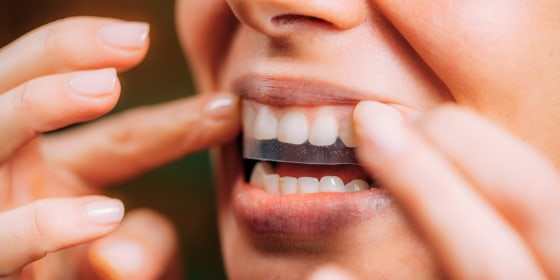
Individually wrapped teeth whitening strips are practical for home use and retail programs.
Jiangxi DentalBright Technology Co., Ltd., better known under the brand GlorySmile, is an oral-care manufacturer that builds private-label and OEM teeth whitening strip programs. The company was established in 2013 and operates a 36,000 m² factory in Makou Industrial District, Nanchang, with 20,000 m² of 100,000-class cleanrooms. This article explains the main strip types, the active ingredients commonly used, the regulatory considerations that influence product decisions, and how to evaluate a manufacturing partner.
Why Strip Choice Is Not Just a Consumer Decision
For an end consumer, the main question is usually simple: do these strips remove coffee stains without causing sensitivity? For a brand owner, procurement manager, distributor, or e-commerce seller, the question is more complex. A strip purchase can depend on formula classification, packaging compliance, target-market regulations, format preference, private-label branding, and factory certification levels.
Teeth whitening strips can be divided into several product families. They can be dry strips, wet strips, or dissolving strips. The active side can use hydrogen peroxide, PAP, purple color-correcting technology, charcoal, or a custom mix. Each choice affects how the product feels, how it is regulated, how it should be positioned, and what documentation the supplier needs to provide.
What Teeth Whitening Strips Do
Most commercial strips are designed to remove exogenous stains, meaning stains on the surface of the enamel that come from foods, drinks, and tobacco. Whitening strips are used once per day for a fixed number of days. In product literature for GlorySmile strips, the typical stated function is to remove coffee, tea, and tobacco stains and to help whiten teeth.
From a construction standpoint, a typical GlorySmile strip uses a three-layer design: a PET hard film, the whitening gel layer, and a PE soft film. Each strip is individually packed in an aluminum bag to protect the gel from air and moisture. This type of construction appears in both dry and wet strip production and is part of the technical specification that a responsible supplier can share.
Market and Regulatory Signals That Brands Should Know
The whitening strip category operates within a broader oral care market. According to Grand View Research, the global market for teeth whitening strips and gels was valued at USD 1.1 billion in 2025. Although the exact market definition varies by analyst, the segment is large enough that many companies want to enter it with differentiated brands.
Regulation is one of the first factors that separates a compliant strip program from a risky one. In the European Union, Regulation (EC) No. 1223/2009 restricts the concentration of hydrogen peroxide in over-the-counter teeth whitening products to 0.1% or less. For this reason, peroxide-free PAP formulas are often chosen for EU-market products. In the United States, the Modernization of Cosmetics Regulation Act (MoCRA) treats many whitening strips as cosmetics, requiring facility registration and product listing. The verified compliance costs under MoCRA are USD 849 per year for facility registration and USD 200 per product listing. On the import side, teeth whitening strips are primarily classified under HS Code 3306.90.00, a code used for preparations for oral or dental hygiene.
This regulatory landscape explains why a factory cannot simply produce one strip formula and expect it to work in every country. The supplier should understand whether a formula is positioned as a cosmetic or as a medical or OTC product, and should provide the necessary documentation: MSDS, COA, CPSR, PIF, CPNP notification, CE-MDR, or FDA-related registrations where applicable.
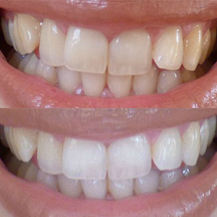
Surface stains from coffee, tea, and tobacco are a common target for whitening strips.
Core Formula Choices: Peroxide, PAP, Charcoal, and Purple
GlorySmile produces a range of dry teeth whitening strips under the model numbers GS-004H, GS-004V, GS-004C, and GS-004P. These strips are described in product data as dry strips that are high-viscosity, residue-free, and alcohol-free. The main formulas are 6% hydrogen peroxide, purple, PAP with charcoal, and PAP. This family offers a practical example of how the same strip format can be adapted for different market positions.
Hydrogen Peroxide Strips (6% HP)
Hydrogen peroxide (HP) is a traditional whitening ingredient. It is effective on many types of stains, but it is also closely regulated in certain markets. GlorySmile uses a 6% HP option in the GS-004H model. Because of its regulatory status, peroxide-containing formats require more careful classification work before launch.
PAP and Peroxide-Free Strips
PAP, or phthalimidoperoxycaproic acid, is a whitening ingredient that can be used to create peroxide-free formulas. From a formulation perspective, PAP is often described as a larger-molecule, surface-acting type of whitening agent. It is typically considered gentler than peroxide for people with sensitivity concerns. GlorySmile offers PAP-based teeth whitening strips in the GS-004P model, and the company also states that it offers PAP and low-sensitivity formulas designed for sensitive teeth.
Charcoal Strips
Charcoal is another popular addition in whitening categories. GlorySmile combines PAP with charcoal in the GS-004C model. This combination allows a brand to sell a peroxide-free, charcoal-positioned strip while retaining a whitening-active ingredient that is suitable for daily oral care routines.
Purple Colour-Correcting Strips
Purple whitening strips are based on color theory: purple sits opposite yellow on the color wheel, so a water-soluble purple dye applied to teeth can temporarily cancel out yellow undertones. GlorySmile offers purple strips in both dry and wet formats, including the GS-004V dry strip and the GS-V34-S07 wet strip. Wet strips are sometimes recommended for purple formulas because higher residue can help the purple pigment adhere to the teeth and produce a more visible color-correcting effect.
Dissolving Strips
For brands that want a newer format, dissolving strips offer a different use experience. GlorySmile’s DB-004L is classified as a teeth whitening dissolving strip. It shares the three-layer and aluminum-bag construction seen in other strip models, but is marketed as a dissolving format rather than a peel-off dry or wet strip.
Dry Strips vs. Wet Strips: What the Factory Evidence Shows
A common question for buyers is whether to choose dry strips or wet strips. GlorySmile produces both. Dry strips are defined by higher viscosity and are formulated to be residue-free and alcohol-free. In the company’s product-based comparison, dry strips provide good adhesiveness, do not easily slip off, and leave minimal residue. They are, however, generally more expensive to produce.
Wet strips have relatively lower adhesion, which means they are more likely to shift during use and may leave more residue. This is not always a disadvantage. Wet strips are a lower-cost option, and the higher residue can be useful for purple whitening strips because the remaining pigment layer helps the color-correcting effect last longer.
Buyers should therefore not choose a format in isolation. They should first choose a formula and a market position, then select the strip format that supports that position.
Why Factory Capability Matters in OEM and Private Label Teeth Whitening Strips
Launching a whitening strip brand is rarely a do-it-yourself exercise. The factory controls the formula, the adhesion profile, the residue behavior, the flavor, the packaging seal, and the regulatory documentation. A reliable manufacturer should be able to demonstrate several specific capabilities.
Jiangxi DentalBright Technology Co., Ltd. holds a certification set that includes MDSAP, ISO 13485, ISO 22716, US GMP, BSCI, HALA, and VEGEA. Its products are described as complying with FDA, CE, CPSR, PIF, CPNP, and other major international standards. These certifications cover quality management, cosmetic good manufacturing practice, medical device safety, and social responsibility.
The factory also has physical capacity. It currently employs about 256 people, including 17 R&D engineers and 11 quality-control specialists. A 1,000-square-meter laboratory supports raw-material, semi-finished, and finished-product testing. The company states that its annual production capacity includes 300,000,000 pieces of teeth whitening strips and 10,000,000 sets of teeth whitening kits. This is the scale needed for supermarket retail programs, distributor orders, and fast-growing e-commerce brands.
Step-by-Step Decision Framework for Sourcing Teeth Whitening Strips
If you are evaluating a private-label strip program, the following sequence can reduce the risk of choosing the wrong product or the wrong supplier.
- Identify the destination market and product classification. Decide whether the strip will be sold in the EU, US, UK, or elsewhere. Check whether the formula will be treated as a cosmetic, an OTC drug, or a medical device. This will determine the permissible active ingredients and the documents you need from the manufacturer.
- Choose the active formula. For a gentle, daily-use, enamel-conscious brand, PAP or PAP-based formulas are often selected. For a stronger whitening claim, a peroxide formula may be appropriate, but it will require more regulatory attention. Charcoal and purple formulas add differentiation but should not replace a core whitening active unless the product is positioned as a color corrector rather than a bleach.
- Select the strip format. Dry strips support premium positioning because of strong adhesion and low residue. Wet strips are a lower-cost option and pair well with purple color-correcting formulas. Dissolving strips create a new-format story for brands looking to stand out on shelves.
- Define packaging and flavor. GlorySmile offers strip packs of 7, 14, or 21 individually wrapped strips. Flavors include options such as blue raspberry, strawberry, peach, grape, watermelon, peppermint, orange, mint, pineapple, cherry blossom, coconut, and mango. Custom flavor and custom packaging are available through the factory’s OEM service.
- Confirm compliance documentation. Ask the supplier whether they can provide MSDS, COA, and, for EU products, CPSR, CPNP notification, and PIF. For medical device products, confirm whether CE-MDR or FDA registration has been completed. For cosmetics under MoCRA, facility registration and product listing should be part of the launch checklist.
- Validate with samples before committing. A professional manufacturer should support sampling. Cleanroom production data and batch documentation can help you verify that the commercial product matches the sample.
- Plan lead time, MOQ, and logistics. For GlorySmile, regular orders using existing packaging have an MOQ of 5 boxes, while OEM orders with customized packaging carry an MOQ that varies by product, usually from 100 to 1,000 boxes. Lead time and shipping should be agreed with the factory before the first large purchase order.
Use Cases for Private Label Teeth Whitening Strips
E-commerce Sellers Launching a Direct-to-Consumer Brand
E-commerce platforms are a major route for oral care private labels. GlorySmile products have been used by e-commerce platform sellers to launch private-label brands. For an online seller, the advantage of OEM strips is the ability to create a unique flavor, pack size, and branded carton without owning a factory.
Distributors Building an Oral Care Portfolio
Distributors often need a dependable volume supplier with certifications for multiple markets. A manufacturer with exports to 102 countries and approximately 90% export ratio can help a distributor meet documentation requirements across regions. GlorySmile’s main export markets include the EU, USA, and UK, which are also the markets most likely to require detailed compliance files.
Dental Clinics and Beauty Salons
Professional whitening not only happens in dental chairs; many clinics and beauty salons also retail home-maintenance products. Some GlorySmile products have been successfully used by dental clinics and beauty salons. Whitening strips can extend a clinic’s whitening service by giving patients a controlled take-home option.
Retailers and FMCG Brands
Supermarket and drugstore buyers tend to prefer manufacturers with both solid certifications and flexible packaging. The GS-004 series is sold in different formulas, so a retailer can carry one strip range while differentiating by shelf segments: PAP+ for sensitive teeth, 6% HP for classic whitening, charcoal for natural appeal, and purple for immediate tone correction.
Teeth Whitening Strip Options at a Glance
| Strip Type / Formula | GlorySmile Model | Product Features from Verified Data |
|---|---|---|
| PAP+ dry strips | GS-004P | Dry strip, PAP formula, high-viscosity, residue-free, alcohol-free; 3-layer construction; aluminum-bag packaging; 7/14/21 strip packs; multiple flavors. |
| PAP + charcoal dry strips | GS-004C | Dry strip combining PAP with charcoal; same high-viscosity, residue-free, alcohol-free profile and packaging options. |
| Purple dry strips | GS-004V | Dry strip using purple ingredients to cancel yellow undertones; suitable for color-correction positioning. |
| 6% HP dry strips | GS-004H | Dry strip with 6% hydrogen peroxide; classic peroxide-based whitening format with high-viscosity adhesive film. |
| Purple wet strips | GS-V34-S07 | Wet strip format; purple color; lower-cost format; more residue than dry strips can help purple pigment adhesion. |
| Dissolving strips | DB-004L | Teeth whitening dissolving strip format; 3-layer structure and aluminum-bag packaging. |
Frequently Asked Questions
Are teeth whitening strips safe for sensitive teeth?
GlorySmile offers PAP and low-sensitivity formulas designed for sensitive teeth. PAP is a peroxide-free whitening agent that is generally considered gentler than hydrogen peroxide. Buyers and users should still follow the application time on the product label and consult a dentist if they have existing oral health conditions or prolonged sensitivity.
What certifications should a teeth whitening strips manufacturer have?
At a minimum, the factory should be able to show its manufacturing system certifications and product compliance documentation. Jiangxi DentalBright Technology Co., Ltd. holds MDSAP, ISO 13485, ISO 22716, US GMP, BSCI, HALA, and VEGEA, and states that its products comply with FDA, CE, CPSR, PIF, CPNP, and other major international standards. For the EU market, the company can offer CPSR, CPNP notification, and PIF for cosmetic products, while medical-device products have completed CE-MDR registration.
What is the difference between dry strips and wet strips?
Dry strips have good adhesiveness and are less likely to slip off. They leave minimal residue and are generally more expensive. Wet strips have weaker adhesion and may leave more residue, but they cost less. For purple whitening strips, wet strips are sometimes preferred because the higher residue helps the purple pigment stay on the teeth to produce a physical color-correction effect.
Can I create private label or OEM teeth whitening strips?
Yes. GlorySmile provides OEM/ODM services that include product formulation, customization, free sampling, and packaging design. For regular orders with existing packaging, the MOQ is 5 boxes. For OEM orders with custom packaging, the MOQ varies by product, generally from 100 to 1,000 boxes.
What whitening formulas can be used in custom teeth whitening strips?
In the teeth whitening strip product line, GlorySmile offers PAP, PAP with charcoal, purple, 6% hydrogen peroxide, sodium phytate, sodium bicarbonate, and custom formulations. The broader whitening portfolio also includes carbamide peroxide and hydrogen peroxide options. The best formula depends on the target market, the product claim, and the consumer profile.
How do I request samples or get a quotation for OEM teeth whitening strips?
You can contact the GlorySmile sales team directly by email at tasha@enjoywhite.com or by WhatsApp at +86 177 7911 0152. The company also provides a catalog that can be downloaded for product specifications and manufacturing information. A direct inquiry is the fastest way to start formula selection, packaging review, and sample validation.
Conclusion: Build a Strip Program Around Compliance, Format, and Partner Depth
Teeth whitening strips are more than a white-label commodity. The choice between dry, wet, and dissolving strips, and between peroxide, PAP, charcoal, and purple formulas, changes the consumer experience, the regulatory path, and the cost structure. A brand that understands these differences can enter the market with a clearer product story and a much shorter route to retail readiness.
GlorySmile, as the brand of Jiangxi DentalBright Technology Co., Ltd., is a useful reference point for buyers: it combines a full certification stack, large cleanroom capacity, annual production of 300 million strip pieces, and an OEM service that supports custom formula and packaging. If you are evaluating suppliers for a private-label whitening strip launch, start with a certified manufacturer that can support you from formula review to customs documentation.
Explore the GlorySmile factory catalog
Download the product catalog to review whitening strip models, packaging capabilities, and OEM service details.
Download the GlorySmile Catalog
Email: tasha@enjoywhite.com | WhatsApp: +86 177 7911 0152
Address: Makou Industrial District, Yongxiu Town, Nanchang (Jiujiang) City, Jiangxi Province, China
Have Questions or Need More Details?
Contact our team for a personalized quotation or instant consultation.
Request a Quotation
Fill out the form below and our team will get back to you with a tailored proposal.
WhatsApp Direct Chat
Prefer to chat in real-time? Message us on WhatsApp for instant assistance & quick answers.
- Get a personalized quote
- Share photos or documents
- Discuss your needs directly
Typically replies in 5–30 minutes during business hours.