
Stained Teeth, Stubborn Coffee, and the Whitening Strip That Fits Your Routine
Stained Teeth, Stubborn Coffee, and the Whitening Strip That Fits Your Routine
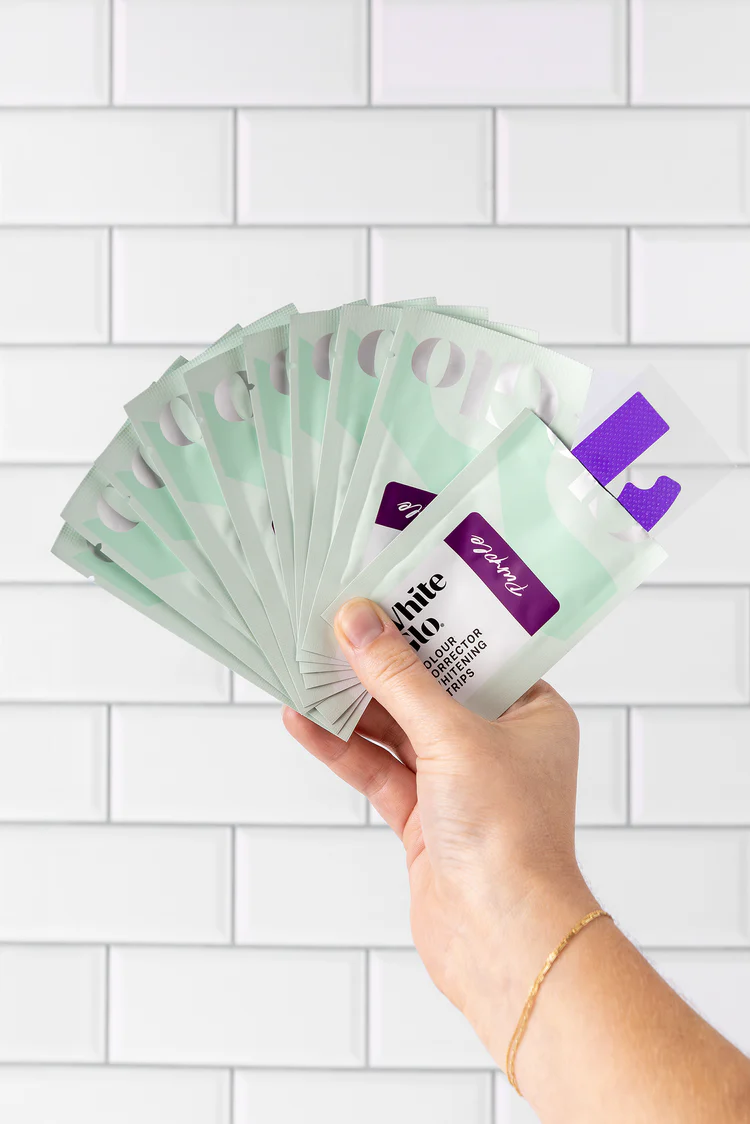
Most people do not set out to whiten their teeth. They notice, one ordinary morning, that coffee, tea and the occasional cigarette have left a shadow behind the front teeth — and then they go looking for something that will not take over their life.
Teeth whitening strips are the format that survives that test. The dose is pre-measured, the strip is flat, and the session ends while your phone is still charging. What actually decides the result is not the marketing on the box but three technical choices: strip format (dry, wet or dissolving), active formula (peroxide or PAP), and how much sensitivity your teeth will tolerate.
This guide works through those three choices, turns them into a routine you can keep, and finishes with the questions buyers ask when they move from “which box” to “which supplier”.
Why Stubborn Coffee and Tea Stains Are a Surface Problem, Not an Enamel Problem
The stain that shows up in photographs is almost always exogenous: pigment from coffee, tea, wine, cola or tobacco that binds to the surface film of the tooth rather than fusing into the enamel crystal. Home whitening specifications supplied by the manufacturer describe exactly this job — the stated functions are to remove exogenous stains (coffee, tea, tobacco), to whiten teeth by 5–8 shades, and to provide anti-sensitivity protection.
That third function is the one most consumer products under-deliver on, and it explains why the strip category has moved toward gentler chemistry rather than stronger chemistry. A formula that is fast but painful gets abandoned in week one; a formula that is gentle but consistent gets used for months.
The practical consequence is a rule that sounds almost too simple: because pigment exposure repeats every single day, the removal method has to repeat too. A format you will use five mornings a week beats a stronger format you will use twice a month.
Why Home Whitening Often Fails: Three Pain Points Worth Naming
1. Sensitivity fear
The sensitivity question is a chemistry question. Hydrogen Peroxide (HP) and Carbamide Peroxide (CP) are small-molecule, penetrating actives: they travel through the enamel into the dentin and break down deep-seated pigment through free-radical oxidation. The trade-off is speed and power for a higher likelihood of temporary sensitivity, and peroxide is strictly regulated as a drug in most markets.
PAP (phthalimidoperoxycaproic acid) behaves differently. Its large molecular size keeps it on the surface, oxidising surface stains only — gentle, with minimal sensitivity, but slower to show visible change on deep stains. The manufacturer’s guidance is blunt about the trade-off: prioritise effectiveness and accept temporary sensitivity, choose peroxide; prioritise safety for sensitive teeth or daily use, choose PAP. PAP and low-sensitivity formulas are the options designed for sensitive teeth.
2. Messy gels, trays and hardware
Trays need fitting, syringes need dispensing, lights need charging, and gel can bleed past the gum line. A strip removes that entire step: it is flat, pre-measured and supplied in an aluminium sachet as a three-layer construction — PET hard film, whitening gel, and PE soft film. There is nothing to mix and nothing to rinse out of a tray.
Residue is the second half of the mess problem. Wet strips are known to leave relatively more residue than dry strips, which are described as leaving minimal residue.
3. Inconsistent results
Inconsistency is usually not a formula failure, it is a contact failure. A strip that shifts during wear delivers an uneven dose. Dry strips are specified with good adhesiveness — they are not easy to slip off — while wet strips have inferior adhesiveness, tend to shift during application, and leave more residue. The other source of inconsistency is habit-switching: a new format every fortnight never completes a whitening cycle.
The Industry Context: Regulation Is Quietly Reshaping the Strip Aisle
Three external forces now determine which strips can even reach a shelf, and they are worth understanding before you buy or specify one.
- Market size. The global market for teeth whitening strips and gels was valued at USD 1.1 billion in 2025 (Grand View Research, Teeth Whitening Strips & Gels Market Size Report 2026–2033).
- EU concentration limit. EU Regulation (EC) No. 1223/2009 restricts hydrogen peroxide in over-the-counter teeth whitening products to 0.1% or less. This is a structural reason why peroxide-free PAP formats are easier to place as cosmetics in Europe, while high-percentage peroxide formats carry heavier regulatory weight.
- US MoCRA registration. Under MoCRA 2022, manufacturers of whitening strips — classified as cosmetics — must register facilities (USD 849/year) and list products (USD 200 per product).
- Customs classification. Whitening strips are primarily classified under HS Code 3306.90.00 (preparations for oral or dental hygiene).
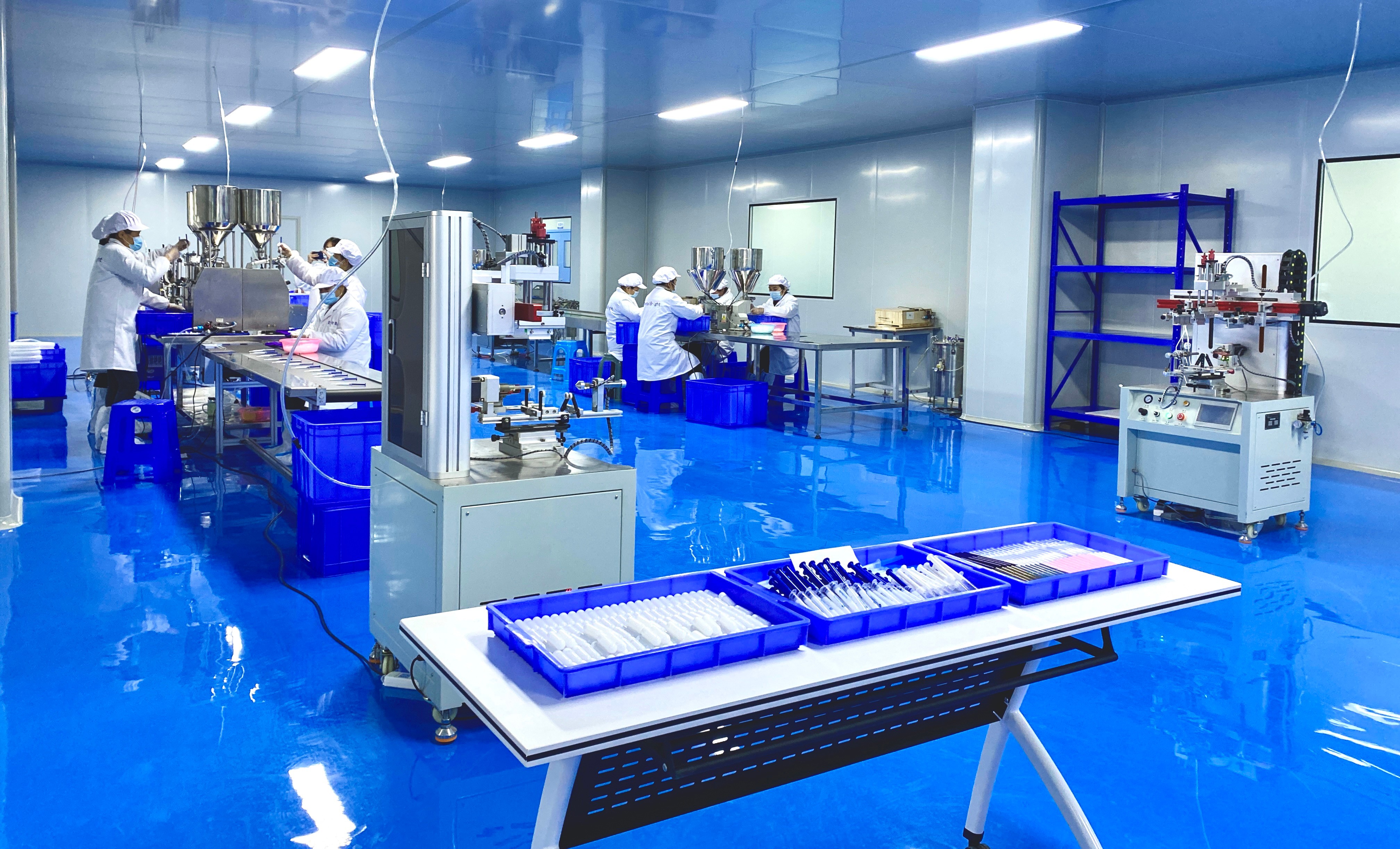
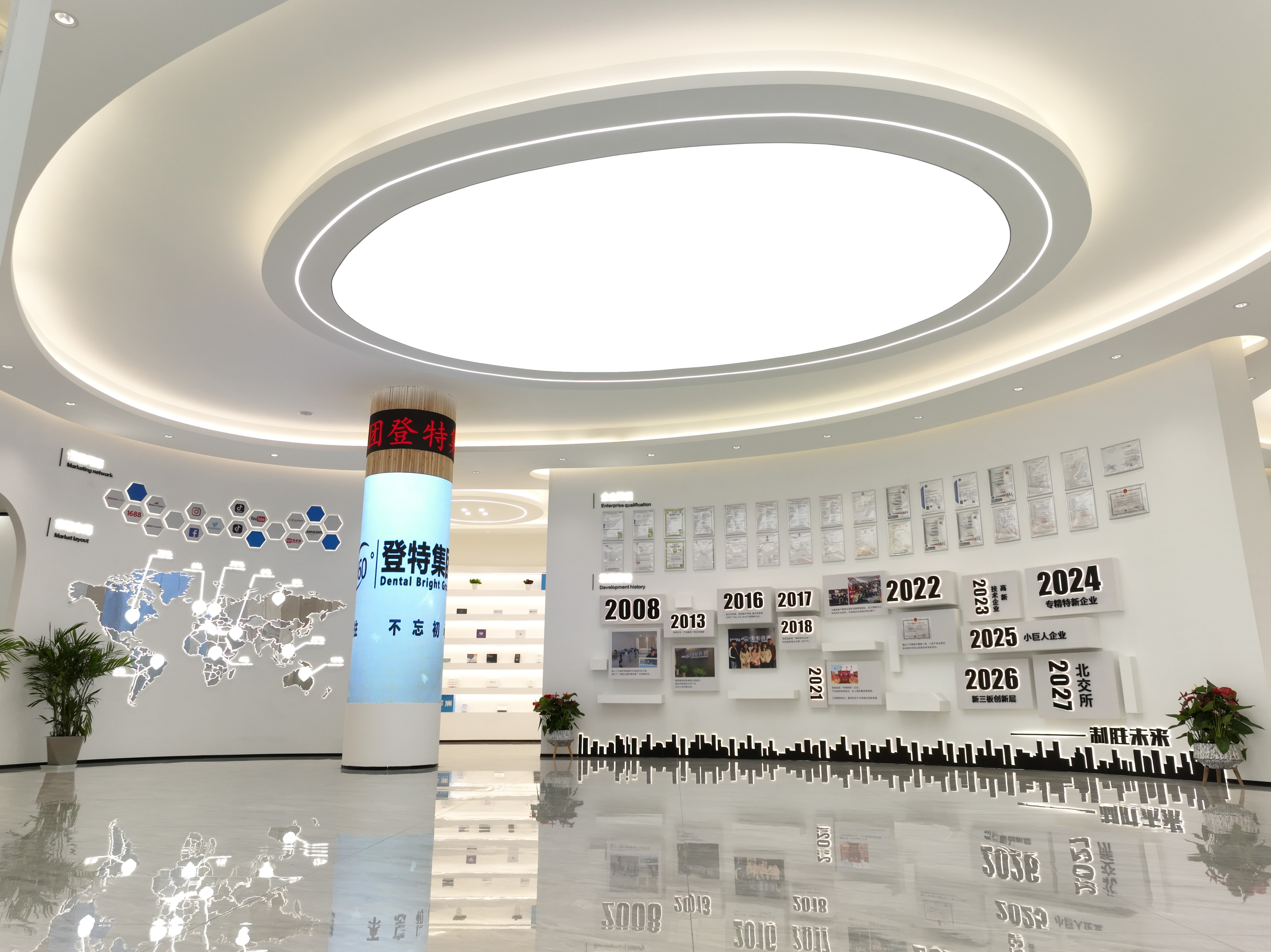
The manufacturer behind the formats described in this article is Jiangxi Dentalbright Technology Co., Ltd. (Glorysmile Factory), an oral care manufacturer founded in 2008 with its current factory completed in 2013. The 36,000 m² facility includes 20,000 m² of 100,000-class cleanrooms and a 1,000 m² laboratory with a 100-class cleanroom for microbiological testing, employs 256 people (including 17 R&D engineers and 11 QC specialists), exports to 102 countries at roughly a 90% export ratio, and is certified to MDSAP, ISO 13485, ISO 22716, US GMP, BSCI, HALAL and Vegan standards, holding both medical device and cosmetics production licences. Annual output includes 300,000,000 pieces of teeth whitening strips.
The Solution in Detail: Matching the Strip to the Way You Actually Live
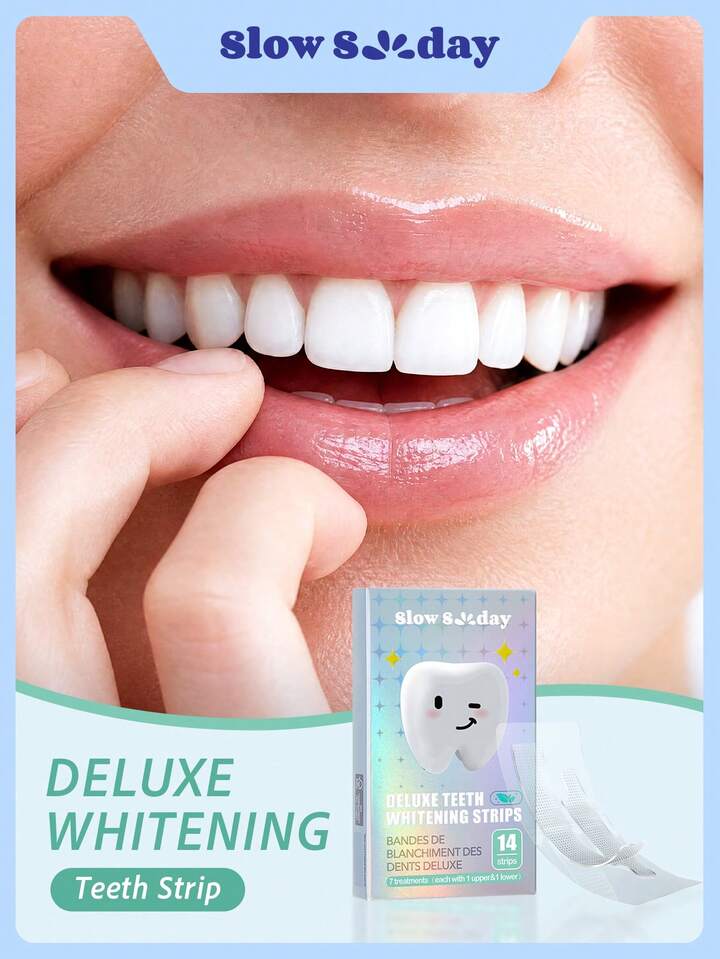
Dry, wet or dissolving: choose by behaviour, not by label
All three formats ship in 7, 14 or 21-strip packs with a user manual, shade guide and colour box, and all use the same three-layer laminate structure. Where they separate is behaviour:
- Dry strips (GS-004H/V/C/P) — available as dry, alcohol-free dry, residue-free dry and high-viscosity dry strips. Good adhesiveness, minimal slip and minimal residue. Higher cost.
- Wet strips (GS-V34-S07) — lower adhesiveness, more residue, lower cost. They are also the recommended choice for purple (V34) whitening strips, because the higher residue helps the purple pigment stay in contact with the tooth for its physical colour-correcting effect.
- Dissolving strips (DB-004L) — a dissolving-strip format positioned separately from traditional dry strips.
For a daily coffee drinker, dry strips are the low-friction default: the no-slip dry adhesive behaviour is specified for once-a-day use at home or while travelling, and the enamel-safe, zero-peroxide option is intended to be individually wrapped.
Peroxide or PAP: this is the sensitivity decision
If you have ever abandoned a whitening product because your teeth felt sharp for two days, PAP is the specification to look for. If your concern is a heavy, long-standing stain load and you have no sensitivity history, a peroxide format will move faster. Both are available as custom formulations, alongside PAP + charcoal, purple, sodium phytate and sodium bicarbonate variants.
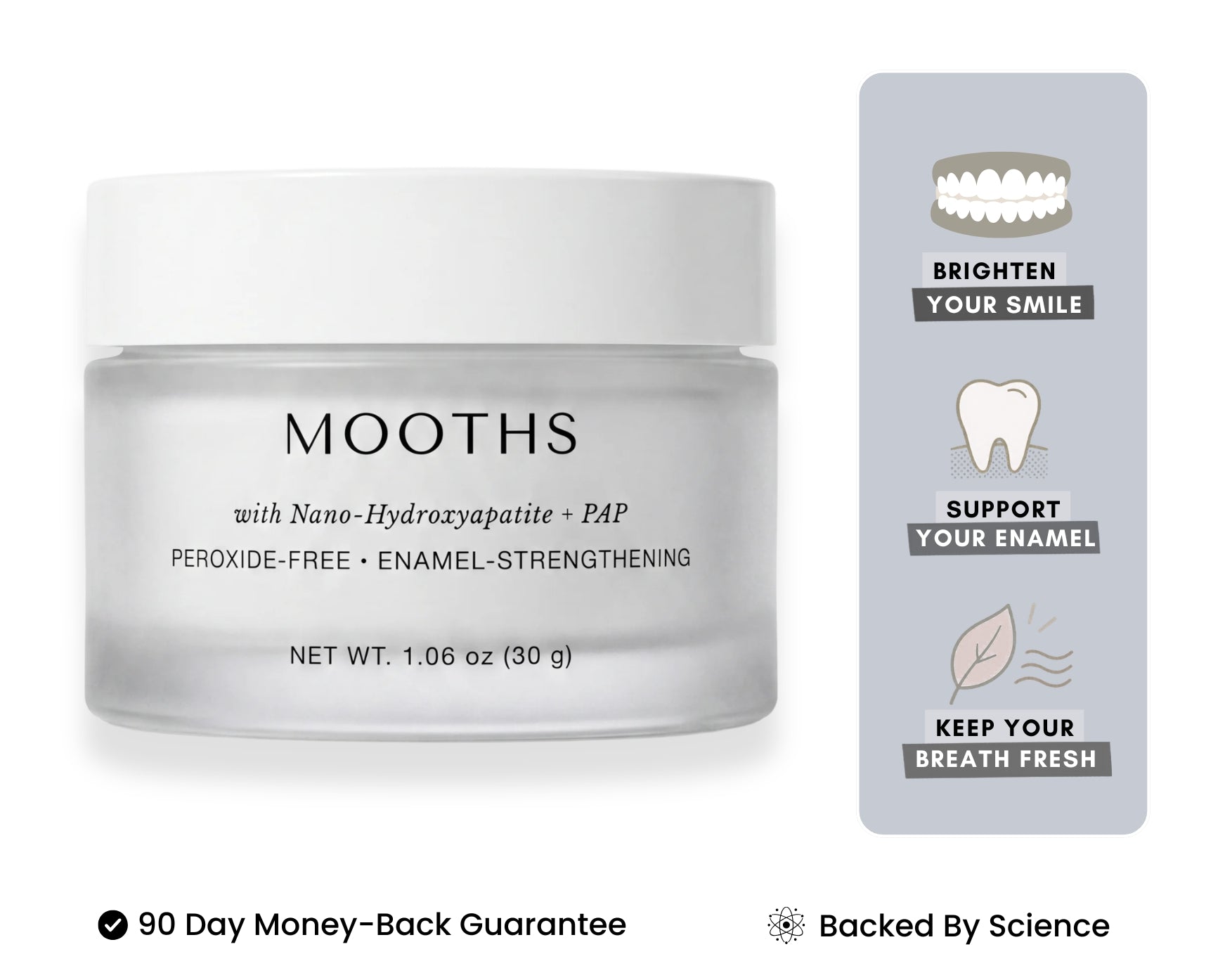
Where whitening powder fits
Powder is not a replacement for strips; it is maintenance between them. The range covers charcoal powder (GS-005C, 30 g, whitening ingredient: charcoal powder), PAP+ powder (GS-005P, 12 g, whitening ingredient: PAP) and purple colour corrector powder (GS-005V, 12 g, whitening ingredient: PAP). All three are mint or custom flavoured, with custom jar colour and type available.
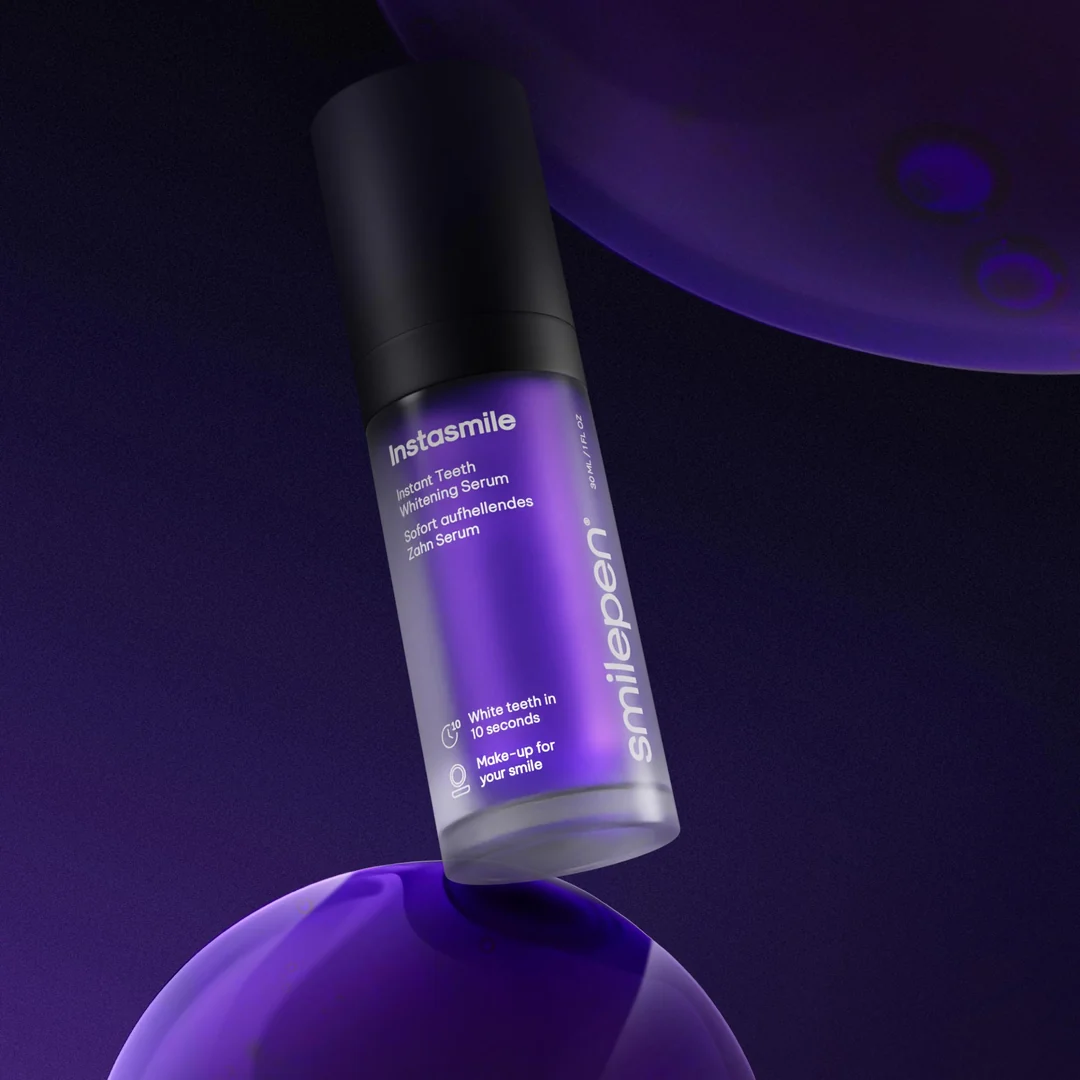
Purple colour correctors do a different job
Purple is directly opposite yellow on the colour wheel, which is why a water-soluble purple dye applied to the teeth cancels yellow undertones. The purple colour corrector foam (GS-006V, 30 ml, mint or custom flavour) and the V34 wet strip apply that optical logic. V34 is not a stain remover in the way a peroxide or PAP gel is — it neutralises the colour you see, which is why wet-strip construction is preferred for it.
Gum protection is now engineered, not assumed
The strongest technical evidence in this category is a strip design patent rather than a marketing claim: US 12,350,120 B1, “Gum-Protecting and Teeth-Whitening Strip and Preparation Method Thereof”, granted 8 July 2025 and expiring 12 December 2044. It covers a residue-free whitening strip using an acrylic copolymer gelling agent with a marginal sealing effect — sealing the strip margin so the gel stays where it belongs instead of bleeding toward the gums. The associated strip models are GS-004H/V/C/P, GS-V34-S07 and DB-004L.
Step-by-Step: A Strip Routine You Will Actually Keep
The most effective protocol is the one that attaches to a habit you already have. The manufacturer’s home-whitening usage scenario for strips is once per day; kit formats are specified at 10–30 minutes per treatment. Build around that.
- Anchor it. Attach the strip to something you already do every morning — right after your coffee and your brush. Once a day, not twice.
- Start gentle. If you have sensitive teeth or have not whitened before, begin with a PAP or low-sensitivity formula and see how your teeth respond before moving to a peroxide format.
- Apply to a clean surface. The three-layer strip works by contact. Align it along the gum line, press it flat, and keep it in place for the full wear time printed on the pack.
- Do not eat or drink during wear. Coffee during a whitening session defeats the purpose twice over.
- Aftercare with toothpaste. Brush after removing the strip. Options include GS-007F fruity toothpaste (60 g, flavours such as smooth mint, strawberry, red velvet, mango sorbet, peach iced tea, grape bubblegum, watermelon, vanilla, banana, coconut whip and candy cane), GS-007D double tube toothpaste (100 g, formula including PAP and hydrogen peroxide), or DB-007P purple colour corrector toothpaste (65 g / 120 g).
- Finish with mouthwash. DB-010S liquid mouthwash (237 ml, alcohol-free, functions listed as breath freshener and stain remover) is the simplest option. GS-010F foam mouthwash is applied as two pumps directly into the mouth, swished for 30–60 seconds, then expelled. DB-010P coconut mouthwash comes as 20 × 12 ml sachets for travel.
- Use purple corrector on off days. On days you are not wearing a strip, GS-006V purple colour corrector foam handles the yellow undertone.
- Track the change. Every strip pack ships with a shade guide, so progress is measured rather than guessed — which is exactly what keeps a routine alive past week three.
Use Cases: Which Strip Fits Which Person
The three-cup-a-day coffee drinker
Daily exogenous exposure, moderate stain load, no sensitivity history. Dry strips once a day, with purple corrector foam as an optional evening add-on and whitening powder for maintenance brushing.
The tea and tobacco user
Heavier, longer-established exogenous staining from tea and tobacco. A peroxide-based format will lift more pigment faster, but if sensitivity appears, PAP remains the sustainable long-term option — the manufacturer’s positioning for strips and home whitening is explicitly anti-sensitivity protection alongside stain removal, not stain removal alone.
The sensitive-teeth user
This is the case the category was redesigned for. PAP and low-sensitivity formulas exist specifically for sensitive teeth, and a residue-free dry strip (the design covered by US 12,350,120 B1) limits gel contact with the gums on top of that.
The traveller and commuter
Strip packs are 7, 14 or 21 strips, individually wrapped, in an aluminium sachet — no liquid, no tray, no charger. Denture and aligner wearers have a parallel product in GS-008D denture cleansing tablets, intended for dentures, mouthguards, retainers and other dental appliances.
The brand owner or distributor evaluating a supplier
This is where format and compliance stop being consumer questions and become sourcing questions. Glorysmile offers OEM, ODM, custom formulation and private-label production for teeth whitening strips, with strip capacity of 29.2 million pieces per month, a customisation scope covering strip type, active ingredient, residue-free or standard formulation, colour, flavour, packaging and labelling, and exports to the USA, Russia, Australia, the EU and Southeast Asia.
Two project references illustrate the scale: a private-label brand project of 5 million units, and a 7-million-unit promotional gift set programme for pharmacy chain and supermarket retail running over two years, which passed third-party factory audits (BSCI/ISO) with a zero return rate in large-batch inspection. In a separate professional clinic-supply project, the reported outcome was whitening of 5–8 shades in one treatment with zero sensitivity reports from more than 5,000 patients.
Comparison Table: Strip Formats and Active Formulas
The two tables below summarise the trade-offs using manufacturer specifications and published compliance facts only.
| Strip format | Reference models | Adhesion & residue | Cost position | Suits |
|---|---|---|---|---|
| Dry strips (incl. alcohol-free, residue-free, high-viscosity) | GS-004H/V/C/P | Good adhesiveness, not easy to slip off, minimal residue | Higher | Daily, low-friction routines in home or travel use; buyers who want low residue |
| Wet strips | GS-V34-S07 | Lower adhesiveness, tends to shift, relatively more residue | Lower | Budget-conscious buyers, and purple (V34) colour-correcting strips where higher residue improves pigment contact |
| Dissolving strips | DB-004L | Dissolving-strip format, distinct from traditional dry strips | Not specified | Buyers who want a format without the standard strip-removal step |
| Active formula | Mechanism | Sensitivity profile | Regulatory and market notes |
|---|---|---|---|
| Hydrogen Peroxide (HP) / Carbamide Peroxide (CP) | Small-molecule penetrating type — passes into the dentin and breaks down deep-seated pigment by free-radical oxidation | Higher likelihood of temporary sensitivity | Fast and powerful; strictly regulated as a drug in most markets. EU Regulation (EC) No. 1223/2009 limits HP in OTC whitening products to 0.1% or less |
| PAP (phthalimidoperoxycaproic acid) | Large-molecule surface-acting type — too large to penetrate, oxidises surface stains only | Minimal sensitivity | Gentler and slower on deep stains; easier to launch as a cosmetic in most countries; also the base of PAP + charcoal and purple variants |
FAQ: What Buyers Ask Before Choosing a Strip
Are your teeth whitening strips compliant for the US and EU markets?
For the United States, Glorysmile has completed MoCRA-compliant cosmetic facility registration and product listing for teeth whitening strips; the company’s medical-device lines — whitening lights, electric toothbrushes and oral irrigators — separately hold FDA medical device registration, and the silicone dental impression material has completed 510(k) registration. For the European Union, CPSR (Cosmetic Product Safety Report), CPNP notification confirmation and EU Responsible Person details are supplied for cosmetic products, with CE-MDR registration completed for medical devices. Factory certificates include CE, FDA, CPSR, CPNP, PIF, SCPN, MSDS, COA, RoHS, HALAL and Vegan; product certificates include GMP, ISO 22716, ISO 13485, MDSAP and BSCI.
Which strip formats and formulas can be customized for private label?
Three formats: dry strips (GS-004H/V/C/P, including alcohol-free dry, residue-free dry and high-viscosity dry options), wet strips (GS-V34-S07) and dissolving strips (DB-004L). Formula options are PAP, PAP + charcoal, purple, 6% HP, sodium phytate, sodium bicarbonate, or a fully custom formulation — with PAP and low-sensitivity formulas available for sensitive-teeth positioning. Flavour options include Blue Raspberry, Strawberry, Peach, Grape, Watermelon, Peppermint, Orange, Mint, Pineapple, Cherry Blossom, Coconut and Mango. Packs ship as 7/14/21 strips with a user manual, shade guide and colour box; the strip bag is aluminium and each strip is a three-layer PET hard film / whitening gel / PE soft film construction. Custom colour, flavour, packaging and labelling are supported, along with OEM, ODM and dealer services.
What is the MOQ for private-label teeth whitening strips?
For standard packaging (the existing packaging range), the MOQ is 5 boxes. For OEM orders with customized packaging, the MOQ ranges from 100 to 1,000 boxes and depends mainly on the minimum order quantity required by the custom packaging itself. The exact MOQ is confirmed during the quotation and sampling phase.
Can I evaluate samples before committing to a production run?
Yes. The OEM/ODM service covers product formulation and customization, free sampling and professional package design. Sampling is where you verify the variables that matter commercially: adhesion and slip behaviour on a real tooth surface, residue after removal, flavour acceptance, purple pigment behaviour on wet versus dry strips, and shade-guide performance. Standard-packaging orders start from 5 boxes, so a small first run is possible alongside sample evaluation.
What production lead time and quality control apply to strips?
Lead time varies depending on order volume, product specifications, customization complexity and the current production schedule; a precise delivery timeline is provided upon order confirmation. Strip production runs on a 29.2 million-piece monthly capacity, with quality control covering pre-shipment testing, third-party laboratory testing (SGS / UL) and microbial, pH and efficacy evaluation, backed by an ISO 13485 and MDSAP-certified quality system and in-house microbiological testing in a 1,000 m² laboratory. After-sales support operates on a 24-hour response mechanism with full-lifecycle product quality assurance. To start a project, contact the manufacturer through glorysmile.com.
The Takeaway
Coffee stains are not a dental emergency, and they are not solved by one heroic treatment. They are managed by a format small enough to survive a normal Tuesday morning — which is exactly the design brief of the whitening strip. Choose the format by behaviour (dry for adhesion and low residue, wet for cost and purple pigment, dissolving for a no-removal format), choose the formula by sensitivity (PAP for daily comfort, peroxide for speed), and lock the routine to a habit you already have.
For consumers, that is a fifteen-second decision made once. For brands, distributors and importers, it is a specification list — format, active ingredient, flavour, packaging, MOQ and market compliance — and the manufacturer’s job is to make that list verifiable before the first production run.
Working on a Private-Label Strip Line?
Glorysmile (Jiangxi Dentalbright Technology Co., Ltd.) manufactures dry, wet and dissolving teeth whitening strips alongside whitening powder, purple colour corrector foam, toothpaste and mouthwash, with OEM, ODM and custom formulation services, free sampling and package design support.
Request samples or a quote: email tasha@enjoywhite.com · Tel / WhatsApp +86 177 7911 0152 · Website www.glorysmile.com · Download the full product catalog: Glorysmile Catalog (PDF).
You can also visit the factory at Makou Industrial District, Yongxiu Town, Nanchang (Jiujiang) City, Jiangxi Province, China — approximately a 15-minute drive from Nanchang Changbei International Airport.
Have Questions or Need More Details?
Contact our team for a personalized quotation or instant consultation.
Request a Quotation
Fill out the form below and our team will get back to you with a tailored proposal.
WhatsApp Direct Chat
Prefer to chat in real-time? Message us on WhatsApp for instant assistance & quick answers.
- Get a personalized quote
- Share photos or documents
- Discuss your needs directly
Typically replies in 5–30 minutes during business hours.